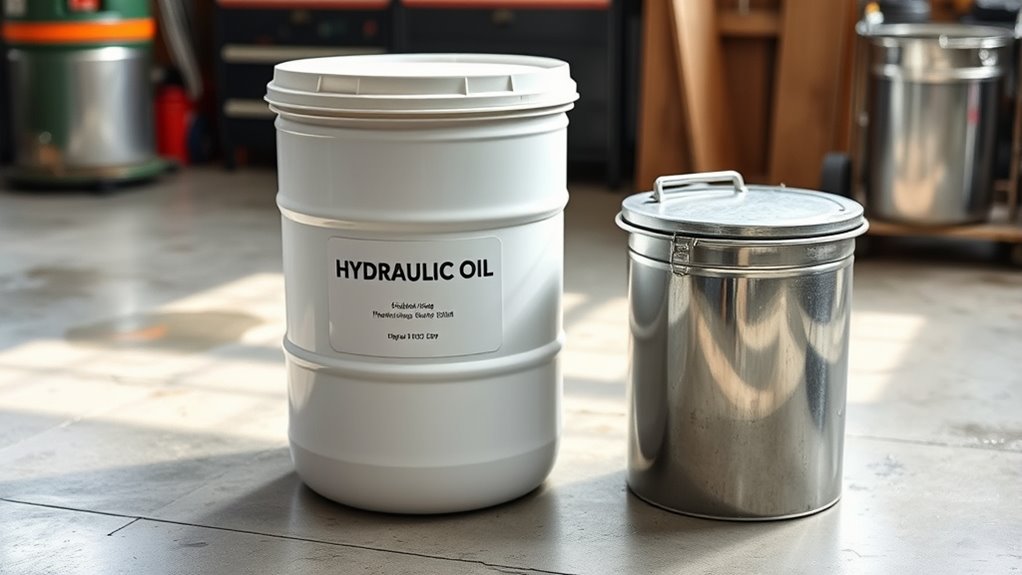

To safely dispose of old hydraulic oil, you should store it in sealed, labeled containers and avoid spills or leaks. Never pour it down drains or onto the ground, and always use certified disposal or recycling facilities. Follow local, state, and federal regulations to stay compliant, and keep detailed records of your disposal activities. Proper handling and disposal protect the environment and your health—continue to learn more about how you can do this responsibly.
Key Takeaways
- Store used hydraulic oil in sealed, labeled containers to prevent leaks and contamination.
- Do not pour hydraulic oil down drains, onto the ground, or into water bodies.
- Use certified hazardous waste collection programs or authorized disposal facilities.
- Wear protective gear like gloves and eyewear when handling old hydraulic oil.
- Keep detailed records of disposal or recycling activities for compliance purposes.
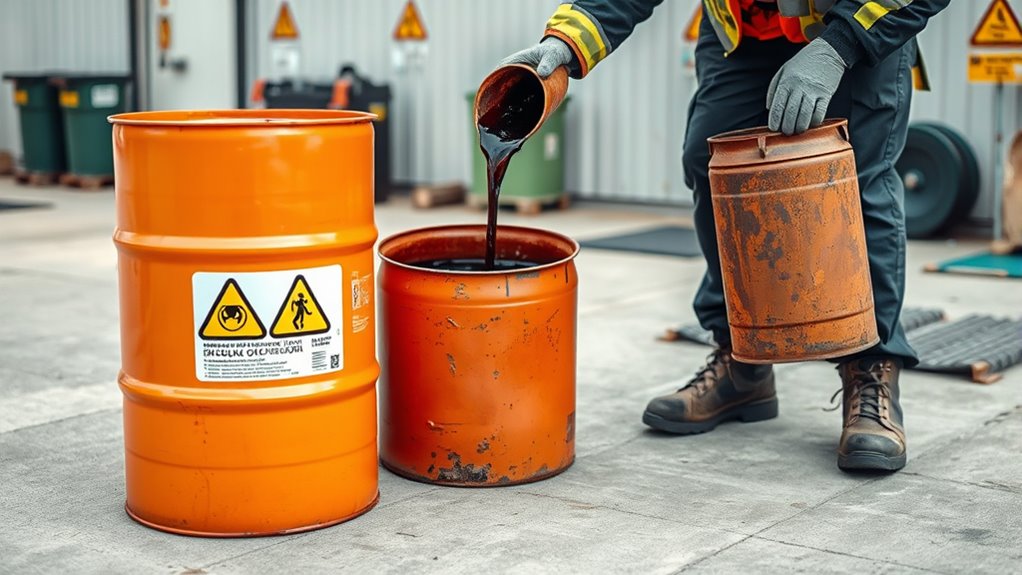
Properly disposing of old hydraulic oil is essential to prevent environmental contamination and health hazards. When you’re dealing with used hydraulic fluid, it’s crucial to understand and follow environmental regulations that govern its disposal. These regulations are designed to protect soil, water sources, and public health from dangerous pollutants found in used oil. Ignoring these rules can lead to hefty fines and environmental damage, so always stay informed about local, state, and federal guidelines. Proper disposal begins with identifying authorized disposal or recycling facilities that accept hydraulic oil. These facilities are equipped to handle hazardous waste and ensure the fluid doesn’t harm the environment.
Proper disposal of hydraulic oil prevents environmental harm and ensures compliance with regulations.
Recycling methods are an effective way to manage used hydraulic oil responsibly. Instead of simply throwing it away, you can have it processed and refined for reuse. Many recycling centers can filter out contaminants, restore the oil’s properties, and prepare it for reuse in industrial applications or as a base for new lubricants. Recycling not only reduces the environmental impact but also conserves resources and can be cost-effective in the long run. Before recycling, make sure the hydraulic oil is stored safely in sealed, clearly labeled containers to prevent leaks or spills during transport. Never mix hydraulic oil with other chemicals or waste, as this complicates the recycling process and poses additional hazards.
In addition to recycling, some facilities offer reconditioning services where used hydraulic oil is cleaned, tested, and restored to meet industry standards. This process often includes filtering out dirt, water, and metal particles, ensuring the oil remains effective for future use. When you choose recycling or reconditioning, you’re actively reducing environmental pollution and supporting sustainable practices. It’s also important to keep detailed records of how and where you dispose of or recycle the hydraulic oil, as this documentation can be vital for compliance with environmental regulations. Certified disposal facilities are crucial for ensuring adherence to legal requirements and safe handling.
Furthermore, many communities organize hazardous waste collection days or provide designated drop-off sites for used oils and chemicals. Take advantage of these programs to dispose of your hydraulic oil correctly. Always wear protective gloves and eyewear when handling old hydraulic fluid to reduce exposure risks. Never pour hydraulic oil down the drain, onto the ground, or into water bodies, as this can cause severe environmental damage. By staying informed about proper disposal methods and adhering to recycling procedures, you play a vital role in safeguarding the environment and public health from the harmful effects of improper hydraulic oil disposal.
Frequently Asked Questions
Can Old Hydraulic Oil Be Recycled for Other Uses?
Yes, you can recycle old hydraulic oil for alternative uses by exploring recycling methods. Instead of disposal, consider filtering and reconditioning the oil for reuse in less critical applications or as a lubricant in machinery. Recycling methods like centrifugation or chemical treatment help purify the oil, making it suitable for these purposes. Always make certain proper testing and adherence to environmental regulations before repurposing hydraulic oil to prevent contamination.
What Are the Environmental Risks of Improper Disposal?
Think of improper disposal as throwing a poison dart into the earth’s delicate veins. You risk environmental contamination, which can seep into soil and water, causing long-lasting damage. Groundwater pollution is a silent killer, threatening drinking water and ecosystems. If you don’t handle old hydraulic oil responsibly, you’re releasing a toxic shadow that endangers health and the environment, making it essential to dispose of it properly and safely.
How Long Does Hydraulic Oil Take to Decompose Naturally?
Hydraulic oil typically takes years to biodegrade naturally, with a biodegradation timeline that can range from 5 to 15 years depending on environmental conditions. Natural decomposition is a slow process, as the oil resists breakdown due to its chemical composition. To protect the environment, you should avoid improper disposal and opt for proper recycling or disposal methods, ensuring that harmful substances don’t contaminate soil or water sources.
Are There Any DIY Methods to Dispose of Hydraulic Oil Safely?
You can’t just toss hydraulic oil in the trash—doing DIY disposal with household methods is dangerous and illegal. Instead, you should take it to a licensed recycling center or hazardous waste facility, where professionals handle it safely. Never pour it down drains or onto the ground, as it devastates the environment. Your best move is to contact local waste authorities for proper disposal options, protecting both your community and the planet.
What Signs Indicate Hydraulic Oil Has Become Too Contaminated?
You’ll notice oil contamination when it appears cloudy, dark, or contains particles and sludge. If your filter effectiveness drops, it’s a sign the oil is no longer clean. Additionally, if you observe foaming or inconsistent hydraulic performance, contamination might be the cause. Regularly inspecting and testing your hydraulic oil helps catch these signs early, ensuring your equipment runs smoothly and preventing costly damage.
Conclusion
Remember, improper disposal of old hydraulic oil isn’t just a minor mistake—it’s like releasing a toxic monster on the environment. Always follow local regulations and take your used oil to certified recycling centers. Doing so protects our planet and keeps harmful chemicals out of our water and soil. By disposing of your hydraulic oil responsibly, you’re not just doing your part; you’re helping prevent an ecological disaster of epic proportions. Stay safe and environmentally conscious every step of the way!