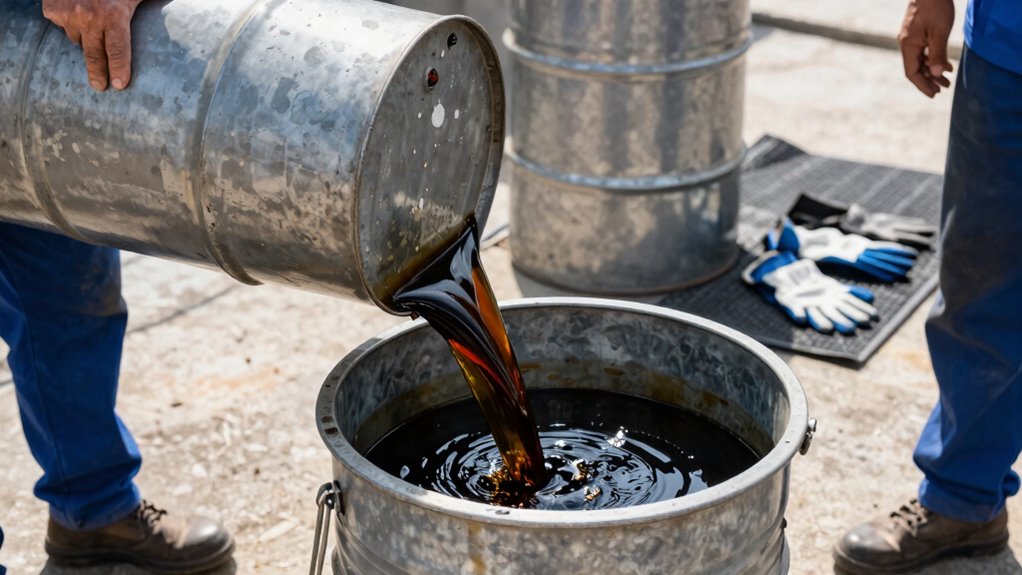

To handle hydraulic waste without creating a bigger mess, always follow proper disposal procedures and adhere to local, state, and federal regulations. Use dedicated, labeled containers that are durable and leak-proof, and transfer waste slowly to prevent spills. Keep spill kits nearby and practice containment techniques regularly. Inspect containers and equipment frequently to catch any issues early. By staying prepared and compliant, you minimize risks—keep going to discover more tips for effective waste management.

Get business pricing on tools and workshop supplies
- Business-only prices and quantity discounts
- Tax-exempt purchasing
- Multiple users, one account, clear invoices
Key Takeaways
- Use dedicated, labeled, and leak-proof containers for hydraulic waste to prevent spills.
- Employ spill containment tools like pallets or drip trays during transfer and handling.
- Transfer waste slowly and steadily to avoid splashes or accidental spills.
- Regularly inspect and maintain containers and equipment to detect leaks early.
- Keep spill kits nearby and ensure staff are trained in quick, effective spill response.
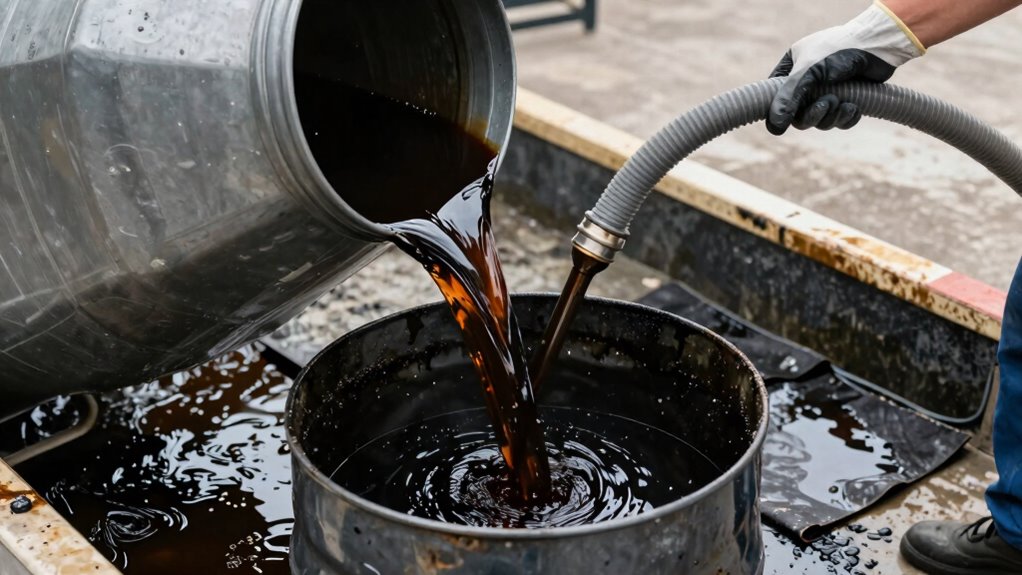
Ever wondered how to manage hydraulic waste safely without turning the cleanup into a bigger mess? Handling hydraulic waste requires careful planning and adherence to environmental regulations to prevent contamination and legal issues. First, you need to understand the specific rules that govern waste disposal in your area. These regulations are designed to protect the environment, so ignoring them can lead to hefty fines or worse, environmental harm. Make certain you’re familiar with local, state, and federal guidelines, and always follow proper disposal procedures.
Managing hydraulic waste safely requires understanding regulations and following proper disposal procedures to protect the environment.
Spill containment is your first line of defense against accidental leaks or spills. When working with hydraulic fluids, use spill containment pallets, drip trays, or secondary containment systems to catch any leaks before they hit the ground. Investing in portable spill kits is also a smart move. These kits typically include absorbent materials, gloves, and disposal bags, making it easier to quickly contain and clean up spills. Always keep spill containment tools nearby, especially when you’re working in areas prone to leaks or in remote locations. Proper waste handling procedures are essential to prevent accidents and ensure compliance with environmental standards. Regularly practicing spill response techniques can help your team react swiftly and effectively during emergencies.
When it’s time to remove the waste, do so carefully to avoid any splashes or drips. Use dedicated tools and containers labeled specifically for hydraulic waste. These containers should be durable, leak-proof, and clearly marked to prevent accidental mixing with other waste streams. When transferring hydraulic waste, do so slowly and carefully, keeping the containers upright and stable to minimize risks of spillage. Properly managing waste disposal procedures is essential to ensure compliance and prevent environmental contamination. Regularly inspecting your waste handling procedures ensures you catch potential issues before they escalate. Check containers for leaks, cracks, or signs of deterioration, and replace them if needed. Proper training is essential too; everyone involved should understand spill containment techniques and regulatory requirements. This way, you minimize risks and keep your workspace safe and compliant.
hydraulic waste spill containment pallets
As an affiliate, we earn on qualifying purchases.
As an affiliate, we earn on qualifying purchases.
Frequently Asked Questions
What Personal Protective Equipment Is Recommended When Handling Hydraulic Waste?
When handling hydraulic waste, you should wear protective gloves and safety goggles to prevent skin and eye contact with hazardous substances. Gloves protect your hands from chemicals and contamination, while goggles shield your eyes from splashes or sprays. Always make certain your PPE fits properly and inspect it regularly for damage. Using this equipment minimizes health risks and keeps you safe while managing hydraulic waste effectively.
How Can I Safely Dispose of Contaminated Hydraulic Fluid?
Imagine you’re managing hydraulic fluid contamination at a construction site. To safely dispose of contaminated hydraulic fluid, first perform hydraulic fluid testing to assess its condition. Then, select an appropriate waste container designed for hazardous liquids, ensuring it’s leak-proof and clearly labeled. Always follow local regulations for disposal. Properly sealing and transporting the waste container prevents spills, protecting both the environment and workers.
What Are Common Mistakes to Avoid During Hydraulic Waste Cleanup?
You should avoid common mistakes like neglecting spill containment and mixing waste types. Always set up proper spill containment measures to prevent spreading contamination. Remember to segregate waste correctly, keeping hydraulic fluids separate from other materials. Don’t rush cleanup or use inappropriate tools, as this can worsen spills. Stay organized, follow safety protocols, and promptly dispose of waste in designated containers to prevent environmental harm and guarantee a safe, efficient cleanup.
Are There Eco-Friendly Options for Recycling Hydraulic Waste?
Think of hydraulic waste recycling as planting seeds for a greener future. Yes, there are eco-friendly options, like biodegradable options that break down naturally and reduce environmental impact. Many recycling programs now accept hydraulic waste, making it easier to dispose of responsibly. By choosing these sustainable methods, you help protect the environment while managing waste efficiently. Embracing eco-friendly recycling options transforms waste into an opportunity for positive change.
How Do I Identify Leaks That Could Lead to Waste Spillage?
You can identify leaks by performing regular leak detection checks around hydraulic systems, focusing on hoses, fittings, and seals. Look for visible signs of fluid accumulation or dampness, and listen for hissing sounds that indicate escaping fluid. Early leak detection helps prevent spills, aiding spill prevention efforts. Keep a routine inspection schedule, and address small leaks promptly to avoid larger waste issues and maintain a clean, safe environment.
Conclusion
Handling hydraulic waste carefully prevents environmental damage and costly cleanup, but rushing the process can turn a small spill into a major disaster. You’re balancing the need for swift action with the importance of precision—each move shaping the outcome. In this dance of control and chaos, your attention to detail determines whether you contain the mess or let it spread. Remember, in hydraulic waste management, patience isn’t just a virtue—it’s your best tool.
Fall yard work Picks
leaf blowers
As an affiliate, we earn on qualifying purchases.