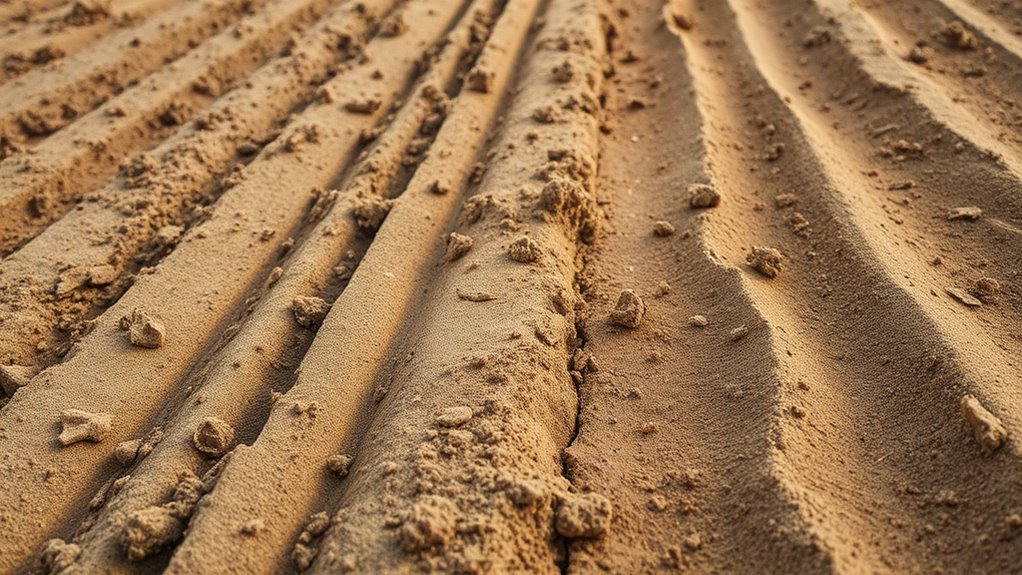

To prevent terrain ruts and soil compaction, use lighter equipment or evenly distribute weight with wider tires to reduce soil disturbance. Designate specific pathways for machinery and foot traffic, avoiding soft or sensitive areas. Plan activities during dry conditions and regularly aerate the soil to improve porosity. Monitoring soil health helps you make timely adjustments. Staying proactive ensures healthy soil structure; explore further tips to protect your land effectively.
Key Takeaways
- Designate specific, well-maintained pathways to limit soil disturbance from machinery and foot traffic.
- Use lighter, low-impact equipment and wider tires to reduce soil compaction during operations.
- Schedule activities during dry conditions to minimize soil sticking and deep ruts formation.
- Regularly aerate soil to alleviate existing compaction and maintain pore space for healthy soil structure.
- Promptly repair ruts and loosen compacted areas to prevent long-term soil degradation.
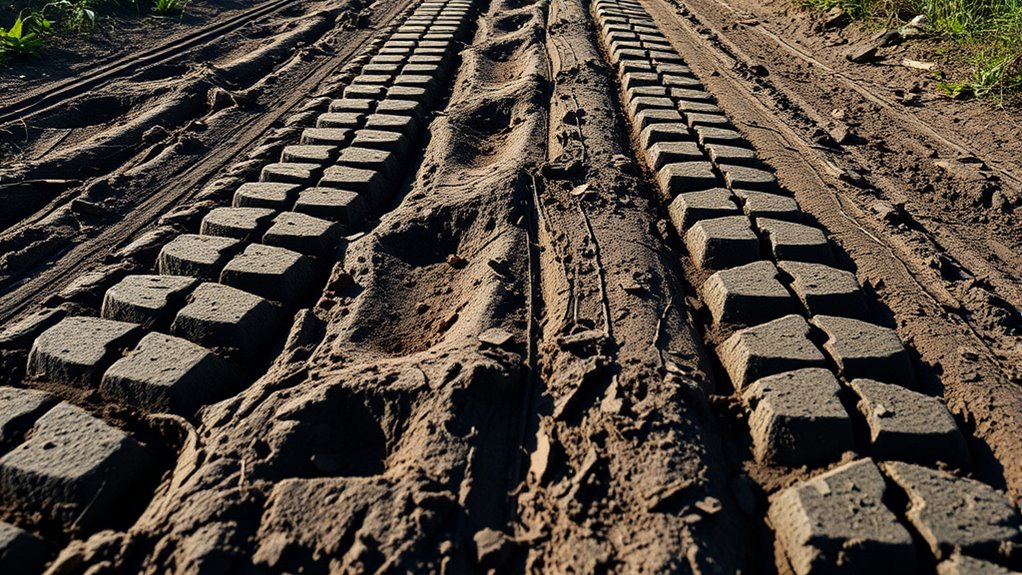
When heavy machinery or frequent foot traffic traverse soft or uneven terrain, they often leave behind deep ruts and compact the soil, which can lead to long-term environmental and structural issues. If you’re managing land, construction, or farming activities, understanding how to prevent these problems is essential. One key factor is the role of tractor tires—they exert significant pressure on the soil, which can quickly lead to compaction if not managed properly. When tractor tires press down on the ground, they push out air and water, reducing pore space and making it harder for roots and microorganisms to thrive. Over time, this compaction can create a dense, hard layer that inhibits healthy soil development, restricting plant growth and increasing runoff.
To combat this, soil aeration becomes necessary. Soil aeration involves creating small holes or channels in the soil to restore its natural porosity. By aerating the soil regularly, you allow air, water, and nutrients to penetrate deeper, which helps break up compacted layers caused by tractor tires and foot traffic. Aeration can be achieved through mechanical tools like spiked shoes, core aerators, or even manual techniques such as poking holes with a garden fork. The goal is to alleviate soil stress and promote a healthier root environment, ultimately reducing the formation of ruts and compacted zones.
Regular soil aeration restores porosity, reduces compaction, and promotes healthy root growth.
Another effective strategy is to minimize the weight and pressure exerted by machinery. When possible, use lighter equipment or distribute weight more evenly across wider tires to lessen soil disturbance. Selecting tractor tires designed for minimal soil impact—such as low-pressure or wide tires—can dramatically reduce the risk of creating deep ruts and compacted patches. Additionally, planning activities during drier conditions can help prevent excessive soil sticking and compaction, since wet soil is more susceptible to damage.
Implementing proper traffic management is also essential. Designate specific pathways for vehicles and foot traffic, and avoid unnecessary crossings over soft or sensitive areas. Installing temporary walkways or using gravel pads can help distribute weight and protect the underlying soil structure. If you notice ruts forming, address them promptly through manual reshaping or soil loosening techniques to prevent long-term degradation. Regular assessment of soil health and compaction levels allows you to adjust your practices proactively.
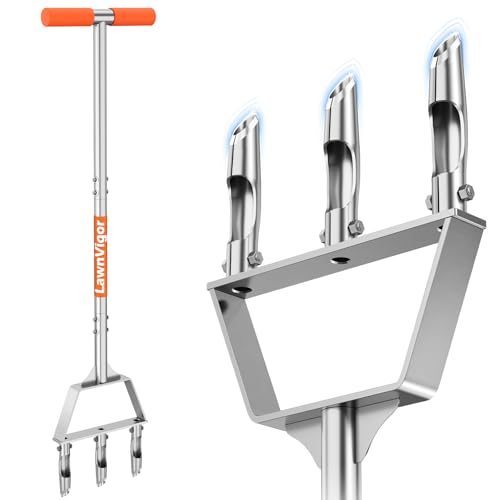
Manual Core Aerator Lawn Tool – Lawn Aerator Tool with 3 Hollow Tines, Semi-Assembled Grass Aerator Core Aeration Tool for Lawn, Yard Plug Aerator for Lawn Care Compacted Soil – Orange
- Promotes Healthier Lawn Growth: Enhances air, water, nutrients penetration
- Durable Metal Construction: Sturdy, heat-treated hollow tines for longevity
- Efficient Soil Plug Removal: Prevents clogging with 3 hollow tines
As an affiliate, we earn on qualifying purchases.
As an affiliate, we earn on qualifying purchases.
Frequently Asked Questions
How Do Weather Conditions Influence Soil Compaction?
Weather conditions directly influence soil compaction through weather patterns and rainfall effects. Heavy rainfall can saturate soil, making it more prone to compaction when you walk or operate machinery on it. Conversely, dry weather helps maintain soil structure, reducing compaction risks. You should monitor weather forecasts and avoid working on soil during or immediately after heavy rain, as moist soil becomes compacted more easily, leading to increased terrain ruts.
What Equipment Minimizes Terrain Ruts During Construction?
Think of your equipment as a gentle hand guiding the soil. To minimize terrain ruts during construction, select equipment with wide tires or tracks, which distribute weight evenly. Use proper compaction techniques like adjusting the roller’s pressure and speed, avoiding excessive passes. This careful approach helps preserve the soil structure, preventing ruts and soil compaction. Your choice of equipment and techniques directly shape the land’s future stability and health.
Can Soil Compaction Be Reversed Naturally Over Time?
Soil compaction can partially reverse naturally over time through soil recovery processes. You should allow natural processes like freeze-thaw cycles, rainfall, and biological activity to work on the soil. These factors help break up compacted layers, improve aeration, and promote root growth. However, this process can take years, especially in heavily compacted areas. To speed up recovery, consider practices like planting cover crops or aerating the soil.
What Are the Long-Term Environmental Impacts of Soil Compaction?
Like a silent villain, long-term soil compaction harms your environment by degrading soil health and increasing erosion risks. It reduces porosity, hampers water infiltration, and limits root growth, which weakens plant resilience. Over time, this imbalance can cause more erosion and nutrient loss, disrupting ecosystems. To counteract these effects, prioritize soil aeration, prevent compaction, and implement erosion control measures to sustain healthy, productive land.
How Does Vegetation Help Prevent Terrain Ruts?
Vegetation helps prevent terrain ruts by stabilizing soil with its roots and providing ground cover that reduces erosion. Your vegetation roots hold soil particles together, making it more resistant to displacement from water or foot traffic. The ground cover acts as a protective layer, absorbing impact and reducing surface runoff. By maintaining healthy plants, you minimize soil disturbance, preventing ruts and promoting a stable, healthy landscape.
Conclusion
By avoiding terrain ruts and soil compaction, you protect your land and guarantee healthy growth. While the damage may seem invisible at first, it quietly hampers future productivity, much like a hidden scar beneath smooth surface. Staying mindful of your driving habits and spreading out activity is your best defense. Remember, gentle care today prevents costly repairs tomorrow—because sometimes, the biggest impact is made by the smallest actions beneath the surface.