
To decide whether to cut, mill, or leave a log alone, first assess its health by checking for decay, cracks, or insect activity. Consider your equipment and experience; if you’re lacks tools or skill, hiring professionals might be best. Think about the ecological benefits of leaving the log intact, especially if it’s still healthy or supports ecosystems. Understanding decay and sustainable practices can guide your choice—keep exploring for more insights to make informed decisions.

Get business pricing on tools and workshop supplies
- Business-only prices and quantity discounts
- Tax-exempt purchasing
- Multiple users, one account, clear invoices
Key Takeaways
- Assess the log’s health and decay status to determine if it’s suitable for cutting or milling.
- Consider available equipment, skills, and whether hiring professionals is necessary.
- Evaluate ecological impact and benefits of leaving the log for habitat and natural decay processes.
- Understand your goals—whether for timber, habitat, or conservation—to guide management decisions.
- Balance sustainable harvesting practices with forest health to decide the best course of action.
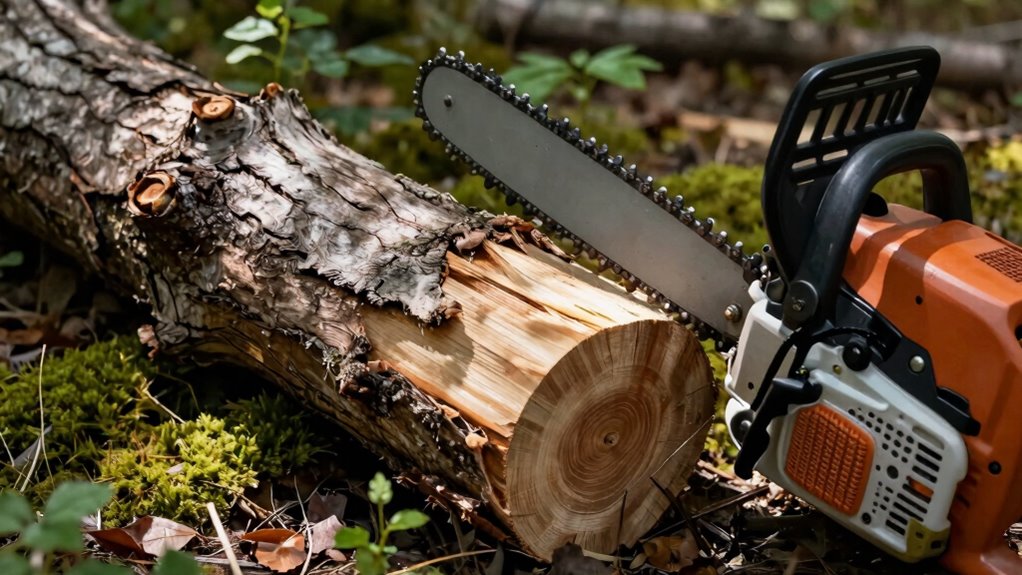
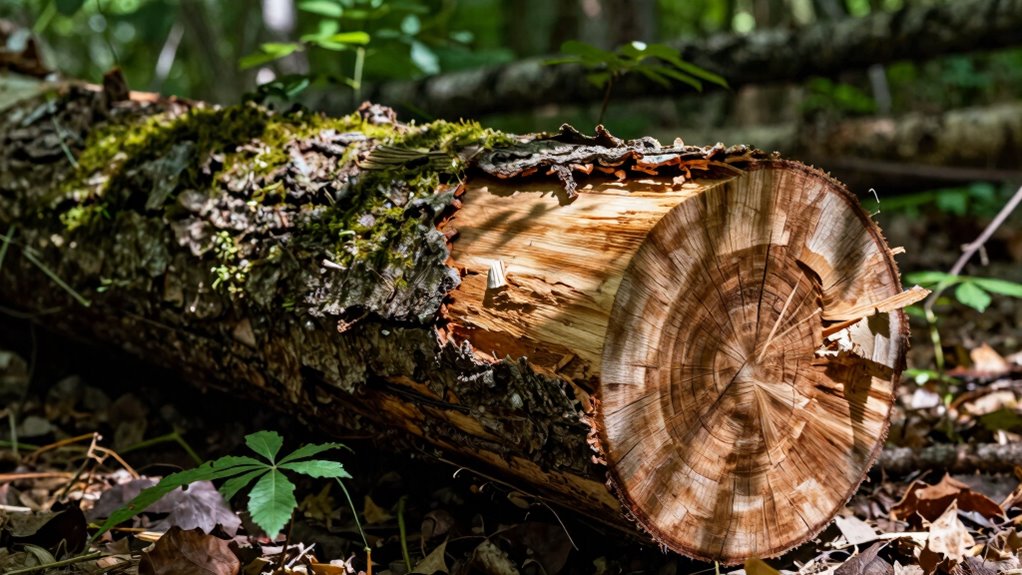
Deciding whether to cut or mill also depends on your available equipment and skills. Milling requires specific machinery, so if you lack the tools or experience, leaving the log intact might be a better option or hiring a professional. If you’re equipped and knowledgeable, milling can maximize the value of each log while minimizing waste. When you choose to leave a log untouched, it’s often because it’s either healthier in its current state or better suited for natural decay, which benefits the ecosystem. Always consider the forest’s overall health—removing only what’s necessary helps maintain biodiversity and supports sustainable harvesting. Conducting a proper log health assessment involves inspecting both the exterior and interior of the wood, checking for signs of decay, cracks, or insect activity. Using tools like a hammer or a screwdriver to tap or probe can reveal internal weaknesses not visible on the surface. Additionally, understanding sustainable harvesting practices ensures that your actions support the long-term health of the forest while meeting your immediate goals. Recognizing the natural decay process can help determine whether a log is still beneficial to leave standing for ecological reasons. It’s also essential to be aware of forest ecosystem dynamics to make informed decisions about tree and log management. Being mindful of how decay influences wood quality can further guide your decision-making process.
As an affiliate, we earn on qualifying purchases.
Frequently Asked Questions
How Do I Identify the Type of Wood in My Log?
To identify your log’s wood type, examine the wood grain closely; different species have distinct patterns, like tight or loose grains. Check the bark texture—some bark is rough and thick, while others are smooth or flaky. Smell the wood too, as certain woods have unique scents. Combining these clues helps you determine the species, guiding your decision to cut, mill, or leave the log untouched.
What Safety Precautions Should I Take During Logging?
You should always wear safety gear like helmets, gloves, and eye protection to prevent injuries during logging. Before starting, review emergency procedures and have a first aid kit on hand. Keep a clear escape route and communicate your plans with others nearby. Stay alert, avoid loose clothing, and operate equipment carefully. These safety precautions help protect you from accidents and guarantee a safer logging environment.
How Does Climate Affect the Decision to Cut or Leave a Log?
Climate impact can turn your decision into a wildfire of complexity. If the weather is wet or freezing, it’s often better to leave the log untouched, as environmental considerations highlight risks like rot or damage. Conversely, in dry, stable conditions, cutting might be more sustainable. Always weigh climate effects carefully, as they influence the health of the forest, your safety, and the longevity of your logging practices.
Can I Re-Evaluate My Decision Later After Initial Assessment?
Yes, you can re-evaluate your decision later using reassessment strategies. After your initial assessment, take time to observe the log’s condition, weather changes, and your goals. Decision reevaluation allows you to adapt if new information arises or circumstances shift. Regularly revisiting your choice guarantees you’re making the best use of resources and protecting the environment, helping you stay flexible and informed throughout your project.
What Tools Are Best Suited for Cutting Versus Milling?
If you think a simple handsaw will do, think again—your tools’ maintenance and cutting techniques matter. For precision cuts, use a chainsaw or power saw with sharp blades, guaranteeing they’re well-maintained. Milling calls for specialized equipment like a portable mill or router, designed for removal of larger sections. Using the right tools with proper technique saves time, effort, and ensures safety, proving that the right gear really makes all the difference.
Conclusion
Remember, like the careful steward tending a garden, your choice to cut, mill, or leave a log alone shapes its future. Every decision echoes the wisdom of those who came before, balancing respect for nature’s patience with your goals. Trust your instincts, weigh the options, and act with purpose. In doing so, you honor the silent stories within each log, turning potential into legacy—just as ancient trees have done through the ages.
Halloween Picks
halloween
As an affiliate, we earn on qualifying purchases.