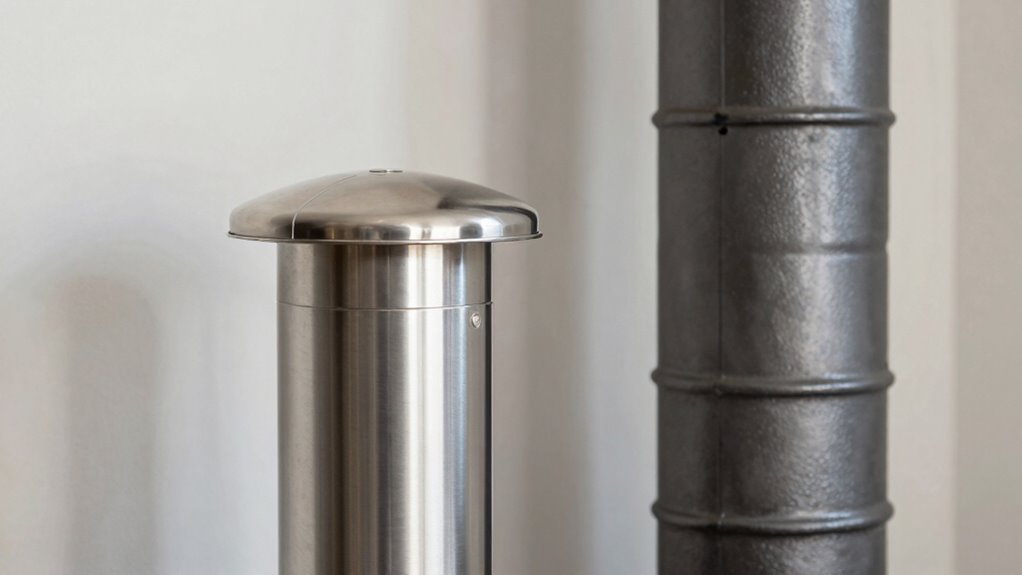

Class A chimney kits are designed for permanent, high-temperature venting of appliances like wood stoves and fireplaces, offering durability, insulation, and strict safety standards. Double-wall stove pipe, on the other hand, connects the stove to the chimney and is more flexible, ideal for less permanent setups. Knowing when and how to utilize each ensures safe, efficient operation. Keep exploring to understand the features and best applications of both systems.
Key Takeaways
- Class A chimney kits are permanent, insulated systems for high-temperature appliances, while double-wall stove pipe is more flexible and suitable for temporary setups.
- Class A systems require precise installation, strict adherence to safety codes, and are designed for external venting.
- Double-wall stove pipe connects stoves to chimneys within the same area, offering easier, quicker installation.
- Class A chimneys offer enhanced durability, insulation, and heat containment for long-term use.
- Regular inspections are essential for both, but Class A systems generally need less frequent maintenance.
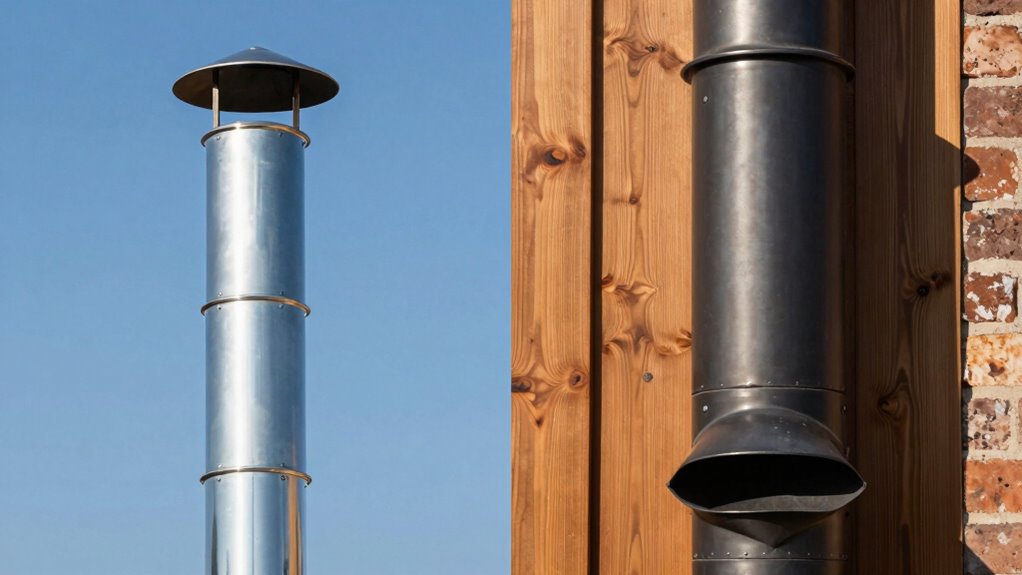
When choosing the right chimney system for your heating appliance, understanding the differences between Class A chimney kits and double-wall stove pipe is vital. Your decision impacts safety, efficiency, and ease of installation. Class A chimney kits are designed for venting high-temperature appliances like wood stoves and fireplaces. They are made from durable, insulated materials that can handle extreme heat and prevent heat transfer to surrounding structures. These systems are typically installed from the appliance to the outside, often passing through walls or ceilings, following strict safety regulations to guarantee safe operation. Because they are built for permanence, they usually require careful planning and adherence to local building codes during installation. The installation procedures for Class A chimney kits involve precise measurements, proper sealing, and secure mounting to avoid leaks and guarantee stability. You need to confirm clearances from combustibles and proper insulation, which help maintain safety and efficiency. Additionally, proper insulation is crucial to prevent heat loss and ensure the system functions safely and efficiently. Regular inspections are also recommended to maintain optimal performance over time.
On the other hand, double-wall stove pipe is generally used for connecting your stove to a chimney or venting system within the same room or area. It consists of two layers: an inner pipe that handles the exhaust gases and an outer pipe that provides insulation and protects surrounding materials from heat. Double-wall stove pipe is more flexible and easier to install, making it suitable for temporary or less permanent setups. When working with double-wall pipe, safety regulations still apply, especially regarding clearance distances, material compatibility, and proper sealing to prevent leaks of dangerous combustion gases. The installation procedures are simpler but still require attention to detail. You’ll need to regularly inspect the pipe for corrosion or damage since it’s closer to heat sources and exposed to more wear and tear. Proper maintenance and periodic inspections are essential to ensure ongoing safety and performance. Understanding these installation requirements helps you select the appropriate system for your specific needs and ensures safe operation.

AllFuel HST Through The Wall Kit with Spark Guard Chimney Cap for 8" Diameter 304 Stainless Steel Class-A Double Wall All Fuel Insulated Chimney Pipe (18" Length, Adjustable Wall Bracket)
- Compatibility: Fits AllFuel HST Class-A chimney pipes
- Wall Thickness Adjustment: Select pipe length based on wall thickness
- Wall Bracket Options: Standard or adjustable brackets available
As an affiliate, we earn on qualifying purchases.
As an affiliate, we earn on qualifying purchases.
Frequently Asked Questions
Can Both Options Be Used Indoors and Outdoors?
Yes, both options can be used indoors and outdoors, but with important considerations. Class A chimney kits are designed for exterior durability, making them suitable for outdoor use, and guarantee indoor safety when properly installed. Double-wall stove pipes are primarily for indoor use, providing insulation and safe venting. Always follow manufacturer guidelines to guarantee safety and durability, especially when shifting between indoor and outdoor environments.
Which Option Is More Cost-Effective Long-Term?
Class A chimney kits are more cost-effective long-term because they use durable, fire-resistant materials that withstand harsh weather and high temperatures better than double-wall stove pipes. Their cost comparison shows higher upfront costs, but their longevity reduces replacement expenses over time. You’ll save money by choosing Class A kits if you prioritize durability and lower maintenance, making them a smarter, more economical investment for long-term safety and performance.
Are There Any Specific Safety Certifications Needed?
Yes, safety certifications are essential for both options. You should look for products that meet safety standards like UL (Underwriters Laboratories) certification, which guarantees the chimney or stove pipe has been tested for safety and performance. Checking certification requirements helps you avoid hazards like leaks or fire risks. Always verify that your chosen system complies with local building codes and manufacturer guidelines to ensure safe and reliable operation.
How Easy Is Installation for a DIY Homeowner?
Installing chimney kits or stove pipe is fairly manageable for a DIY homeowner, especially if you prioritize chimney durability and stove pipe flexibility. You’ll find that many kits come with clear instructions, but make certain you have the right tools and follow safety guidelines. Double-wall stove pipe offers flexibility, making installation easier around corners. With patience and careful measurements, you can achieve a safe, efficient setup, though consulting local codes is always wise.
Do They Require Different Maintenance Routines?
Yes, they require different maintenance routines. For Class A chimney kits, you’ll need regular chimney cleaning and pipe inspections to prevent creosote buildup and guarantee safety. Double-wall stove pipe, on the other hand, demands less frequent cleaning but still needs periodic inspections for corrosion or damage. Both systems benefit from timely maintenance, but the chimney kit particularly needs more thorough and routine upkeep to maintain efficiency and safety.
Conclusion
While both Class A chimney kits and double-wall stove pipes serve the essential role of venting your stove safely, their differences can’t be ignored. Think of the Class A kit as the sturdy highway for your smoke, designed for long-distance, outdoor use. In contrast, the double-wall pipe acts like a cozy tunnel within your home, offering efficient, indoor venting. Choosing the right one means balancing safety, efficiency, and the environment you’re working with.