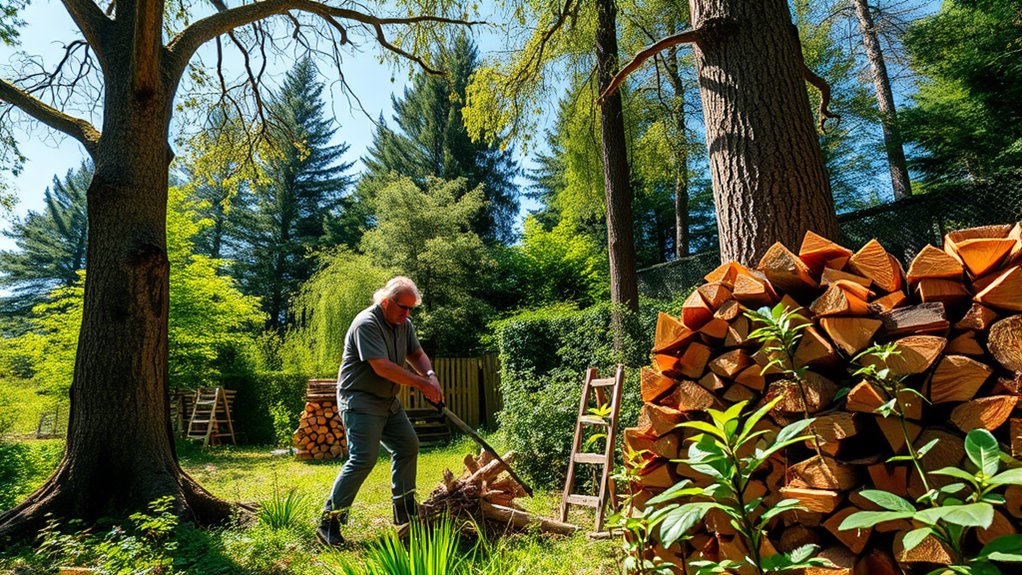

To sustainably harvest in your backyard woodlot, focus on selective thinning of weaker or overcrowded trees to promote healthy growth. Plan your activities carefully, timing them to minimize stress on trees and soil disturbance. Use eco-friendly tools and techniques, and only harvest what’s necessary to prevent overexploitation. This approach maintains forest health, biodiversity, and resilience. Keep exploring these practices, and you’ll discover how to manage your woodland responsibly for the long term.
Key Takeaways
- Conduct selective thinning to remove weaker trees and reduce competition, promoting healthy growth.
- Plan harvests during optimal seasons to minimize stress and support quick forest recovery.
- Use eco-friendly tools and techniques to minimize soil disturbance and protect surrounding vegetation.
- Limit the amount of timber harvested to sustainable levels, ensuring long-term forest health.
- Regularly assess your woodlot’s condition and adapt management practices for ongoing sustainability.

Sustainable harvesting is essential for protecting our natural resources while ensuring that they continue to benefit communities and ecosystems. When managing your backyard woodlot, it’s important to adopt practices that promote the health and resilience of your forest. One effective approach is eco-friendly thinning, which involves selectively removing weaker or overcrowded trees to give healthier ones room to grow. This method reduces competition for nutrients, water, and sunlight, encouraging robust growth and maintaining biodiversity. By focusing on eco-friendly thinning, you help guarantee that your forest remains vigorous and productive over the long term.
Implementing sustainable harvesting techniques isn’t just about cutting trees; it’s about making thoughtful decisions that support long-term forest health. When you harvest, aim to remove only what’s necessary and avoid overharvesting, which can leave your woodland vulnerable to pests, disease, and erosion. Careful planning and adherence to best practices help maintain the forest’s structure, ensuring that it continues to provide habitat for wildlife, sequester carbon, and sustain soil quality. Consistent management that emphasizes long-term forest health results in a resilient ecosystem capable of adapting to changing environmental conditions.
Practicing sustainable harvesting also involves understanding the natural growth cycles of your trees. For example, timing your thinning operations during the right season minimizes stress on the trees and encourages quick recovery. Additionally, utilizing tools and techniques that minimize soil disturbance can further protect the integrity of your woodland. Properly managing your woodlot through eco-friendly thinning promotes not only the health of individual trees but also the overall stability of the forest. This approach supports a balanced environment where trees grow stronger and ecosystems thrive. Incorporating proper planning and assessment can further enhance the sustainability of your harvesting practices, ensuring long-term benefits for your woodland.
Frequently Asked Questions
How Do I Identify Which Trees Are Suitable for Harvesting?
To identify which trees are suitable for harvesting, look for specific tree species that are known for sustainable use, such as oak or maple. You should also assess their growth stages; trees in their prime age, usually mature but not overgrown, are ideal. Avoid young saplings or trees showing signs of disease or damage. Proper identification and understanding growth stages guarantee you harvest responsibly, maintaining a healthy and productive woodlot.
What Tools Are Best for Sustainable Woodlot Harvesting?
You should use sharp pruning saws or hand saws for selective cutting, guaranteeing precise cuts that minimize damage. A hatchet or axe can help with smaller removals. Use binoculars to spot invasive species and remove them early, promoting healthy growth. Always carry measuring tools or tree tags to monitor growth and ensure you’re harvesting sustainably, preventing overharvesting and maintaining the woodlot’s health.
How Often Should I Harvest to Maintain Forest Health?
You should harvest based on your trees’ growth cycle, typically every 10 to 15 years, to maintain forest health. Adjust your harvest frequency according to tree species and site conditions, ensuring you leave enough mature trees for regeneration. Regularly monitor your woodlot for signs of overgrowth or decline, and avoid excessive removal. This approach promotes sustainable growth, supports biodiversity, and keeps your forest thriving over the long term.
Can I Harvest Wood Without Damaging the Soil or Surrounding Plants?
Think of your woodlot as a delicate ballet, where each step matters. You can harvest wood without damaging soil preservation or plant protection if you follow gentle techniques. Use hand tools instead of heavy machinery, and make careful cuts to minimize soil disturbance. Avoid harvesting near roots or fragile plants, and leave enough residual trees to protect the soil. This mindful approach keeps your forest healthy and thriving for years to come.
Are There Legal Restrictions on Backyard Tree Harvesting?
Yes, there are legal considerations you need to keep in mind when harvesting trees in your backyard. You should check local laws, as some areas require harvesting permits or have restrictions on tree removal, especially if the tree is protected or part of a conservation effort. Failing to follow these regulations can lead to fines or other penalties. Always review your local regulations to ensure you’re harvesting legitimately and responsibly.
Conclusion
By practicing sustainable harvesting, you guarantee your woodlot remains healthy and productive for years to come. Imagine a neighbor who responsibly manages their forest, only taking what’s needed and leaving enough behind. Over time, their trees flourish, and wildlife thrives. You can create that same legacy. When you harvest thoughtfully, you protect your land’s beauty and resources, fostering a thriving environment for future generations—and that’s a gift worth giving.