To store firewood safely for wildlife and pest prevention, keep it outside, elevated on metal racks or pest-resistant containers, and away from your home. Make sure your storage area is dry, well-ventilated, and tidy to deter wildlife from nesting nearby. Regularly inspect the wood for pests and avoid stacking directly on damp ground. Properly stored firewood reduces pest risks and protects your home and local wildlife—continue further to discover detailed tips.
Key Takeaways
- Store firewood outside away from the home and animal pathways to prevent wildlife intrusion.
- Elevate wood on metal or wooden racks with proper ventilation to deter pests.
- Use pest-resistant, airtight containers or enclosures with lids for additional protection.
- Regularly inspect and keep storage areas dry, tidy, and well-ventilated to reduce pest attraction.
- Avoid stacking directly on the ground or in enclosed, damp spaces to prevent pest and wildlife access.
Storing firewood safely is vital not only for your home but also for protecting local wildlife. When you neglect proper storage, pests can invade your woodpile, and animals seeking shelter might become trapped or affected by chemicals or unsanitary conditions. To prevent this, you need to be intentional about how and where you store your firewood, paying close attention to firewood pests and the storage container options available. Regularly inspecting your firewood for signs of pests can help catch infestations early and prevent larger problems down the line.
Firewood pests, such as termites, beetles, and ants, often hitchhike into your home when you bring in wood that hasn’t been properly stored. These pests can cause significant damage to your property and pose health risks. The key to avoiding this is to store your firewood outside, away from your house, and keep it elevated off the ground. Elevating the wood prevents pests from easily crawling into your home and reduces moisture buildup, which pests thrive on. Using a secure, well-ventilated storage container options can also help prevent pests from infiltrating your firewood. Metal racks or enclosures with tight-fitting lids create a barrier that pests can’t easily penetrate. Avoid stacking firewood directly on the ground or inside enclosed spaces that lack proper airflow, as damp conditions attract pests and promote mold growth.
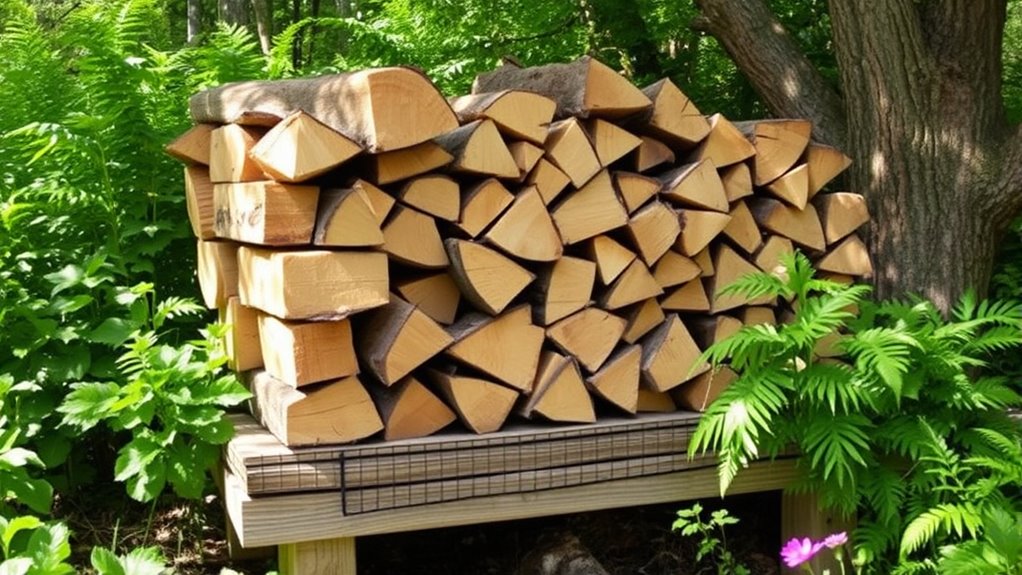
Choosing the right storage container options is essential for both pest control and wildlife safety. Opt for metal containers or racks designed specifically for firewood storage. These options are durable, pest-resistant, and allow for proper air circulation, which keeps the wood dry and less appealing to pests and fungi. Avoid using plastic or cardboard containers, as they can trap moisture, encouraging pest infestations and mold. If you prefer a more natural look, a wooden rack with a roof provides excellent ventilation while keeping your firewood elevated and protected from rain and snow. Whichever option you choose, ensure it is placed in a location that’s away from animal pathways, and keep the area tidy to discourage wildlife from nesting nearby. Proper storage not only protects your home but also supports wildlife safety and promotes responsible outdoor practices.
Frequently Asked Questions
How Can Firewood Storage Attract Local Wildlife?
Storing firewood can attract local wildlife by providing easy access to natural food sources like insects and larvae that live in the wood. Additionally, if you stack it improperly or leave gaps, it creates nesting opportunities for small animals and insects. To minimize attraction, keep firewood away from your home, elevate it off the ground, and avoid stacking it directly against structures, reducing the chances of wildlife intrusion.
Are There Specific Materials That Deter Pests From Firewood Piles?
Using pest-resistant materials like metal or plastic bins can help keep pests away from your firewood pile. You should also create natural deterrent barriers, such as gravel or concrete pads, to prevent pests from burrowing underneath. Elevating your firewood on a raised platform allows better airflow and reduces moisture, discouraging pests. Combining these strategies guarantees your firewood stays pest-free and safe for your home.
What Signs Indicate Wildlife Has Taken Shelter in Stored Firewood?
You might notice signs of animal nests or see twigs and leaves tucked into your firewood pile, which are clear indicators wildlife has taken shelter. Unusual sounds, like scratching or scurrying, could also reveal critters hiding inside. Sometimes, you only discover their presence when you move the logs or hear activity nearby. Keep an eye out for these signs to make certain of safe and wildlife-friendly firewood storage.
How Often Should Firewood Be Inspected for Animal Intrusion?
You should inspect your firewood at least once a week to catch wildlife indicators early. Regular inspections help you spot signs like droppings, unusual noises, or disturbed wood, which suggest animals might be hiding inside. By maintaining a consistent inspection frequency, you reduce the risk of wildlife getting trapped or nesting in your stored wood, ensuring both your safety and the animals’ well-being.
Can Firewood Storage Areas Impact Nearby Wildlife Habitats?
You should be aware that firewood storage areas can indeed impact nearby wildlife habitats. If you neglect proper storage, it might lead to firewood contamination with pests or invasive species, which can disturb natural habitats. To avoid causing habitat disturbance, keep your firewood off the ground and away from sensitive areas. This way, you protect local wildlife and prevent unintended consequences, proving that a little caution goes a long way.
Conclusion
By following wildlife-safe firewood storage practices, you help protect local animals and their habitats. Did you know that leaving wood piles accessible can attract up to 30 different species of wildlife? Keeping your firewood off the ground, away from tree trunks, and covered not only prevents wildlife from nesting in your woodpile but also supports a healthier ecosystem. Take these simple steps, and you’ll enjoy your fire safely while safeguarding the creatures that share your environment.