To handle bark and debris efficiently, start by using a rake to gently gather loose bark, leaves, and debris around your trees and beds, avoiding soil or root damage. Use a leaf blower for quick cleanup of large areas, and employ a garden fork or hand trowel for stubborn spots. Regularly remove debris from mulch and properly dispose of organic waste through composting or yard services. Continuing will guide you through maintaining a tidy, pest-free landscape.
Key Takeaways
- Use a rake and leaf blower for efficient, gentle removal of bark and debris without damaging soil or roots.
- Regularly inspect and maintain mulch layers, removing debris and adding fresh mulch to promote healthy growth.
- Collect and compost small organic debris to reduce clutter and enrich soil naturally.
- Discard diseased or decomposed bark and branches promptly to prevent pest attraction and disease spread.
- Keep the yard tidy by promptly removing organic matter, minimizing pest habitats and maintaining a clean landscape.
Cleaning bark and debris from your outdoor spaces is essential for maintaining healthy trees and a tidy landscape. When you keep your yard free of fallen leaves, twigs, and old bark, you help prevent pests and disease, ensuring your trees stay vigorous. Mulch maintenance becomes much easier when you routinely clear debris, allowing you to maintain an even, healthy layer of mulch that insulates roots and conserves moisture. Regular yard cleanup not only improves aesthetics but also promotes plant health by reducing the chances of fungal growth and rot. Consistent practice and attention to detail can significantly enhance your landscape’s resilience and beauty.
Regular yard cleanup keeps your landscape healthy, tidy, and pest-free by preventing fungal growth and rot.
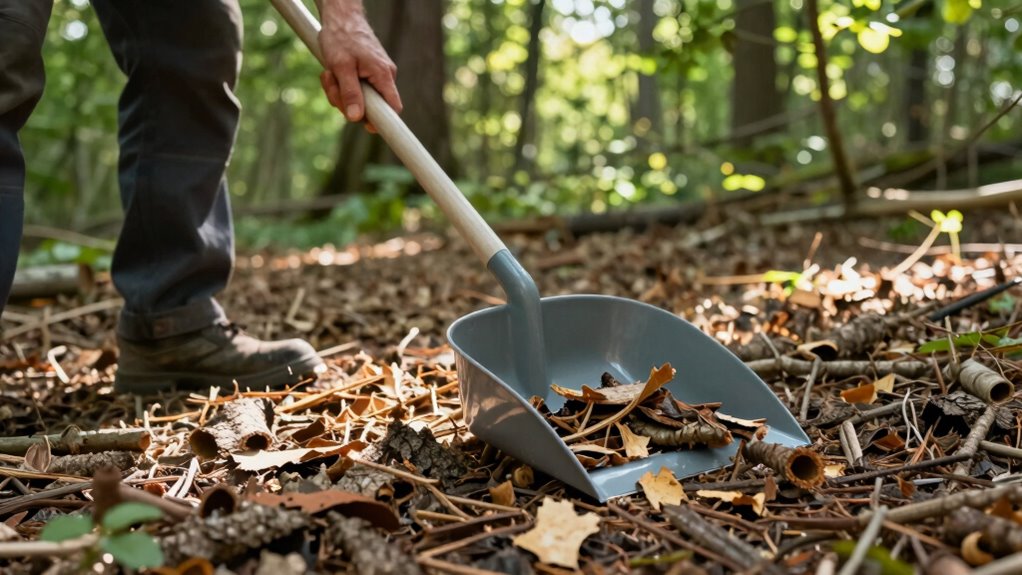
To start, gather the right tools — a rake, leaf blower, or garden fork can make the job quicker and less strenuous. Raking is effective for gathering loose bark, leaves, and small debris from around your trees and garden beds. When you rake, aim to lift debris gently so you don’t damage the underlying soil or roots. Using a leaf blower can speed up the process for larger areas, allowing you to clear debris without much effort. For stubborn bark or larger pieces, a garden fork or hand trowel helps lift and remove debris carefully, ensuring you don’t disturb the soil or mulch layer beneath.
Once you’ve cleared the surface, focus on mulch maintenance. Over time, mulch can break down or be displaced by wind, rain, or foot traffic. Regularly inspecting your mulch layer allows you to add fresh mulch where needed and remove any debris that might have fallen in. This keeps the mulch effective at regulating temperature and moisture for your plants while preventing pest harboring. Removing debris from mulch also prevents it from compacting too much, which can lead to poor aeration for roots. Additionally, understanding the role of visual and auditory cues in identifying areas needing attention can make your cleanup more effective.
Yard cleanup doesn’t stop at just removing debris; it involves tidying the overall landscape to create a neat, healthy environment. Dispose of the debris properly — compost small branches and leaves or put them out for yard waste collection. Avoid leaving debris in your yard, as decomposing organic matter attracts pests and can spread diseases. If you notice any diseased bark or fallen branches, remove them promptly to prevent issues from spreading to healthy parts of your landscape.
Frequently Asked Questions
Can I Reuse Cleaned Bark for Mulching?
Yes, you can reuse cleaned bark for mulching. After bark composting and removing debris, the recycled bark makes excellent mulch, helping retain soil moisture and suppress weeds. Just make certain the bark is free of pests and disease before applying it again. Mulch recycling like this not only promotes sustainability but also gives your garden a fresh, natural look while protecting your plants.
What Tools Are Best for Removing Stubborn Debris?
Like a seasoned carpenter wielding a chisel, you should choose the right tools for stubborn debris. Manual tools such as a sturdy rake or a sturdy pry bar work well for lighter, embedded debris. For tougher tasks, power equipment like leaf blowers, power rakes, or even mini excavators can efficiently clear stubborn debris. Always wear safety gear, and select tools based on the debris’s size and location to make certain of effective cleanup.
How Often Should I Clean Bark in My Landscape?
You should clean your bark landscape regularly, ideally every 6 to 8 weeks, to maintain best bark maintenance. This frequency helps prevent debris buildup, which can trap moisture and promote pests. During each cleaning, remove fallen leaves, twigs, and other debris to keep the area tidy and healthy. Adjust the schedule if you experience heavy storms or seasonal changes, ensuring your bark stays clean and attractive year-round.
Is There Eco-Friendly Debris Removal Method?
Imagine your yard as a living canvas, and eco-friendly debris removal as its gentle brushstroke. You can opt for composting options that turn bark and debris into nutrient-rich soil, or choose alternative mulch materials like wood chips or straw that break down naturally. These methods reduce waste, nurture your garden, and keep your environment healthy, making cleanup both sustainable and satisfying, like a breath of fresh, eco-conscious air.
Will Cleaning Harm Beneficial Soil Organisms?
Cleaning your yard carefully won’t harm beneficial microbes or soil health. You should avoid harsh chemicals and excessive disturbance that can disrupt soil ecosystems. Instead, use eco-friendly debris removal methods like composting or mulching, which support beneficial microbes and maintain soil vitality. By being gentle and mindful, you protect the natural balance, ensuring your soil remains healthy and productive without damaging the beneficial organisms that sustain it.
Conclusion
Keeping your yard tidy is like tending a delicate garden—you must gently clear away bark and debris to let beauty flourish. By regularly sweeping and raking, you prevent buildup from becoming a stubborn mountain. Think of your efforts as watering a plant—you nurture your landscape, ensuring it stays vibrant and healthy. With consistent care, you’ll create a welcoming space that shines brighter than a polished gem, inviting nature’s best to thrive under your watchful eye.