
To build a breezy, dry firewood shed, choose a dry, elevated site with good drainage and airflow. Incorporate cross-ventilation with adjustable vents and design a sloped roof with overhangs to direct water away. Stack logs in a crisscross pattern with gaps for airflow, and keep stacks elevated on pallets or racks. Regularly check vents and maintain the structure to guarantee your firewood stays dry and well-ventilated. If you keep exploring, you’ll find more tips to optimize your shed’s design.
Key Takeaways
- Select a dry, elevated site with good drainage and airflow, avoiding shaded or low-lying areas prone to moisture.
- Incorporate cross-ventilation vents and a sloped roof with overhangs to facilitate moisture escape and water runoff.
- Stack logs in a crisscross pattern with gaps, keeping them away from shed walls to improve airflow and prevent dampness.
- Elevate firewood on pallets or racks to reduce ground contact and promote better air circulation underneath.
- Regularly inspect and clean vents and structural components to maintain optimal airflow and prevent moisture buildup.
A well-ventilated firewood shed is vital for keeping your logs dry and ready for use, especially during damp seasons. Proper shed ventilation plays a critical role in preventing moisture buildup, which can lead to mold, rot, and pests. When designing your shed, focus on how you’ll handle firewood stacking and airflow to maximize dryness and accessibility.
A well-ventilated shed keeps firewood dry, preventing mold, rot, and pests.
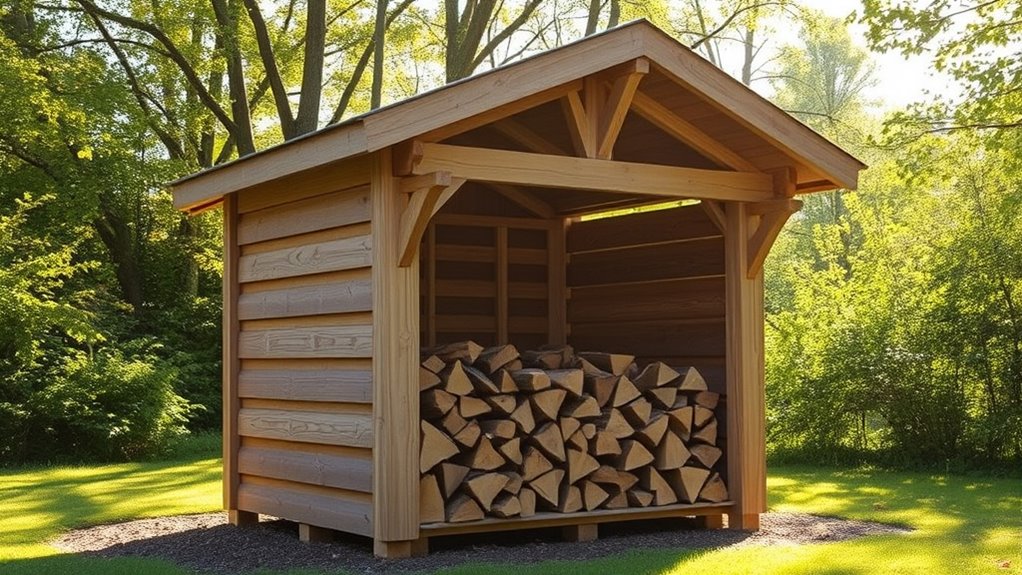
Start by choosing a location that’s naturally dry and elevated to reduce contact with ground moisture. When building your shed, include openings or vents on opposite sides to promote cross-ventilation. This airflow is the backbone of shed ventilation, continuously exchanging moist air for drier air and preventing condensation. Keep these vents unobstructed and consider installing adjustable louver vents so you can control airflow based on weather conditions.
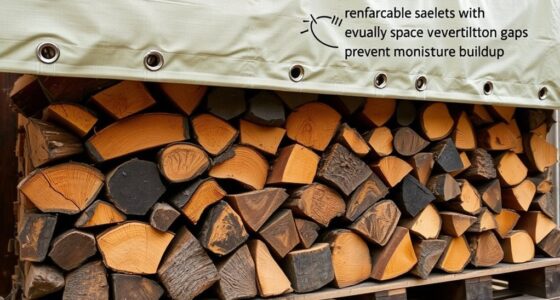
When stacking your firewood, pay attention to how you arrange the logs inside the shed. Stack the logs in a crisscross or “log cabin” style to improve airflow between each piece. Avoid stacking logs directly against the shed walls, as this can restrict air circulation and trap moisture. Instead, leave a gap between the firewood and the walls to allow air to circulate freely around each bundle. Elevate the stacks on pallets or firewood racks to further improve ventilation from below, preventing ground moisture from seeping into the logs.
The key to maintaining dry firewood is making certain that air can circulate around every piece, so you want to avoid tightly packed stacks. Leave a few inches between the logs and the shed’s walls, and don’t pile the firewood too high—air needs space to flow at all levels. As you build your stacks, rotate and reorganize the logs occasionally to prevent moisture from settling at the bottom or in the center of the pile.
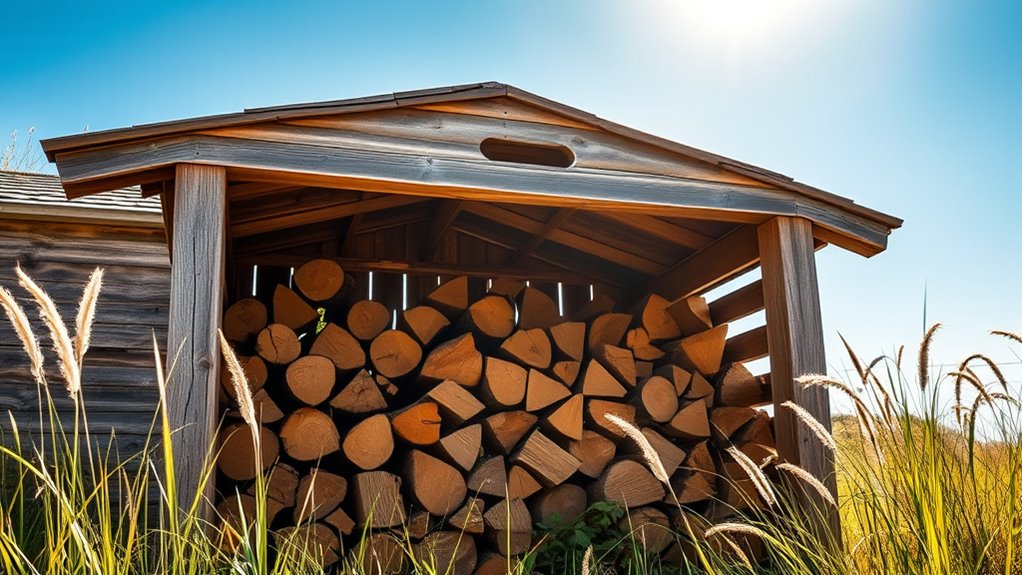
In addition to structural elements, consider installing a roof over the firewood storage area to shield logs from rain and snow. A sloped roof with overhangs directs water away from the stacks and enhances shed ventilation by allowing hot, moist air to escape more easily. Regularly check the vents and ensure there’s no blockage, especially after storms or heavy winds. Incorporating proper maintenance practices, like cleaning vents and inspecting seals, will help sustain optimal airflow and dryness over time.
Frequently Asked Questions
What Is the Ideal Wood Storage Temperature?
The ideal wood storage temperature is around 60°F to 70°F to maintain proper wood moisture and prevent mold. You should regulate the temperature by guaranteeing good airflow in your shed, which helps keep the wood dry and prevents excessive humidity. Avoid extreme heat or cold, as these can affect wood moisture levels. Proper temperature regulation ensures your firewood stays dry, easy to burn, and ready when you need it.
How Often Should I Inspect the Shed for Pests?
You should inspect your shed monthly to catch pests early. Imagine a homeowner who overlooked termite prevention and rodent control; a small infestation turned costly. Regular checks help you spot signs like termite mud tubes or rodent droppings. This proactive approach keeps pests at bay, protecting your firewood and shed structure. Consistent inspections guarantee your wood stays dry, pest-free, and ready for cozy nights by the fire.
Can I Build a Firewood Shed on Uneven Ground?
Yes, you can build a firewood shed on uneven ground. Start by ground leveling to create a stable base. Consider foundation options like concrete blocks, gravel beds, or pressure-treated skids to guarantee stability and proper drainage. These choices help prevent wood rot and pests. Make sure to elevate the shed enough to keep it dry and allow air circulation, which keeps your firewood dry and ready to burn.
What Materials Are Best for Insulation?
Think of your shed as a cozy cabin in winter. Using foam board or spray foam insulation types provides excellent thermal protection, keeping your firewood dry and ready. When it comes to insulation installation, guarantee tight, seamless application to prevent drafts. These materials, installed properly, act like a warm blanket, shielding your wood from moisture and cold, just as a cabin’s walls protect its inhabitants from the harsh elements.
How Do I Prevent Mold Growth in the Shed?
To prevent mold growth in your shed, focus on moisture control by ensuring proper ventilation and keeping the area dry. Use breathable materials for walls and floors, and avoid stacking wet or green wood inside. Regularly check for leaks or condensation, and clean the shed to remove any mold spores. Good airflow and moisture management are key to mold prevention, keeping your firewood dry and your shed mold-free.
Conclusion
With your shed standing tall like a trusty guardian, your firewood stays dry and ready to roar. Each carefully placed log becomes a promise of warmth on chilly nights, fueled by your effort and vision. As the breeze whispers through the open slats, it carries away moisture and doubt alike. Now, your backyard’s silent sentinel ensures crackling fires and cozy evenings — a proof to what you can build with care, patience, and a little craftsmanship.