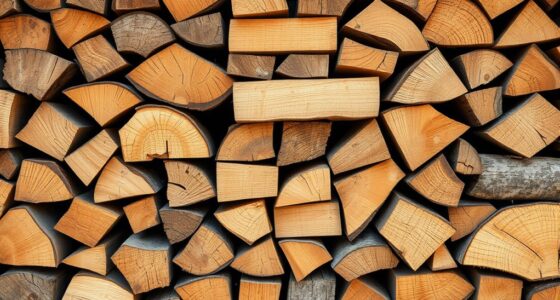
To cut your firewood to the right stove length, measure the interior firebox carefully, leaving about half an inch extra to prevent jamming and allow the door to close easily. Use a tape measure for accuracy and cut with a saw to ensure a clean, straight edge. Properly dried wood burns better and produces more heat, so check dryness first. Keep safety in mind during the process—if you want to know detailed steps, keep exploring further.
Key Takeaways
- Measure the firebox interior dimensions, leaving about half an inch for safe door closure and airflow.
- Use a tape measure to determine maximum length, considering the size of your firewood.
- Cut firewood to the measured length with a saw, ensuring clean, straight cuts for better drying and fit.
- Dry the firewood thoroughly before cutting to ensure efficient burning and reduce creosote buildup.
- Wear safety gear and stabilize the wood securely during cutting to prevent injuries and ensure accurate cuts.

Measuring stove lengths accurately is vital to guarantee a proper fit and safe installation. When preparing firewood for your stove, getting the right length ensures efficient burning, easier handling, and safer operation. If your firewood is too long, it won’t fit comfortably in the stove, forcing you to cram pieces in or force them, which can lead to damaging the unit or creating safety hazards. Conversely, overly short pieces may burn too quickly or produce less heat, reducing overall efficiency. Proper measurement helps you select the right length from the start, saving you time and effort down the line.
To measure correctly, start by considering the interior dimensions of your stove’s firebox. Use a tape measure to determine the maximum length your firewood can be without protruding or causing issues. Keep in mind that it’s wise to leave a small gap—about half an inch—so the wood doesn’t jam or make it difficult to close the door. This small buffer also prevents damage to the stove door seal and guarantees smooth operation. Once you know the maximum length, use a saw to cut your firewood accordingly, making sure the cuts are clean and straight. This precision improves firewood drying, allowing air to circulate better around each piece, which promotes faster and more even drying. Additionally, understanding AI in Education can help develop better tools for measuring and tracking firewood dimensions through smart technology.
While measuring, always prioritize safety precautions. Wear gloves and eye protection to avoid injury from splinters or sawdust. Make sure your workspace is clear of obstructions, and stabilize the wood securely before cutting. If you’re working with large logs, consider using a sturdy work surface or sawhorses to keep the wood steady. Properly dried firewood is vital because it burns more efficiently and produces less creosote buildup, which can be a fire hazard. Drying firewood thoroughly reduces moisture content, preventing dangerous chimney fires and ensuring you get the most heat from each load. When measuring for length, also check that the wood is adequately dried beforehand; cutting green or wet wood won’t improve its burning qualities and may introduce safety risks.
Frequently Asked Questions
What Tools Are Best for Measuring Stove Lengths Accurately?
You should use a combination of measuring tools like a tape measure or a ruler for accurate stove length measurements. A tape measure offers flexibility and precision, especially for longer pieces, while a ruler is useful for smaller, detailed measurements. To guarantee measurement accuracy, double-check your measurements and use a square or level if needed. This way, you get precise stove lengths every time, making your cutting process smoother and more reliable.
How Do I Account for Wood Expansion When Measuring?
Think of wood expansion like a sponge soaking up water—your wood will swell as humidity rises. To guarantee measurement accuracy, always measure when the wood is dry and at stable moisture levels. Leave a small gap to account for potential expansion, especially in humid conditions. This way, you’ll avoid short cuts or gaps in your stove setup, giving you a safer, more efficient burn.
Should I Measure for Length Before or After Cutting?
You should measure for length before cutting to guarantee measurement accuracy, as it allows you to mark precisely without the interference of saw blade kerf or wood movement. Using proper cutting techniques, like marking clearly and cutting steadily, helps maintain accuracy. Remember, measuring first gives you a clean reference point, reducing errors and ensuring your stove-length pieces fit perfectly. Always double-check your measurements before making any cuts.
How Do Different Stove Types Affect Measurement Requirements?
Like steering a maze, stove type variations can change your measurement path. Different stoves, such as wood, pellet, or gas, require measurement adjustments because their designs influence the ideal length. For example, pellet stoves often need slightly longer lengths for proper clearance, while wood stoves demand precise cuts for safety and efficiency. Always consider your stove’s specific requirements to guarantee accurate measurements and a perfect fit.
What Safety Precautions Should I Take During Measurement?
You should always wear safety gear like gloves and eye protection before measuring stove lengths to prevent injuries. Make certain your work area is clean, well-lit, and free from clutter to avoid accidents. Keep your tools sharp and in good condition, and handle them carefully. Be cautious around hot surfaces or sharp edges, and stay focused on your task. Taking these precautions keeps you safe and ensures accurate measurements.
Conclusion
Remember, measure twice, cut once. Getting your stove lengths right saves time, effort, and frustration in the long run. With careful measurement and attention to detail, you’ll guarantee a perfect fit every time. Don’t rush the process—precision now makes for a smoother project later. Keep this tip in mind, and you’ll be well on your way to a successful stove installation. After all, a job worth doing is worth doing right.