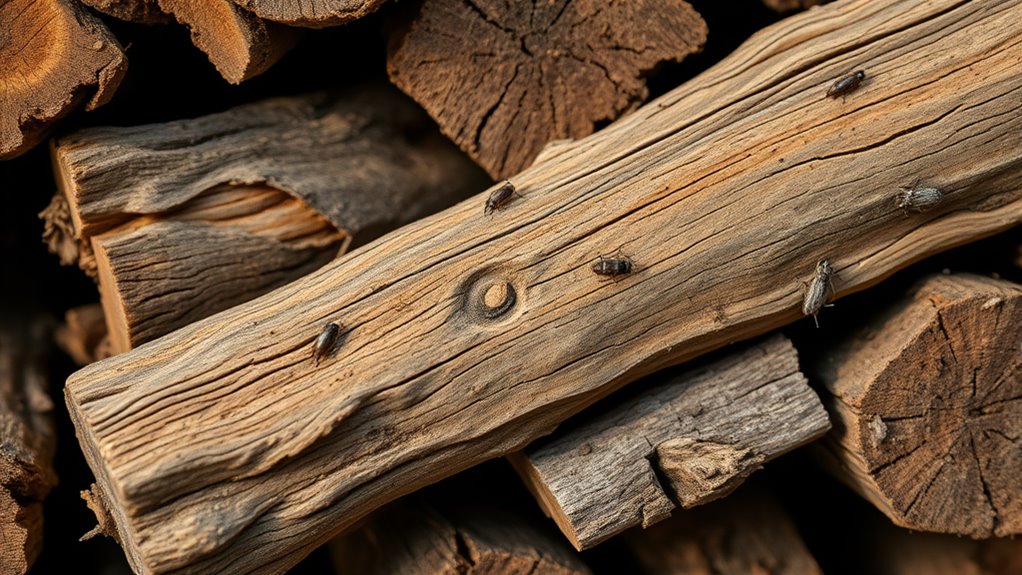
To deal with bugs in firewood, start by inspecting your wood regularly for signs like holes, frass, or live pests. Keep the wood dry and stored off the ground in a well-ventilated area, covering it to protect from moisture but allowing airflow. You can also kill pests by sun-drying or freezing the wood for several days. Proper prevention and treatment methods will help keep pests away—continue to explore ways to protect your firewood effectively.
Key Takeaways
- Inspect firewood regularly for signs of pests like holes, frass, or crawling insects before bringing it indoors.
- Keep firewood dry, stacked off the ground, and covered with ventilation to deter pest infestation.
- Treat firewood with heat (sun-drying or kiln) or freezing to eliminate insects and larvae.
- Use natural deterrents such as diatomaceous earth around the wood pile to prevent pests.
- Avoid storing infested wood indoors and replace heavily infested logs to prevent pest spread.
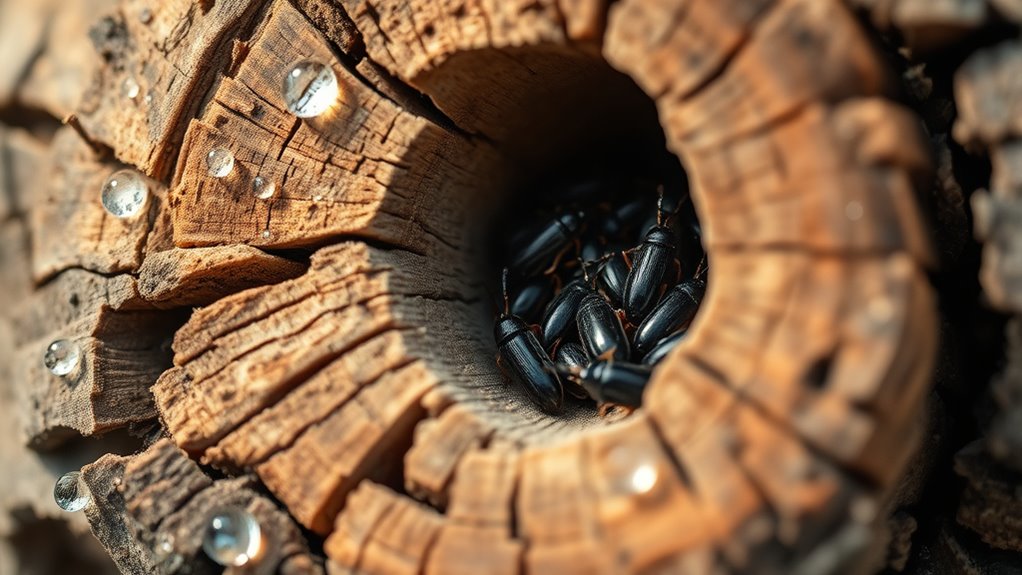
Once you’ve identified the pests, you can take specific steps to prevent further issues. Pest prevention techniques revolve around making the environment less inviting for these insects. Start by inspecting your firewood regularly, especially if you store it outdoors or in a garage. Check for signs of infestation, such as holes, frass (powdery or sawdust-like debris), or the presence of insects crawling on or around the wood. To reduce pest attraction, keep your firewood dry and stacked properly off the ground, allowing for good airflow. Cover the pile with a tarp or weather-resistant cover, but make certain there’s enough ventilation to prevent moisture buildup, which pests thrive on. Additionally, proper storage techniques can significantly reduce the likelihood of a bug infestation. If pests are already present, consider treating the firewood with heat, as high temperatures can kill most insects and their larvae. You can do this by placing the wood in a hot kiln or sun-drying it thoroughly. For smaller infestations, freezing firewood for several days can also eliminate pests, especially for indoor storage. In addition, using natural pest prevention techniques like diatomaceous earth around the wood pile can deter insects without harmful chemicals. If you find a severe infestation, it might be best to discard heavily infested logs and replace them with fresh, pest-free wood. Remember, avoiding the temptation to bring infested firewood indoors is vital, as this can introduce pests into your home.

Magnetic Firewood Measuring Tool,Magnetic Log Marker with Measured Marks
- Quickly Measure and Cut Wood: Adjustable telescopic firewood gauge
- Strong Magnetic Hold: 2.2-inch diameter magnet for secure attachment
- High Visibility Orange Color: Bright color for outdoor visibility
As an affiliate, we earn on qualifying purchases.
As an affiliate, we earn on qualifying purchases.
Frequently Asked Questions
Can Bugs in Firewood Cause Health Issues Indoors?
Bugs in firewood can affect your indoor air quality and potentially cause health issues. When you bring infested firewood inside, pests like insects or rodents can multiply, releasing allergens and spreading bacteria. To protect yourself, use pest control techniques such as proper storage and seasoning of firewood outside. Regularly inspect your firewood, ventilate your home, and consider treatments if pests are present to minimize health risks.
How Often Should I Inspect Stored Firewood for Pests?
You should inspect your stored firewood at least once a month—otherwise, pest problems can spread faster than wildfire. Conduct a seasonal inspection, especially before winter, to spot signs of bugs early. Use pest prevention strategies like keeping firewood off the ground and away from your home’s foundation. Regular checks help prevent infestations, ensuring your firewood stays pest-free and safe for indoor use.
Are There Eco-Friendly Methods to Eliminate Bugs in Firewood?
Yes, you can use eco-friendly methods to eliminate bugs in firewood. Try natural repellents like cedar chips or neem oil, which deter pests without harmful chemicals. Implement pest prevention techniques such as storing firewood off the ground and away from your home to reduce infestation chances. Regularly inspect your firewood and use these eco-conscious solutions to keep bugs at bay while protecting the environment.
Do Certain Types of Firewood Attract More Bugs Than Others?
Imagine a magnet pulling bugs toward certain wood types—some firewood naturally attracts more pests than others. Softwoods like pine and cedar often lure bugs because of their resin and scent, acting like inviting beacons. Hardwoods such as oak and maple tend to repel pests with their dense structure. So, choosing the right wood type can be your best line of defense against bug attraction, keeping your firewood bug-free.
How Long Can Bugs Survive Inside Firewood Before It’s Safe?
Bugs can survive inside firewood for several weeks or even months if it’s kept damp and unseasoned. To guarantee it’s safe, you should thoroughly dry your firewood through proper firewood drying methods, ideally for at least 6-12 months. Use pest prevention methods like stacking wood off the ground and away from your home. Proper drying and pest prevention help eliminate bugs and prevent infestations, making your firewood safer to burn.
Conclusion
Now that you know how to handle bugs in firewood, you’ll be better prepared to keep your fires clean and bug-free. Did you know that an estimated 30% of firewood shipments carry insects? By following simple steps like drying, inspecting, and storing properly, you can prevent infestations and enjoy warm, bug-free evenings. Stay vigilant, and your firewood will serve you well without unwanted surprises. Happy burning!