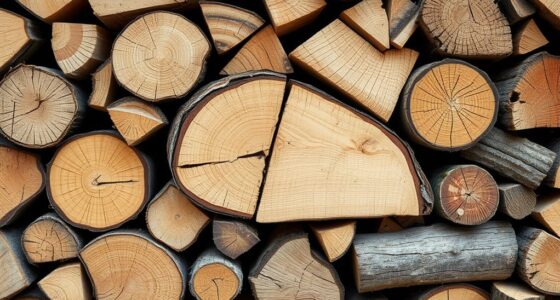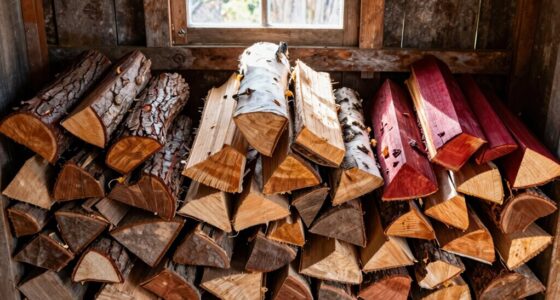
When firewood is frozen, avoid smashing or forcing it into your fireplace, as this can cause cracking. Instead, let it thaw gradually by moving it indoors or near heat sources like a stove or fireplace, but don’t place logs directly on the heat. Once thawed, split the logs and dry them until moisture content drops below 20% for efficient burning. Proper storage and handling prevent freezing in the first place—keep exploring for detailed tips.

Get business pricing on tools and workshop supplies
- Business-only prices and quantity discounts
- Tax-exempt purchasing
- Multiple users, one account, clear invoices
Key Takeaways
- Store firewood in a dry, ventilated area to prevent moisture absorption and freezing.
- Thaw frozen logs gradually indoors or near heat sources, avoiding direct heat or pounding.
- Split logs into smaller pieces after thawing to accelerate drying and reduce moisture content.
- Use a moisture meter to ensure firewood’s moisture level is below 20% before burning.
- Properly cover and elevate firewood to minimize contact with damp ground and prevent freezing.
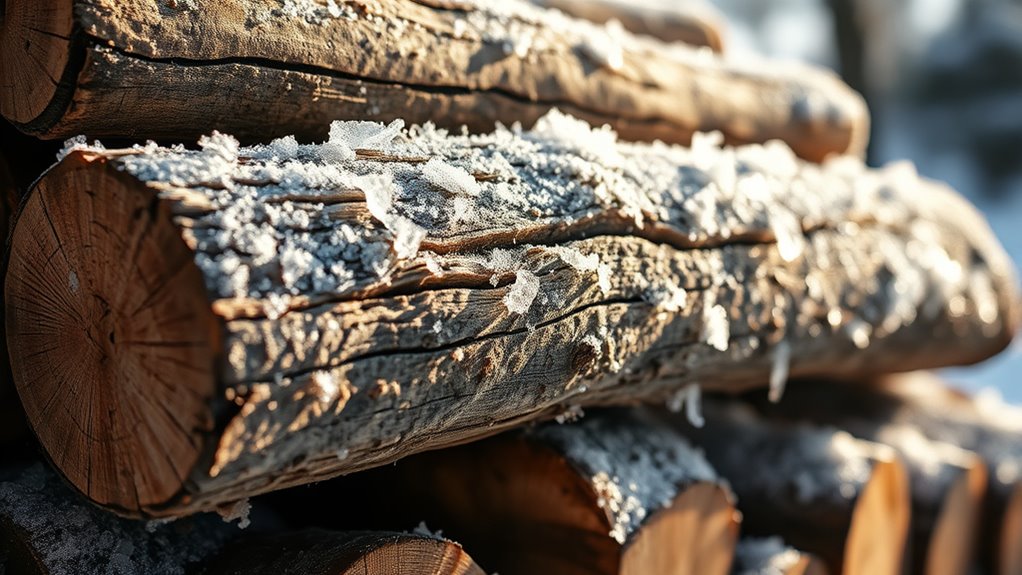
When firewood becomes frozen, it can be challenging to use effectively, especially during cold months. Frozen firewood is often damp and heavy, making it difficult to ignite and burn efficiently. Before you try to use it, you need to address the moisture and figure out the best way to thaw and dry it. Proper moisture control is essential because wet or frozen wood produces more smoke, less heat, and creates creosote buildup in your chimney. If you ignore these issues, you’ll find yourself struggling to get a good fire going or wasting resources trying to dry out the wood later.
Frozen firewood is damp, heavy, and hard to burn efficiently—proper drying prevents smoke and creosote buildup.
The key to managing frozen firewood starts with effective storage tips. If possible, store your firewood in a dry, well-ventilated area that’s protected from the elements. Cover the logs with a tarp or a weatherproof cover, but leave the sides open enough to allow air circulation. This helps prevent moisture from accumulating and freezing the wood solidly. Elevate your firewood off the ground on a pallet or racks to avoid contact with damp soil, which can increase moisture absorption. When stored correctly, your firewood will stay drier and less prone to freezing into unusable clumps.
When you need to use frozen firewood, avoid smashing it with a hammer or trying to force it into the fire in a frozen state. Instead, give the logs time to thaw gradually. You can speed up the process by moving them indoors or into a warmer, covered area, like a garage or shed. If you’re in a hurry, stacking the frozen logs near a heat source, such as near a stove or fireplace opening (but not directly on it), can help melt off the ice. Be careful not to expose the wood to direct heat that could cause cracking or splitting. Additionally, understanding how sound vibrations influence cellular processes in materials can help in choosing safer methods to thaw your firewood without damaging it.
Once thawed, ensure you dry the wood further before burning. If the firewood is still damp, split the logs into smaller pieces to expose more surface area and facilitate drying. Using a moisture meter can help you determine if the wood is dry enough, ideally below 20% moisture content. Remember, storing your firewood properly from the start minimizes the chances of it freezing solid and helps maintain ideal moisture levels for burning.
As an affiliate, we earn on qualifying purchases.
Frequently Asked Questions
How Can I Prevent Firewood From Freezing in the First Place?
To prevent firewood from freezing, you should focus on proper firewood storage and winter insulation. Store your firewood in a dry, covered area off the ground, using a shed or firewood rack with a roof. Wrap the wood with tarps or use insulated firewood covers to shield it from moisture and cold. Ventilation helps, too, so air circulates and prevents frost buildup. This keeps your firewood dry and ready to burn.
Is Frozen Firewood Safe to Burn Without Thawing?
Frozen firewood is safe to burn without thawing, but it’s best to dry it first. In firewood storage during winter weather, moisture can cause inefficient burning and excess smoke, so you should split and dry the wood if possible. If you’re in a hurry, you can burn it directly, but expect more smoke and lower heat output. Always check for excessive moisture before burning to guarantee safe and efficient fires.
What Tools Are Best for Breaking Apart Frozen Firewood?
To break apart frozen firewood, you’ll need sturdy tools like a splitting maul or wedges, along with a heavy hammer or mallet. Make sure your chainsaw is well-maintained for safer cuts if you choose to use it. Proper firewood storage prevents excessive freezing, making it easier to split. Always wear safety gear and work on a stable surface to avoid injuries when dealing with frozen wood.
Does Freezing Firewood Impact Its Burning Efficiency?
Freezing firewood doesn’t necessarily hurt its burning efficiency; it’s the firewood moisture that matters most. When your firewood’s moisture content is high, it smokes, smolders, and produces less heat. Freezing can temporarily increase moisture, but once thawed, proper drying restores its burning performance. You feel the warmth, see the flames, and smell the crackling fire—these moments rely on well-seasoned, dry firewood, whether frozen or not.
How Long Does It Take for Firewood to Thaw Naturally?
It typically takes 24 to 48 hours for firewood to thaw naturally, depending on the size and outdoor temperature. To speed up the process, use proper storage tips like keeping firewood off the ground and covered to prevent moisture buildup. Moisture control is essential because wet or frozen wood burns poorly and produces more smoke. Ensuring your firewood is well-stored helps it dry faster and increases burning efficiency once thawed.
Conclusion
Now that you know how to handle frozen firewood, you’re better prepared for winter’s chill. Keep in mind, patience is key—sometimes you have to wait for the firewood to thaw, just like waiting for the storm to pass. By taking these simple steps, you’ll ensure your fire burns bright and warm, even in the coldest weather. With a little effort, you’ll turn a frozen challenge into a cozy comfort, making winter a little easier to bear.
Halloween Picks
halloween
As an affiliate, we earn on qualifying purchases.