Firewood rotation systems often fail because logs are improperly stacked, trapping moisture and preventing proper drying. Placing wood on uneven surfaces or in shaded areas can lead to mold and decay, while poor ventilation worsens moisture buildup. To fix this, elevate your wood on pallets, choose sunny breezy spots, and regularly inspect for mold or rot. By following these steps, you’ll improve airflow and drying, ensuring better burns—keep going to discover even more effective tips.

Get business pricing on tools and workshop supplies
- Business-only prices and quantity discounts
- Tax-exempt purchasing
- Multiple users, one account, clear invoices
Key Takeaways
- Inadequate stacking traps moisture, preventing proper drying and leading to mold or decay.
- Poor ventilation or shaded storage areas hinder airflow, causing uneven moisture reduction.
- Placing logs directly on the ground increases moisture absorption and promotes rot.
- Failing to regularly inspect and remove moldy or rotten wood disrupts effective rotation.
- Lack of elevation and airflow management reduces drying efficiency, leading to damp, inefficient firewood.
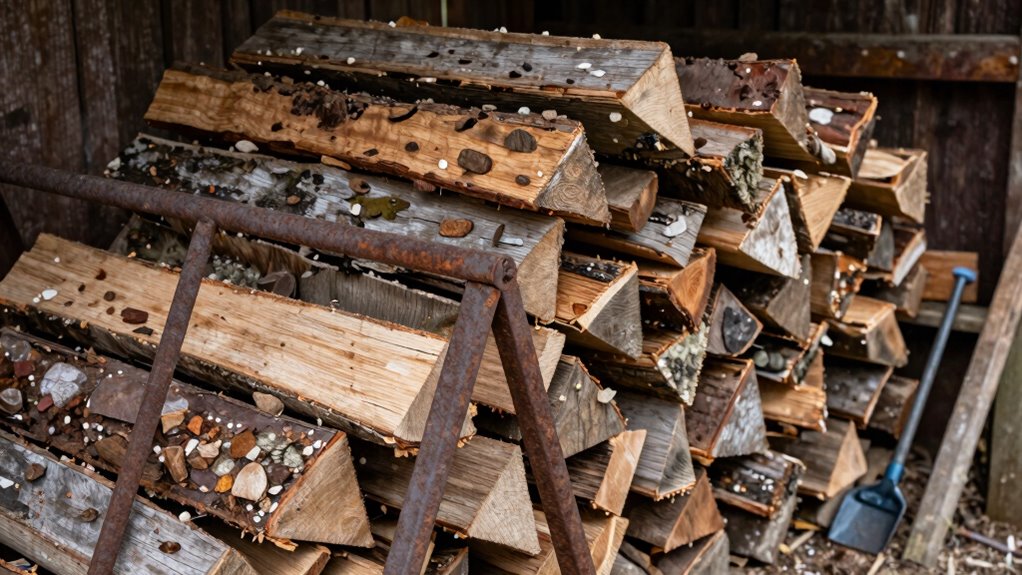
A well-organized firewood rotation system guarantees that your wood dries properly and burns efficiently. When you set up a system that accounts for seasonal storage, you give your firewood the best chance to reach ideal moisture levels before use. If you neglect this, you risk storing wood that’s too wet, which leads to poor burning, excess smoke, and creosote buildup in your chimney. Proper seasonal storage isn’t just about putting wood in a shed; it’s about creating a space that promotes consistent airflow and protection from the elements, so moisture is controlled naturally over time. If your storage area lacks adequate ventilation, your wood may not dry evenly, reducing its burn quality. Without this, your firewood can stay damp for longer, making it harder to ignite and less efficient once you finally burn it.
Proper seasonal storage ensures firewood dries evenly, burns efficiently, and reduces smoke and creosote buildup in your chimney.
One common reason firewood rotation systems fail is because moisture control isn’t prioritized. When you stack your wood improperly or choose the wrong location, you trap moisture and prevent the wood from drying evenly. For example, stacking logs directly on the ground or in a shaded, poorly ventilated area can lead to mold and decay, which severely compromises the quality of your firewood. To fix this, guarantee your woodpile is elevated on pallets or a rack, allowing air to circulate around each piece. Position your storage in a sunny, breezy spot to maximize drying, especially during the warmer months. Regularly inspecting your stored wood and removing any that shows signs of mold or rot also helps maintain a healthy rotation system. Ensuring your storage location is suitable for seasonal storage is crucial for effective moisture management. Incorporating proper ventilation into your storage setup can significantly improve drying times and overall wood quality. Additionally, choosing a location with good airflow helps prevent moisture buildup and keeps your firewood in optimal condition. Remember that consistent monitoring and adjusting your setup are key to maintaining effective moisture control over time.
As an affiliate, we earn on qualifying purchases.
Frequently Asked Questions
How Often Should I Rotate My Firewood?
You should rotate your firewood every few months to guarantee proper seasonal drying and moisture control. Stacking fresh wood on top of older, seasoned logs allows the moisture to evaporate evenly, reducing mold and pests. Check the moisture content regularly—ideally below 20%. By staying consistent with rotation, you’ll keep your firewood dry, burn more efficiently, and prevent common issues caused by improper storage and moisture buildup.
What Types of Wood Are Best for Rotation?
The best wood for rotation includes hardwoods like oak, maple, and hickory, because they season well and have lower moisture content. Always choose wood that’s properly seasoned, meaning it’s been dried for at least 6-12 months, with moisture content below 20%. This guarantees efficient burning, less creosote buildup, and easier ignition. Rotating seasoned hardwoods helps maintain a steady supply of high-quality firewood, reducing problems caused by damp or unseasoned wood.
Can Over-Rotation Damage My Firewood Storage?
Over-rotation can damage your firewood storage by causing uneven drying and unnecessary handling, which impacts storage efficiency. If you rotate your wood too frequently, you might disturb the natural drying process, leading to mold or rot. To avoid this, maintain proper rotational timing—usually every few months—and verify your storage is well-ventilated. This way, you keep your firewood dry, safe, and ready to burn efficiently.
How Do I Track Firewood Age Effectively?
Ever wonder how to track firewood age effectively? Start by using moisture measurement tools to monitor dryness, guaranteeing your wood is ready for burning. Keep a detailed log or label stacked wood by age, and adopt proper stacking techniques to promote even drying. Do you regularly check the moisture levels? These steps help you maintain a steady rotation, prevent over-accumulation, and ensure your firewood stays ideal for burning.
What Signs Indicate My Rotation System Is Failing?
If your rotation system is failing, you’ll notice decreased storage efficiency and moisture issues. Firewood may stay damp longer, rotting or developing mold, indicating poor moisture control. You might also see uneven aging or wood that’s harder to burn, showing your system isn’t allowing proper airflow or timely usage. These signs suggest it’s time to reassess your rotation process to improve storage and keep your firewood dry and ready.
Conclusion
If your firewood rotation system feels more like a tangled mess than a smooth cycle, remember that clear organization and regular checks can turn the chaos into a well-oiled process. Visualize your stacks as a steady river, flowing smoothly with each piece moving forward seamlessly. When you fix your system, you create a warm, crackling fire that keeps your home cozy all winter. With a little effort, your firewood will always be ready, just like a well-tended garden in full bloom.
Fall yard work Picks
leaf blowers
As an affiliate, we earn on qualifying purchases.