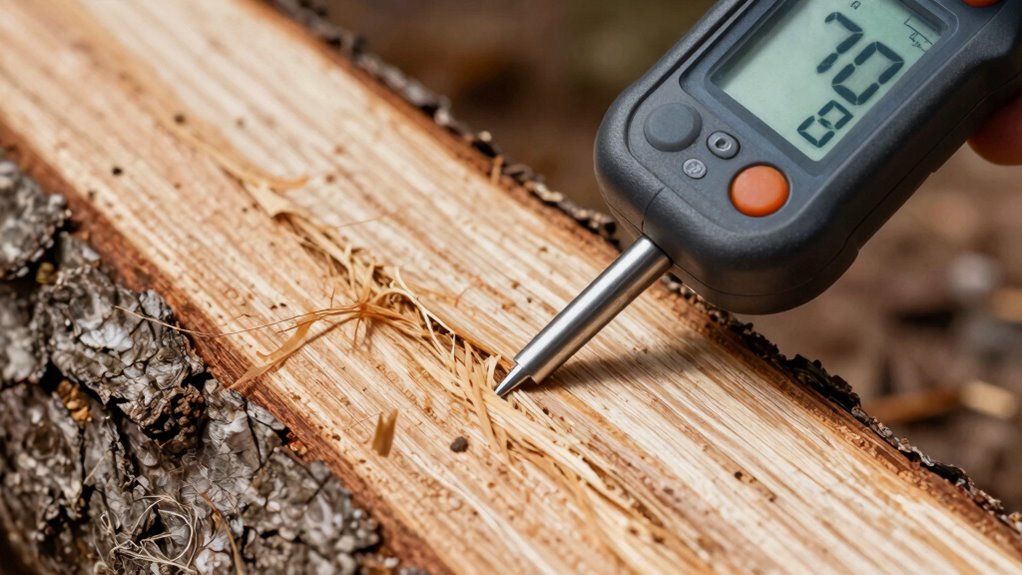

When choosing a moisture meter for serious firewood work, accuracy means reliably measuring moisture levels within a few percentage points, so you can confidently judge if the wood is properly seasoned. High-quality devices use advanced pin or pinless technology to deliver consistent and precise results across different wood types. This guarantees safer, cleaner, and more efficient burns, reducing creosote buildup and wasted fuel. Keep exploring to discover how to select the best meter for your needs.

Get business pricing on tools and workshop supplies
- Business-only prices and quantity discounts
- Tax-exempt purchasing
- Multiple users, one account, clear invoices
Key Takeaways
- Accurate moisture meters provide consistent readings within a few percentage points, ensuring reliable firewood assessments.
- Professional-grade pin and pinless meters minimize measurement errors across different wood types and conditions.
- Small inaccuracies can lead to inefficient burning, safety hazards, and increased creosote buildup.
- Industry standards and calibration ensure moisture readings truly reflect internal wood moisture levels.
- Precise measurements below 20% moisture indicate properly seasoned wood for cleaner, safer fires.
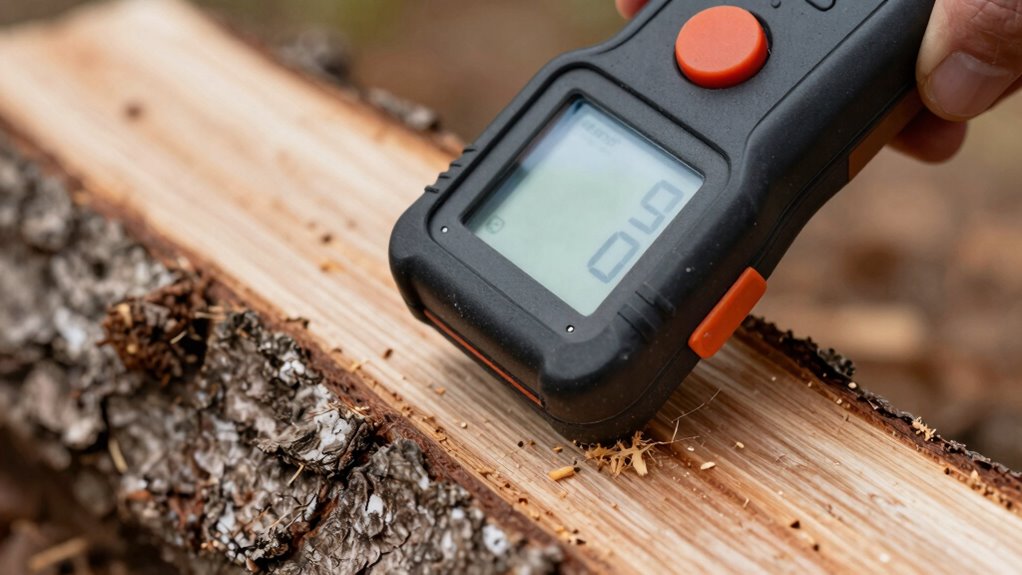
When it comes to burning firewood efficiently and safely, measuring its moisture content is essential. Knowing the moisture levels in your firewood helps you determine if it’s properly seasoned, which is crucial for optimal combustion. Proper wood seasoning involves reducing the moisture content to a level that burns cleanly and produces maximum heat. If the moisture levels are too high, your fire will produce excess smoke, creosote buildup, and less heat. A moisture meter provides a quick and accurate way to assess whether your firewood is ready to burn or needs more time to dry.
Measuring firewood moisture ensures safe, efficient burning and optimal heat with less smoke and creosote buildup.
High-quality moisture meters deliver precise readings, often within a few percentage points, giving you confidence in your wood’s readiness. The accuracy of these tools ensures you’re not guesswork-burning, which can lead to inefficient fires and safety hazards. When moisture levels are too high, you risk creating dangerous creosote deposits in your chimney, increasing the risk of fire. Conversely, overly dry wood is less common but can be more brittle and difficult to handle. By using a moisture meter, you get a clear picture of whether your wood has been properly seasoned or if it still contains too much water.
Understanding what accuracy really means in moisture meters is key. A reliable meter should provide consistent readings across different wood types and conditions. If your meter’s accuracy is off, you might think your wood is ready when it’s not, or vice versa. This can lead to poor combustion, wasted fuel, and increased pollution. Serious firewood work demands high precision because even a small misreading can affect your fire’s performance and safety. Many professional-grade moisture meters use pin or pinless technology. Pin meters penetrate the wood to measure moisture directly, while pinless meters scan the surface without damaging the wood, but both need to be accurate to give you trustworthy results.
Additionally, choosing a moisture meter with advanced technology can help ensure measurements are reliable regardless of the wood’s surface or internal moisture variations. It is also important to consider the type of wood you are working with, as different species have different moisture retention characteristics. Using a moisture meter with standardized accuracy can help you compare readings more confidently and ensure consistency in your results. Ensuring that your moisture meter adheres to industry standards can further improve the reliability of your measurements. In the end, the true value of a moisture meter lies in its ability to provide dependable, accurate readings. This precision allows you to make informed decisions during the wood seasoning process and ensures your fire burns safely and efficiently. When you know your moisture levels are within the ideal range—typically 20% or below—you can enjoy a cleaner burn, less smoke, and more heat. Investing in a good moisture meter is a smart step for anyone serious about firewood work, giving you peace of mind and better control over your firewood’s moisture content. For better results, understanding the accuracy standards of your moisture meter can help you select the best tool for your needs.
professional moisture meter for firewood
As an affiliate, we earn on qualifying purchases.
As an affiliate, we earn on qualifying purchases.
Frequently Asked Questions
How Often Should I Check Firewood Moisture Levels During Seasoning?
You should check firewood moisture levels weekly during seasoning to guarantee it reaches the ideal moisture range, typically between 15-20%. Regular checks help you track seasoning timing and prevent over-drying or under-drying. As the wood approaches the desired moisture content, check more frequently to confirm it stays within the perfect range. Consistent monitoring ensures your firewood is ready for efficient, safe burning.
Are Digital Moisture Meters More Reliable Than Analog Ones?
Did you know digital moisture meters are about 95% accurate when properly calibrated? They tend to be more reliable than analog models because they meet strict calibration standards and often have better consistency. Plus, digital meters typically feature longer battery life, ensuring consistent performance over time. With their precise readings and ease of use, digital meters are a smarter choice for serious firewood work, helping you determine moisture levels accurately every time.
Can Moisture Meters Measure Moisture in Wood Cores or Only Surface?
Moisture meters primarily measure surface readings, but some advanced models can perform core measurement. If you want accurate moisture content deeper inside the wood, look for meters with pin probes or that specify core measurement capabilities. Keep in mind, surface readings give a quick estimate, but for serious firewood work, core measurement provides a more accurate assessment of the wood’s true moisture level.
Do Different Wood Species Require Different Moisture Measurement Techniques?
Think of each wood species as a unique melody; your moisture meter acts as the tuning fork. You’ll need species-specific calibration and awareness of wood density considerations to get accurate readings. Different woods, like softwood and hardwood, require tailored techniques because their internal structures influence moisture flow. By adjusting your approach for each species, you guarantee your firewood’s moisture level is just right, making your work precise and effective.
How Does Temperature Affect Moisture Meter Accuracy?
Temperature can markedly affect your moisture meter’s accuracy. When the environment varies from calibration standards, readings might be off. To counter this, use meters with built-in temperature compensation, ensuring consistent results regardless of temperature fluctuations. Regularly calibrate your device to maintain precision, especially when working in different conditions. This way, you get reliable moisture readings, helping you determine the best time to burn your firewood.
Conclusion
So, next time you’re wielding your moisture meter like a lumberjack’s sword, remember: accuracy isn’t just a fancy feature—it’s your secret weapon against smoky, inefficient fires. Think of it as a tiny, mischievous elf that keeps your firewood perfectly dry, or a tiny detective sniffing out dampness. Ignore its warnings, and you might just end up with a soggy mess—less “firewood expert” and more “firefighting novice.” Stay sharp, stay dry!
Fall Picks
fall essentials
As an affiliate, we earn on qualifying purchases.