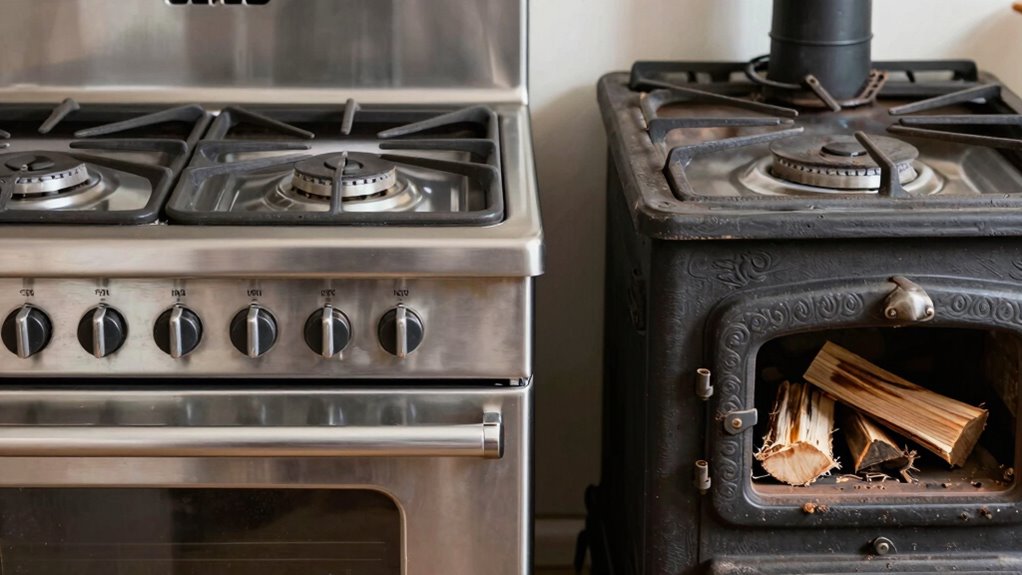
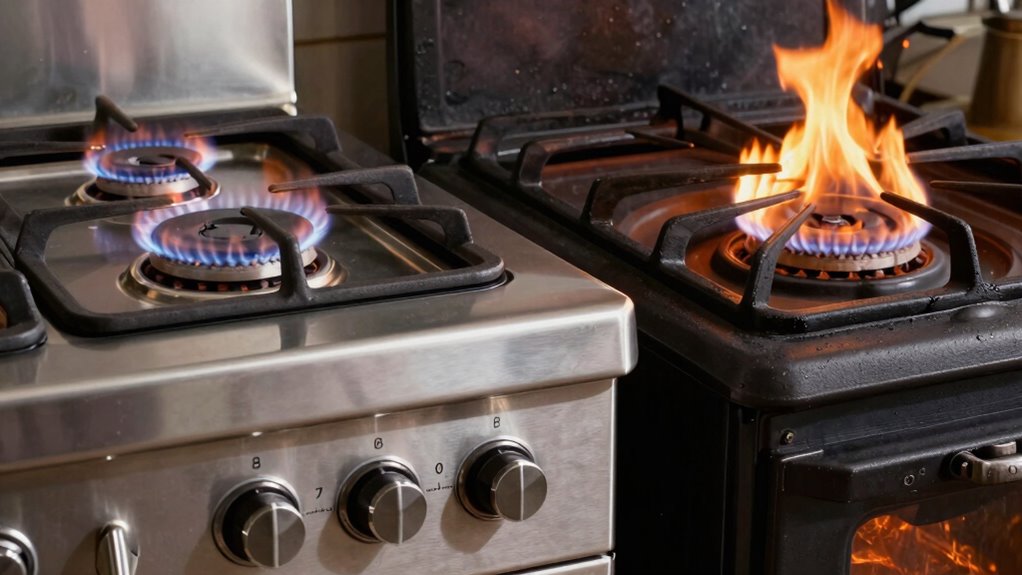
Some stoves love small splits because they burn quickly and produce less creosote, making them more efficient and easier to control. Others dislike them because small splits can ignite too fast or burn out quickly, reducing overall heat output and causing inefficient operation. The stove’s design, airflow, and fuel management influence its preference. To optimize your stove’s performance, understanding how small splits behave can really make a difference—stick around to discover more tips.
Key Takeaways
- Some stoves perform better with small splits due to improved airflow and quicker ignition.
- Stoves that require efficient combustion benefit from small splits to reduce creosote buildup.
- Stoves that struggle with airflow or have poor draft may dislike small splits, causing incomplete burning.
- Properly seasoned small splits produce less smoke, making them preferred by stoves focused on cleaner burning.
- Stoves sensitive to moisture content prefer small splits that are properly dried to avoid inefficiency and safety issues.
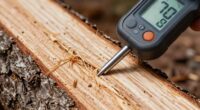
When it comes to heating your home efficiently, stoves and small splits are a versatile and practical choice. They offer flexibility, quick heating, and a cozy atmosphere, but their effectiveness depends on several factors. One key element is the wood you choose. Wood moisture plays an essential role in how well your stove performs. If your small splits are too wet, they’ll produce more smoke, creosote, and less heat. Wet wood burns inefficiently, leading to buildup in your chimney and potential safety hazards. To keep things running smoothly, you need to guarantee your wood has been properly seasoned—ideally dried for at least six to twelve months. Properly seasoned wood has a moisture content below 20%, which promotes cleaner burning and better heat output. This not only helps your stove operate efficiently but also extends the lifespan of your chimney by reducing creosote buildup. Additionally, understanding the importance of wood moisture content can significantly influence your stove’s performance. Ensuring adequate ventilation within your home is equally important, as it helps maintain proper airflow and combustion efficiency. Good airflow also helps prevent the buildup of dangerous gases and improves overall safety. Regularly inspecting and maintaining your chimney, including checking for cracks or blockages, can further enhance chimney performance and safety. Proper airflow also helps prevent the buildup of dangerous gases and improves overall safety. Maintaining optimal airflow is crucial for safe and efficient stove operation.

15" Oak Firewood Logs, with Fire Starters Set, Kiln-Dried Wood for Fire Pit, Seasoned Logs for Fireplace, Campfire, Firewood Bundle, Pizza Oven, Split Wood for Solo Stove, 1200 cub. in., 15-20lb
- Premium Kiln-Dried Firewood: Ideal for fireplaces, fire pits, and stoves
- Versatile Firewood Types: Oak, birch, and cherry for cooking and heating
- Suitable for Outdoor Use: Perfect for fire pits, campfires, and smoking
As an affiliate, we earn on qualifying purchases.
As an affiliate, we earn on qualifying purchases.
Frequently Asked Questions
How Do Small Splits Affect Stove Efficiency Over Time?
Small splits can negatively impact your stove’s efficiency over time if they cause inconsistent fuel sizes. You might notice fluctuations in fuel consistency, which can lead to uneven combustion stability. This inconsistency forces your stove to work harder, reducing overall efficiency and increasing wear. To maintain peak performance, it’s best to use properly sized splits that promote steady fuel flow, ensuring consistent combustion and extending your stove’s lifespan.
Are Small Splits Suitable for All Stove Types?
Small splits aren’t suitable for all stove types. You need to take into account fuel adaptability, as some stoves perform better with specific sizes, and others struggle with small splits, reducing efficiency. Additionally, stove aesthetics matter; small splits can create a cluttered look or affect airflow in some models. Check your stove’s design and fuel requirements, ensuring it’s compatible with small splits to optimize performance and maintain a cohesive appearance.
What Safety Precautions Are Needed for Handling Small Splits?
When handling small splits, you should always wear handling gloves to protect your hands from splinters and heat. Make certain fire safety by keeping a fire extinguisher nearby and working in a well-ventilated area. Never rush the process; handle splits carefully to avoid dropping or injuring yourself. Always double-check that your stove is off and cool before adding small splits, reducing the risk of accidents or fires.
How Do Small Splits Impact Indoor Air Quality?
Small splits can impact indoor air quality by releasing more particulate matter and gases if not burned properly. You need to meet ventilation requirements to reduce air quality concerns, ensuring fresh air circulates and smoke or fumes escape. Poor ventilation can lead to indoor pollution, so always use your stove in a well-ventilated space, and consider air purifiers to maintain a healthier environment when burning small splits.
Can Small Splits Cause Stove Damage or Wear?
Small splits can cause stove damage if they’re too tiny, making it harder for the fire to maintain proper airflow—about 60% of stove issues stem from improper split sizes. Using small splits often increases fuel consumption because the stove works harder to sustain heat, leading to quicker wear and tear. So, choosing the right split size is essential to prevent damage and optimize fuel efficiency.
Conclusion
Whether your stove loves small splits or shuns them, understanding the quirks of your stove is key to keeping the fire burning bright. Think of it as a dance—when you know your partner’s moves, everything flows smoothly. So, experiment, observe, and adjust accordingly. With a little patience, you’ll find the perfect rhythm for your stove, turning firewood into a warm, cozy symphony rather than a stubborn obstacle. Happy burning!