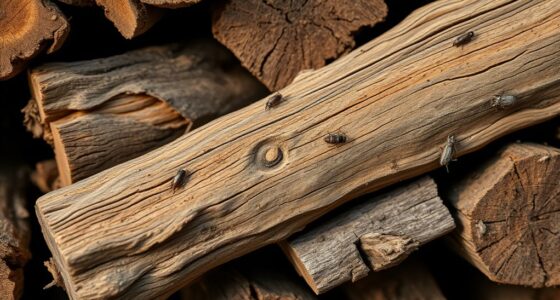
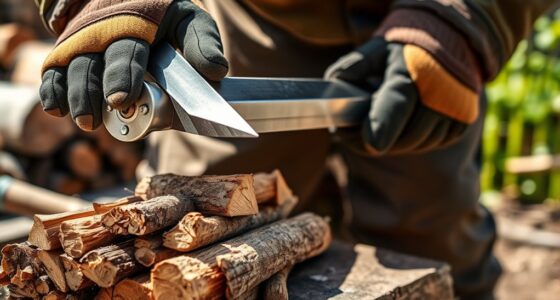
To prevent mold in your firewood stacks, choose a dry, well-ventilated location away from soil, and keep your logs elevated on pallets or racks. Stack the logs tightly but guarantee airflow by placing ends outward and avoiding leaning. Cover the top of the stack to protect from rain, but leave sides open for ventilation. Regularly inspect for moisture or mold and remove affected logs promptly. Continue exploring to discover more tips for keeping your firewood mold-free.
Key Takeaways
- Stack firewood in a dry, well-ventilated area with open sides to promote airflow and prevent moisture buildup.
- Keep logs elevated off the ground using pallets or racks to avoid soil moisture contact.
- Cover the top of the stack with a tarp, leaving sides open for ventilation and protection from rain and snow.
- Allow freshly cut logs to cure for 6 to 12 months, reducing moisture content and mold risk.
- Regularly inspect firewood for signs of mold or dampness, removing affected logs immediately.

Properly stacking firewood is essential to prevent mold growth and guarantee your wood stays dry and ready to burn. When you focus on moisture control, you reduce the chances of mold developing on your logs. Moisture is the main culprit behind mold formation, so managing how and where you store your firewood makes all the difference. To keep your wood in top condition, follow some simple storage tips that promote good airflow and minimize exposure to dampness.
Start by choosing a suitable location for your firewood pile. A dry, well-ventilated area is ideal, such as a shed with open sides or a covered rack that keeps rain and snow away. Avoid stacking your wood directly on the ground because moisture from the soil can seep into the logs and increase the risk of mold. Instead, use a pallet, concrete blocks, or a firewood rack that elevates the stack. This creates space for air to circulate underneath, aiding in moisture control and helping the wood dry thoroughly.
Choose a dry, ventilated space with elevation to prevent mold and ensure proper drying.
When stacking, place the logs with the cut ends facing outward and ensure they are tightly but not overly packed. Proper spacing allows air to flow freely around each piece, which speeds up drying and discourages mold spores from settling. Be wary of stacking your firewood in a way that traps moisture—leaning logs or overly tall stacks can restrict airflow and create damp pockets. Instead, aim for a stable, loosely arranged pile that encourages good ventilation.
You should also pay attention to how long you store your firewood. Freshly cut logs contain more moisture and need time to cure before burning. Ideally, you want to let your wood season for at least 6 to 12 months, depending on the type of wood and climate. During this period, moisture levels decrease, making mold less likely to grow. To further reduce mold risk, consider controlling humidity levels in your storage area, especially in humid climates. Cover the top of your stack with a tarp or a weatherproof cover to shield it from rain and snow, but leave the sides open to maintain airflow. This approach ensures moisture regulation while protecting your firewood from external wetness.
Regularly inspect your stack for signs of mold, excessive moisture, or rot. If you notice mold developing, remove affected logs immediately and allow the remaining wood to dry further. Proper storage tips and moisture control aren’t just about protecting your firewood—they’re about ensuring you have a safe, efficient, and mold-free source of warmth during cold seasons. By following these practices, you’ll keep your firewood dry, mold-free, and ready to use whenever you need it.
Frequently Asked Questions
Can Mold in Firewood Be Harmful to Health?
Mold in firewood can be harmful to your health, especially if you’re exposed to mold spores regularly. Mold exposure may cause allergic reactions, respiratory issues, or worsen asthma symptoms. People with weakened immune systems are particularly at risk. To protect yourself, handle firewood carefully, wear gloves, and store it properly to reduce mold growth. If you notice mold, clean it off and avoid inhaling spores to minimize health risks.
How Long Does It Take for Mold to Develop on Firewood?
Mold can develop on firewood within a few days to weeks, depending on moisture levels and storage duration. If your firewood stays damp or is stored in a humid environment, mold can appear as quickly as 3-7 days. To prevent this, guarantee proper drying and keep the wood in a dry, well-ventilated space, reducing moisture levels and storage time that promote mold growth.
Are Certain Types of Wood More Prone to Mold?
You are what you eat, and the same goes for firewood. Softwoods like pine and cedar are more prone to mold because they often have higher moisture content and porosity, making them ideal breeding grounds. Hardwoods like oak and maple resist mold better due to lower moisture levels and denser structure. To keep mold at bay, always choose well-seasoned wood and store it in a dry, well-ventilated area.
Can Mold Spores Spread From Firewood to Indoor Air?
Yes, mold spores can spread from firewood to indoor air through airborne spores, posing a risk of indoor contamination. When you handle or bring firewood inside, spores can become airborne and settle on surfaces or be inhaled. To minimize this, wear gloves and masks, keep your indoor space well-ventilated, and store firewood outside. This reduces the chance of mold spores spreading and contaminating your indoor environment.
What Are Natural Remedies to Prevent Mold Growth on Firewood?
Think of your firewood as a sponge craving dry sunshine. You can naturally fight mold growth by using sun drying, turning your wood into a sun-kissed fortress. Apply natural antifungal remedies like spraying with a vinegar solution or sprinkling baking soda, which act as guardians against mold spores. Keep your woodpile well-ventilated and dry, transforming it into a mold-resistant haven with simple, natural defenses.
Conclusion
By following these simple steps, you turn your firewood stack into a fortress against mold, keeping it dry and healthy. Think of your firewood as a treasure chest—you want to protect it from hidden threats that can seep in like silent invaders. With proper ventilation and moisture control, you’re guiding your wood safely through the storm. Keep mold at bay, and your cozy fires will burn brighter, lighting up your home with warmth and comfort.