
To prevent rodents in your woodpile, store logs on pallets or racks off the ground and cover them with breathable material to promote airflow. Choose a dry, sunny location away from your home, and guarantee good ventilation. Use barriers like wire mesh and elevate the pile further to block access. Regularly inspect and seal any gaps, and consider natural repellents like peppermint oil to keep pests at bay. Continuing will reveal more effective strategies to protect your firewood.
Key Takeaways
- Elevate logs on racks or pallets and cover with breathable, ventilated tarps to prevent moisture and rodent access.
- Place the woodpile on a raised, well-drained site away from structures and in sunny locations to deter pests.
- Install hardware cloth or wire mesh around the base, burying it into the ground to block rodent entry points.
- Regularly inspect and promptly repair barriers, removing debris and potential hiding spots around the woodpile.
- Use natural repellents like peppermint oil or cayenne pepper and consider additional deterrents such as ultrasonic devices.
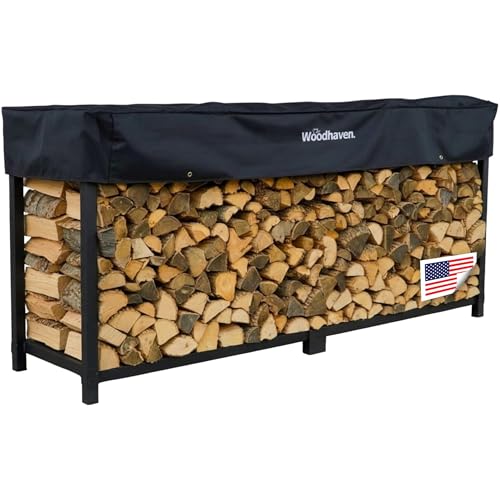
Woodhaven 8-Foot Firewood Rack – American Brand – 1/2 Cord Raised Lumber Storage Rack – Keeps Wood Dry & Ready – Heavy-Duty Steel, Lifetime Structural Warranty (With Cover)
- Capacity: Holds 1/2 cord of logs
- Material: Heavy-duty 16-gauge U.S. steel
- Design: American craftsmanship since 1927
As an affiliate, we earn on qualifying purchases.
As an affiliate, we earn on qualifying purchases.
Proper Storage Techniques for Firewood

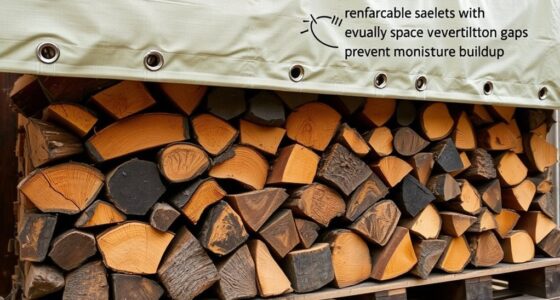
To prevent rodents from making your firewood pile their home, proper storage of your firewood is vital. First, elevate your logs off the ground using a sturdy rack or pallets. This prevents moisture buildup and discourages rodents from burrowing underneath. Cover the top of your firewood with a breathable tarp or a well-ventilated cover, but leave the sides exposed to airflow. Avoid stacking logs directly against your house or other structures, as this creates easy access points. Keep the woodpile neat and organized, reducing hiding spots for pests. Regularly inspect and remove any pieces infested with insects or rodents. Proper storage minimizes pest attraction, keeps your firewood dry, and makes it easier to access when needed. Additionally, suitable storage conditions can help prevent mold and decay, further discouraging pests and maintaining the quality of your firewood.
Selecting the Right Location for Your Woodpile

Choosing the right spot for your firewood pile can make a big difference in keeping pests away and maintaining its quality. Ideally, place it on a raised, well-drained surface away from your home and other structures. This reduces the risk of rodents finding shelter close to your living space.
Choose a raised, sunny spot away from your home to keep firewood dry and pest-free.
Keep in mind these key points:
- Avoid low-lying, damp areas that attract pests and promote rot.
- Choose a sunny location to help keep the wood dry and deter pests.
- Maintain good airflow around the pile to prevent mold and discourage rodents.
Using Barriers and Physical Deterrents
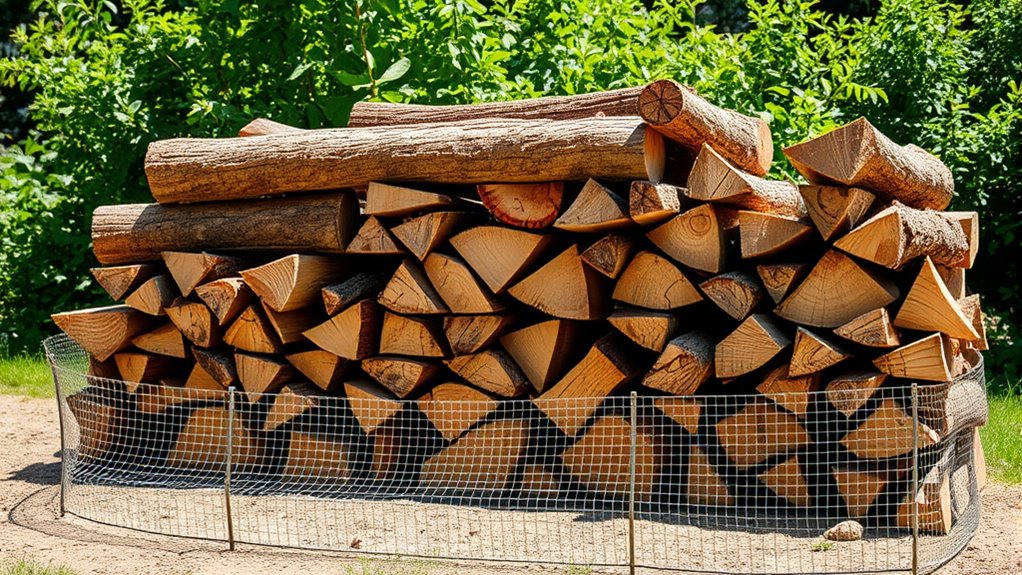
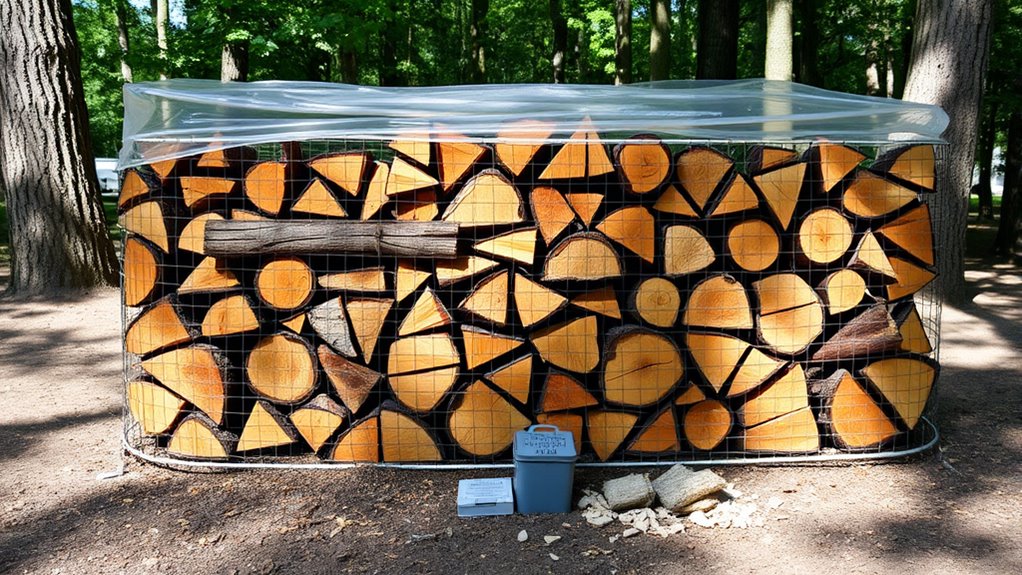
Installing barriers and physical deterrents around your woodpile is one of the most effective ways to keep rodents at bay. You can start by placing a hardware cloth or wire mesh with small holes—about a quarter-inch—around the base of the pile. Bury the mesh at least a few inches into the ground to prevent rodents from burrowing underneath. Elevate the woodpile off the ground using concrete blocks or a wooden pallet to avoid easy access. Consider installing a removable cover or tarp that fits tightly over the pile, making it difficult for rodents to get inside. These physical barriers create a tough obstacle course that rodents can’t easily overcome, substantially reducing their chances of nesting and feeding near your woodpile. Using rodent-proofing techniques can enhance the effectiveness of these barriers and further protect your stored wood. Additionally, ensuring proper ventilation and drainage around the area can prevent moisture buildup that attracts rodents.
Regular Maintenance and Inspection

Maintaining your barriers and physical deterrents is key to keeping rodents away from your woodpile. Regular inspections help you catch problems early before rodents find ways in preventing in. Check for signs of gnawing, droppings, or burrows around your woodpile. Make sure that your barriers remain intact and effective, repairing any damage immediately. Keep the area tidy by removing clutter, debris, and fallen leaves that could hide pests or serve as nesting sites. Staying vigilant creates a hostile environment for rodents, making it less likely they’ll invade. Regular inspections help identify potential vulnerabilities before an infestation occurs. Additionally, implementing preventive measures such as sealing gaps and choosing rodent-resistant materials can further reduce the risk of infestation. Regularly monitoring the environment can also help detect early signs of rodent activity and act swiftly to address issues. Incorporating electric or physical barriers can enhance your defenses and prevent rodent access more effectively.
Natural and Chemical Repellents

To effectively deter rodents from your woodpile, using natural and chemical repellents can be a practical solution. Natural repellents like peppermint oil, cayenne pepper, or garlic powder can be sprinkled around the woodpile to create an unpleasant environment for rodents. You can also hang cotton balls soaked in peppermint oil nearby. Chemical repellents, such as commercial rodent repellents or sprays, are designed to emit scents that rodents dislike. Apply these products around the perimeter of your woodpile regularly, especially during peak rodent activity seasons. Remember, repellents work best when combined with proper maintenance, like keeping your wood elevated and sealing entry points. Additionally, Floating on Water techniques such as installing barriers or water moats around the woodpile can further prevent rodent access. Incorporating sound design methods, such as ultrasonic devices that emit high-frequency sounds, can also be an effective deterrent without disturbing your environment. Using knowledge of rodent behavior can help you determine the most effective placement of repellents and barriers. Consistent use of these repellents can markedly reduce the chances of rodents making your woodpile their home.
Frequently Asked Questions
How Can I Identify Rodent Infestations Early in My Woodpile?
To identify rodent infestations early, look for signs like gnawed wood, droppings, and tracks around your woodpile. Listen for scratching sounds or squeaks, especially at night. Check for nests made of shredded paper or leaves. You might also notice a strong, musty smell. Regularly inspecting your woodpile helps catch issues early, allowing you to take swift action before the infestation worsens.
Are There Specific Wood Types More Attractive to Rodents?
You wonder if certain wood types attract rodents more than others. Generally, rodents aren’t picky about the wood they infest; they’re mainly after shelter and nesting sites. However, softer woods like pine or cedar might be easier for them to chew through, making them slightly more attractive. Keep your woodpile dry, elevated, and well-maintained to deter rodents, regardless of the wood type you choose.
How Does Climate Affect Rodent Activity Around Woodpiles?
Climate plays a big role in rodent activity around your woodpile. In colder weather, rodents seek warmth and shelter, so they’re more likely to invade your woodpile for insulation. Mild or warm climates may see less activity, but during winter, you’ll notice more rodents nesting nearby. To keep them away, guarantee your woodpile is dry, elevated, and stored away from your home, reducing their chances of taking up residence.
Can Composting Nearby Increase Rodent Attraction to My Woodpile?
Composting nearby can definitely attract rodents to your woodpile. As compost piles provide a food source and shelter, rodents are drawn to them, increasing the likelihood they’ll invade your woodpile for additional resources. To minimize this risk, keep compost bins tightly sealed, avoid adding meat or dairy, and maintain a safe distance between compost and wood storage. Regularly turning your compost also discourages rodent nesting habits.
What Are the Most Effective Long-Term Rodent Prevention Strategies?
Like a wise old owl watching over a quiet forest, you need a vigilant strategy for long-term rodent prevention. Keep your yard tidy, removing debris and food sources that attract pests. Store firewood off the ground and away from your home. Seal any small holes around your property, and trim back shrubbery. Regularly inspect these areas, staying proactive, so rodents don’t find your space irresistible.
Conclusion
So, now that you’ve mastered the art of rodent-proofing your woodpile, you’re basically a superhero in the battle against pests. Just remember, no barrier is foolproof—except maybe building a fortress out of steel. But hey, if you want to keep those critters at bay without turning your yard into a BattleBot arena, stick to the tips, stay vigilant, and maybe invest in a few well-placed traps. Because who needs rodents crashing your cozy fire nights?