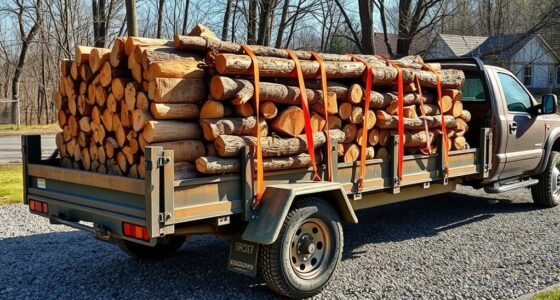
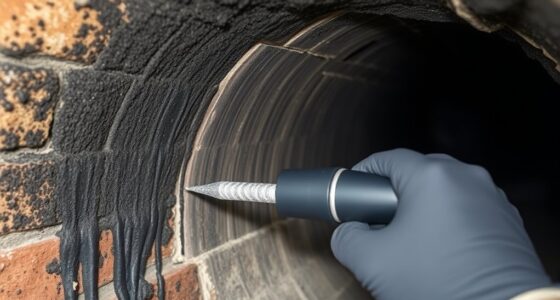
To stay safe around stacked firewood, keep it on a stable, well-ventilated surface and avoid stacking it too high. Maintain at least 30 inches between the woodpile and your home to prevent fire and pests. Wear gloves when handling wood, and regularly check for rot or pests. Keep children and pets away, and store the wood away from walls and vents. For more safety tips, continue exploring essential firewood storage practices.
Key Takeaways
- Keep firewood stacked on stable, level surfaces and avoid overstacking to prevent collapse or accidents.
- Maintain a safe distance of at least 30 inches from your home to reduce fire and pest risks.
- Regularly inspect stacks for stability, pests, or decay, and discard rotten or moldy wood immediately.
- Wear protective gear when handling firewood to prevent injuries and splinters.
- Store firewood in well-ventilated areas to promote drying and reduce moisture-related hazards.
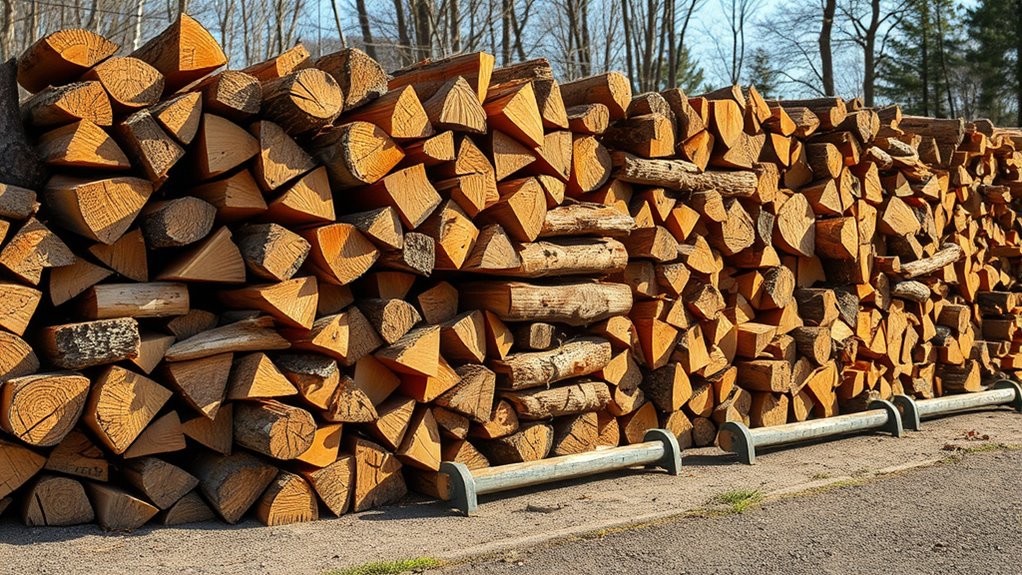
Firewood can be a cozy addition to your home, but handling it safely is essential to prevent accidents. Proper fire safety starts with how you store your wood. When stacking firewood, ensure it’s stable and secure to avoid it toppling over, which could cause injuries or damage. Use a level surface, like a concrete or gravel pad, to keep the stack steady. Avoid stacking firewood too high; a height of about four feet is generally safe and manageable. Keep the wood in a well-ventilated area, ideally outdoors or in a sheltered spot, to promote air circulation and reduce moisture buildup. Proper wood storage not only improves fire safety but also helps your fire burn more efficiently, reducing smoke and creosote buildup.
Stack firewood securely on a level surface to prevent accidents and ensure safe, efficient burning.
When stacking, place the cut side of the logs facing outward to promote better drying and airflow. Leave space between the logs and the ground, using pallets, bricks, or a firewood rack to elevate the stack. This prevents moisture absorption from the ground, decreasing the risk of mold and pests, which can compromise fire safety. It’s also wise to keep firewood away from your home’s walls and vents. Storing wood too close can create a fire hazard, especially if the wood becomes crowded or if embers escape during burning. Maintaining a clear distance of at least 30 inches from your house reduces the risk of fire spreading and helps keep pests like termites and ants away from your home.
Regularly inspect your wood storage area for signs of decay, pests, or instability in your stack. Discard any rotten or moldy wood immediately, as burning it can produce toxic fumes and increase fire hazards. When handling firewood, wear gloves and protective gear to prevent splinters and injuries. Always use proper tools, like a log carrier or wheelbarrow, to move large quantities of wood safely. Never lean or climb on your stacked firewood, as this can cause the stack to collapse. Keep children and pets away from the woodpile to prevent accidents. Additionally, you can consider installing headphones or other safety equipment to protect your ears when working near noisy tools or machinery involved in firewood preparation.
Properly storing firewood is a key part of fire safety. It minimizes risks of fire, pest infestation, and injuries. By ensuring your wood is stacked securely, kept dry, and stored at a safe distance from your home, you create a safer environment for everyone. Good wood storage habits protect your home, promote efficient burning, and make your cozy fire experience worry-free. Always prioritize safety and routine checks to avoid preventable accidents and enjoy the warmth your firewood provides.
Frequently Asked Questions
How Can I Tell if My Firewood Is Infested With Pests?
You can tell if your firewood is infested with pests by doing pest identification and infested wood detection. Look for small holes, sawdust, or frass, which indicate insect activity. Check for weak or decayed wood, and tap pieces to listen for hollow sounds. You might also see bugs or larvae crawling on the surface. Regular inspections help catch infestations early, keeping your firewood safe and pest-free.
What Is the Best Way to Prevent Mold on Stored Firewood?
Did you know mold grows on 60% of stored firewood due to excess moisture? To prevent this, focus on moisture control by keeping firewood dry and off the ground. guarantee proper ventilation around the stacks, allowing air to circulate and reduce humidity. Cover the top of your firewood pile with a breathable material to protect it from rain, but leave the sides open. This keeps your firewood mold-free and ready to burn.
Are There Any Fire Safety Codes for Stacking Firewood?
Yes, there are fire safety codes for stacking firewood to ensure safety and compliance. You should follow firewood stacking regulations that specify safe distances from structures and proper stacking techniques to prevent accidental fires. Always check local fire safety ordinances, keep stacks away from ignition sources, and ensure good airflow. By adhering to fire safety compliance, you reduce fire risks and create a safer environment around your stored firewood.
How Often Should I Inspect My Firewood for Pests or Decay?
You should inspect your firewood every 2 to 4 weeks, as studies show pests can infest wood within that timeframe. To guarantee proper storage and prevent decay, check for signs of pests and excess moisture, which can lead to mold and rot. Regular inspections help you maintain dry, well-ventilated stacks, reducing safety hazards and keeping your firewood in ideal condition for burning.
Can Firewood Be Stored Safely Indoors?
You can store firewood indoors, but you need to make certain proper indoor storage to prevent issues. Keep firewood in a well-ventilated area to reduce firewood moisture, which can cause mold or pests. Avoid stacking it directly on the floor; use a rack or pallets. Regularly check for pests or decay, and make sure the storage area stays dry. This way, your firewood stays safe and ready for use.
Conclusion
Remember, over 40% of household fires start from improperly stored firewood. By stacking your firewood safely and keeping it away from your home, you markedly reduce this risk. Always wear gloves when handling firewood, make sure it’s stable, and check for pests or mold. Staying vigilant around your firewood not only keeps your family safe but also saves lives. Don’t underestimate the importance of proper storage—you’re the first line of defense against fire hazards.