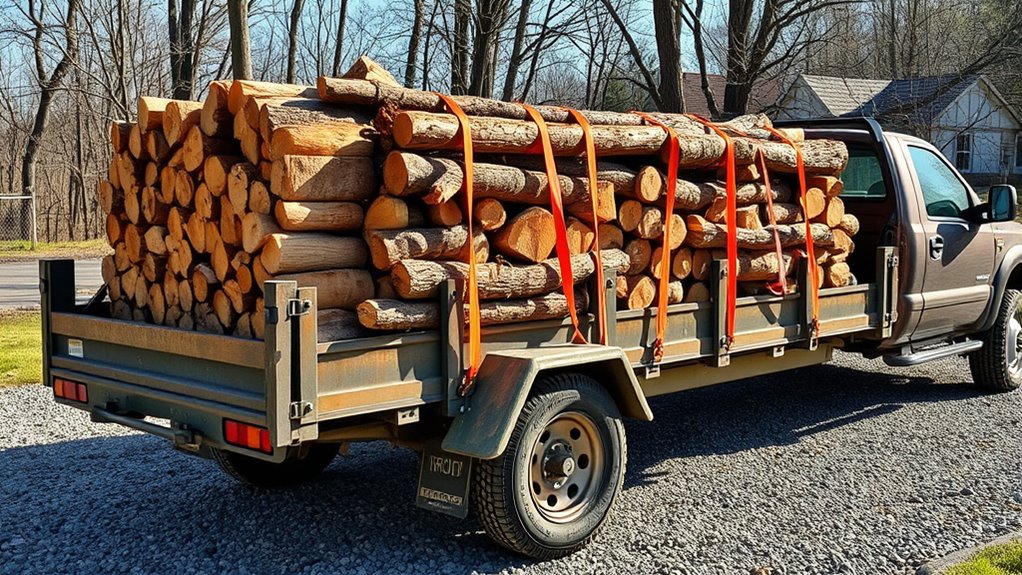

To transport firewood safely on a trailer, select a sturdy trailer with side rails and good weight capacity. Stack the logs securely, with the largest at the bottom and the load level and evenly distributed. Use strong straps or restraints to hold the firewood tightly, checking and adjusting them during travel. Follow local safety and regulation guidelines, drive carefully, and inspect your trailer regularly, so you can confidently handle every step of the process. Keep going to find out more detailed tips.
Key Takeaways
- Select a sturdy, open-bed trailer with side rails to securely stack and prevent logs from falling.
- Use dry, well-seasoned firewood, properly cut and tightly stacked for stability during transit.
- Secure logs with straps or ropes at multiple points, ensuring even weight distribution and balance.
- Follow safety guidelines, avoid overloading, and drive carefully at moderate speeds to prevent shifting or tipping.
- Regularly inspect the trailer, restraints, and load during transport, and unload in a safe, level area.
heavy-duty firewood trailer straps
As an affiliate, we earn on qualifying purchases.
As an affiliate, we earn on qualifying purchases.
Choosing the Right Trailer for Firewood Transport
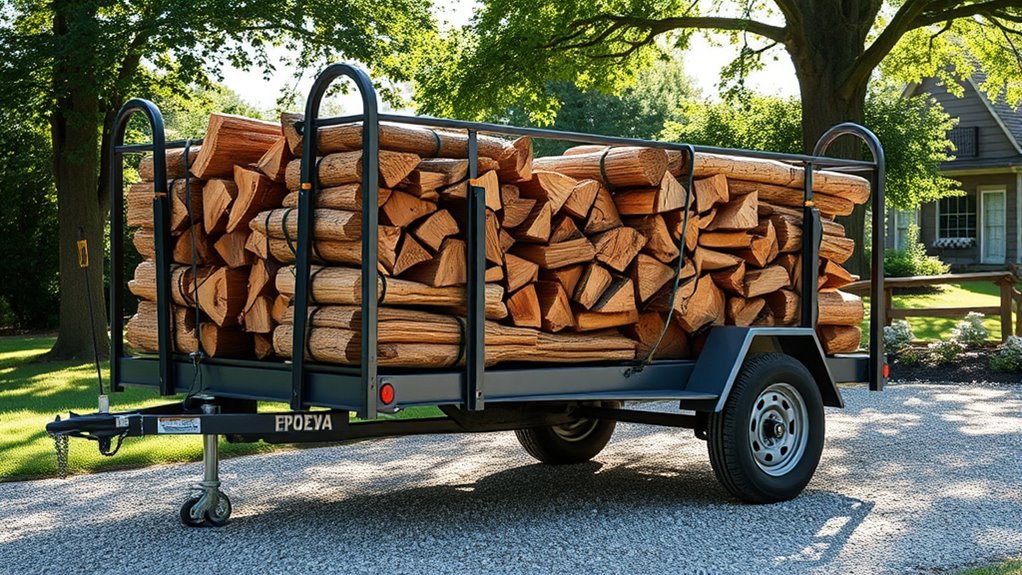
Selecting the right trailer is essential for safely transporting firewood. You need a trailer sturdy enough to handle the weight of your load without risking damage or accidents. Look for one with a robust frame, preferably made of galvanized steel or heavy-duty aluminum, to withstand the elements and heavy loads. The trailer should have a flat, open bed for easy stacking and securement of firewood. Ensure it has side rails or barriers to prevent logs from falling off during transit. Check the axle capacity and tire strength to support the weight you plan to carry. Also, consider the trailer’s size—too small and it won’t hold enough, too large and it may be difficult to maneuver. Choosing the right trailer sets the foundation for safe, efficient firewood transport. Additionally, understanding load capacity and proper weight distribution is crucial for maintaining stability and safety during transportation. Incorporating towing vehicle compatibility ensures the trailer can be safely attached and driven without issue.
Preparing Your Firewood for Safe Loading
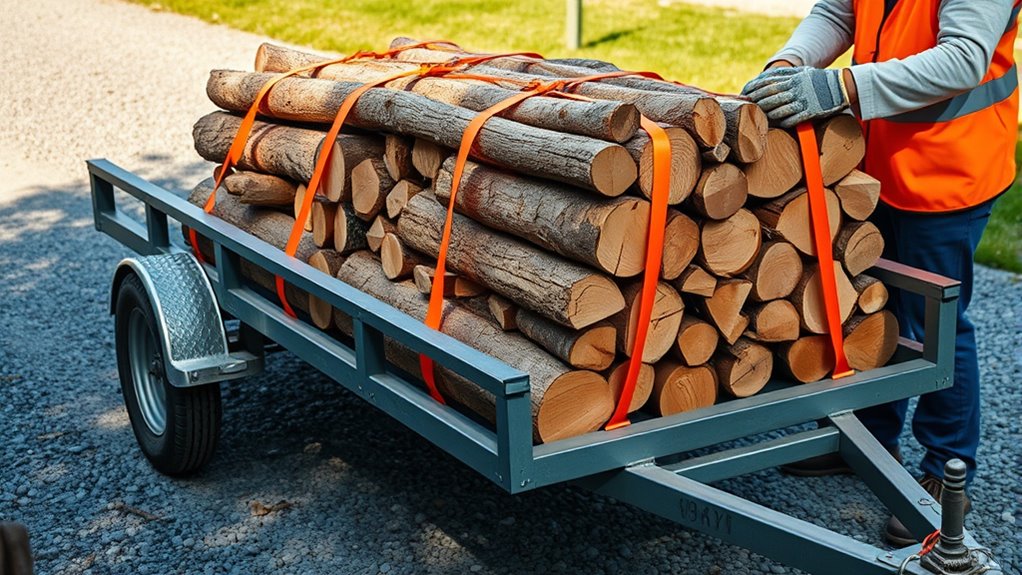
Before loading your firewood, make sure it’s cut to a proper size that fits your trailer. Check that the wood is dry and well-seasoned to prevent excess weight and moisture issues. Once ready, stack the wood securely to keep it stable during transport. Additionally, consider organizing your firewood with preppy dog names in mind to add a touch of style to your outdoor setup. Incorporating terrace gardening can also help you plan the ideal arrangement for safe and efficient transport.
Select Proper Firewood Size
Choosing the right firewood size is essential for safe and efficient loading onto your trailer. Smaller pieces are easier to handle and pack tightly, reducing the risk of shifting during transport. Larger logs provide more heat but can be cumbersome and unbalanced if not properly secured. To help you decide, consider this table:
| Firewood Size | Pros | Cons |
|---|---|---|
| Small pieces | Easy to load and stack | Less heat per piece |
| Medium logs | Good balance of size and heat | Slightly heavier to handle |
| Large logs | High heat output | Difficult to move and secure |
Additionally, understanding proper firewood handling techniques can further enhance safety and efficiency during loading and transport. Proper loading techniques are crucial for preventing accidents and ensuring the firewood stays secure throughout the journey. Being familiar with firewood safety practices can also help minimize potential hazards during transportation, especially when considering weight distribution to maintain trailer stability. Proper firewood stacking can further optimize space and safety during transit.
Ensure Dry and Seasoned Wood
Using properly sized firewood is only part of the equation; making sure your wood is dry and seasoned is equally important for safe transportation. Wet or green wood is heavy, awkward, and prone to shifting during transit, which can cause instability. To guarantee your firewood is ready, split logs into smaller pieces and stack them in a well-ventilated area. Allow at least six months for seasoning, or up to a year in damp climates. Properly seasoned wood should feel dry and have cracks in the ends. If the wood still feels damp or has visible moisture, wait longer before loading it onto your trailer. Dry, seasoned wood burns more efficiently, reduces smoke, and minimizes the risk of shifting or falling during transport. Proper seasoning is essential for maximizing safety and efficiency when transporting firewood, and ensuring the wood has reached the optimal moisture content can be confirmed using a moisture meter. Additionally, checking the wood’s appearance can help determine if it’s adequately seasoned. Recognizing the importance of firewood quality can guide you in selecting the best wood for safe transport and efficient burning. Incorporating mindfulness practices during loading can also improve focus and safety, ensuring that the process is handled carefully and attentively.
Securely Stack for Stability
To make certain your firewood remains stable during transportation, it’s essential to stack it securely on the trailer. Start by placing the largest logs at the bottom to create a sturdy foundation. Stack the wood tightly, avoiding gaps that could cause shifting. Keep the load level, ensuring the weight is evenly distributed across the trailer. Use straps or ropes to hold the stack in place, especially near the front and back edges. Check that the firewood is stacked in a way that prevents it from tipping or falling during transit. Keep the load low and compact to maintain balance and reduce the risk of accidents. Proper stacking not only keeps your firewood safe but also helps prevent damage to your trailer and ensures your safety on the road. Additionally, understanding the load distribution can help optimize stability and safety during transport.
Properly Securing Firewood on Your Trailer
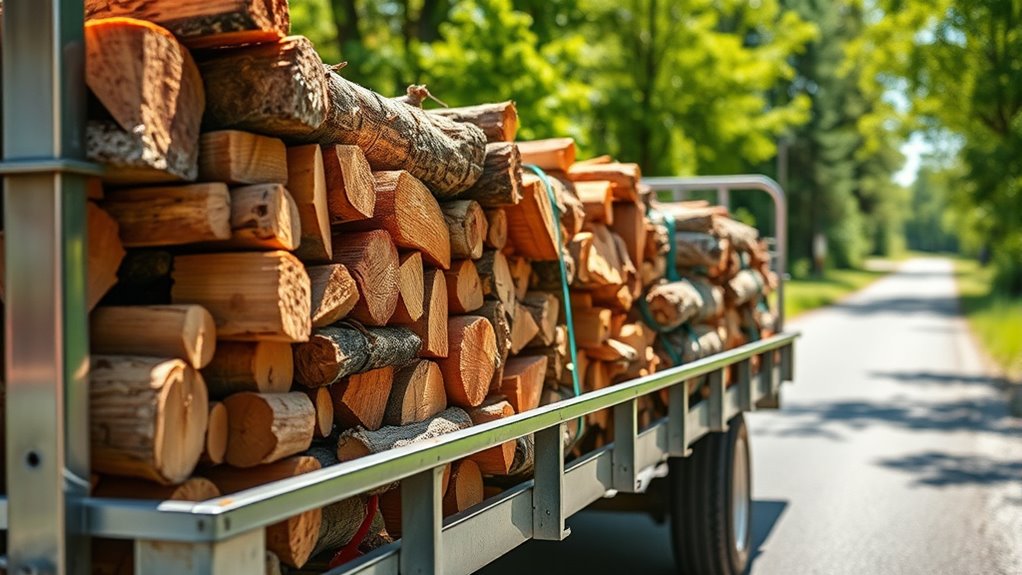
To keep your firewood secure during transport, you need to use strong restraints that won’t give way. Make sure to distribute the weight evenly across your trailer to prevent shifting or tipping. Properly securing your load guarantees safety for everyone on the road.
Use Strong Restraints
Securing firewood properly on your trailer is essential to prevent shifting or falling during transit. Use strong restraints like ratchet straps or heavy-duty tie-downs to hold the wood firmly in place. Loose or weak restraints increase the risk of accidents or damage. Always check that straps are tight and in good condition before moving. Consider the size and weight of your firewood when choosing restraints to ensure they can handle the load.
| Restraint Type | Strength Level |
|---|---|
| Ratchet Straps | Very High |
| Bungee Cords | Moderate |
| Rope | Variable |
| Tie-Down Straps | High |
Distribute Weight Evenly
Ensuring firewood is distributed evenly across your trailer helps maintain stability and safety during transport. Proper weight balance prevents swaying, reduces strain on your hitch, and minimizes the risk of accidents. To achieve this, follow these steps:
- Load the firewood starting from the front of the trailer, evenly spreading weight side to side.
- Stack the firewood in a stable manner, ensuring it doesn’t shift during transit.
- Secure the load tightly with straps or ropes to keep everything in place.
Distributing Weight Evenly for Stability
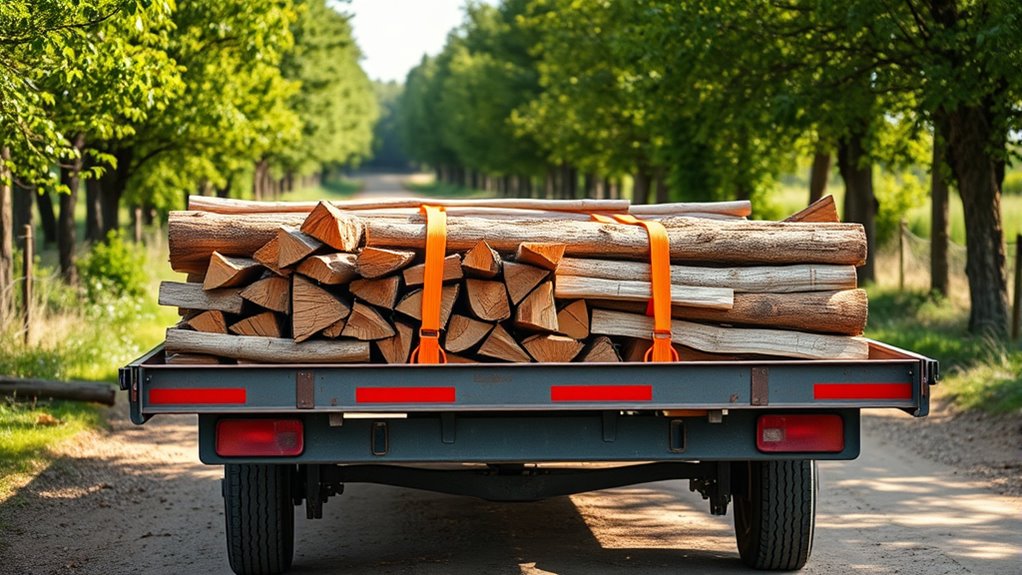
Distributing firewood evenly across the trailer is essential for maintaining stability during transport. When weight shifts unevenly, your trailer can sway, making driving unsafe. To achieve proper balance, position the logs so they distribute the load front to back and side to side. Think of your trailer as a balanced platform. Use the following guide:
| Position | Firewood Placement | Effect |
|---|---|---|
| Front | Slightly forward | Keeps trailer stable |
| Back | Slightly backward | Prevents tipping |
| Center | Centralized | Maintains balance |
| Sides | Evenly on both sides | Stops leaning |
| Top/Bottom | Securely stacked | Avoids shifting |
Using Appropriate Straps and Restraints
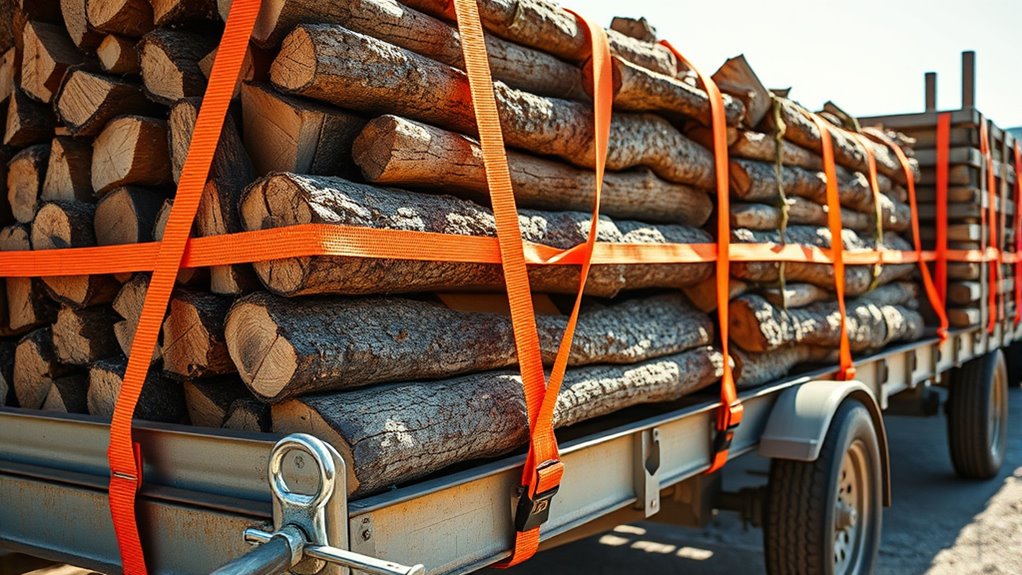
After arranging the firewood for balance, it’s important to keep it firmly in place during transport. Using the right straps and restraints guarantees safety and prevents shifting. First, select heavy-duty ratchet straps or bungee cords designed for hauling loads. Second, secure the straps around the firewood at multiple points to prevent movement in all directions. Third, double-check that each strap is tight and properly fastened before setting out. Avoid over-tightening, which can damage the wood or straps. Always use straps rated for the weight of your load, and ensure they’re in good condition—no frays or tears. Proper restraints keep your firewood stable, protect other road users, and reduce the risk of accidents. Consistently check and re-tighten straps during your trip if needed.
Checking Local Regulations and Safety Guidelines
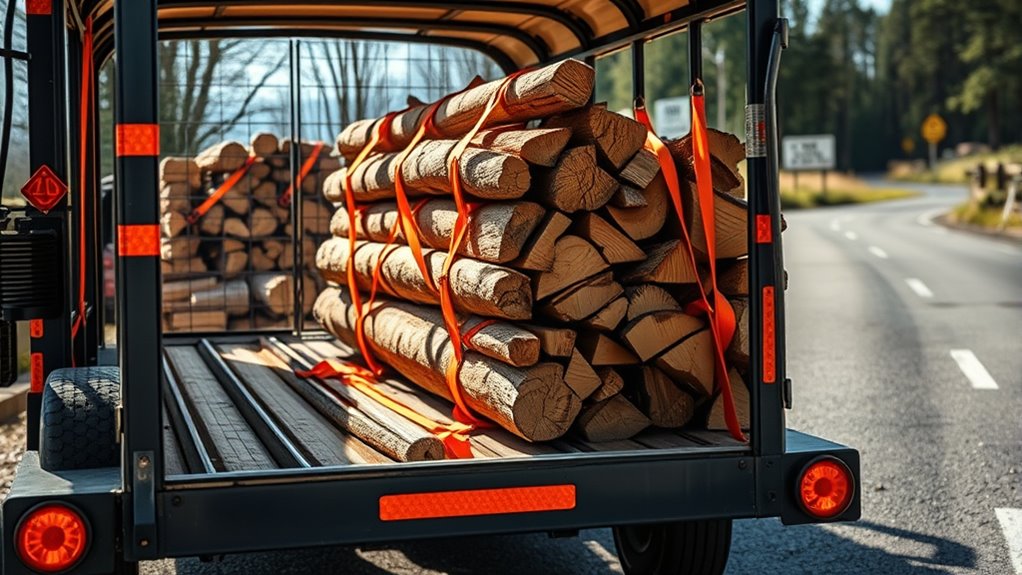
Before hitting the road with your firewood, it’s essential to check local regulations and safety guidelines. Different areas have rules about firewood transportation, such as limits on quantity, packaging, or vehicle requirements. Some regions ban transporting firewood across certain borders to prevent pest spread. Checking these rules helps you avoid fines or delays. Also, safety guidelines may specify trailer capacity, securing methods, and load distribution. To clarify, here’s a quick overview:
| Regulation Aspect | Important Details |
|---|---|
| Load Limits | Max weight and size restrictions |
| Packaging Requirements | Proper bundling or containment |
| Cross-Border Rules | Quarantine and inspection protocols |
| Securing Firewood | Restraints and safety standards |
Always verify with local authorities before your trip to ensure compliance and safety.
Driving Tips for Transporting Firewood Safely
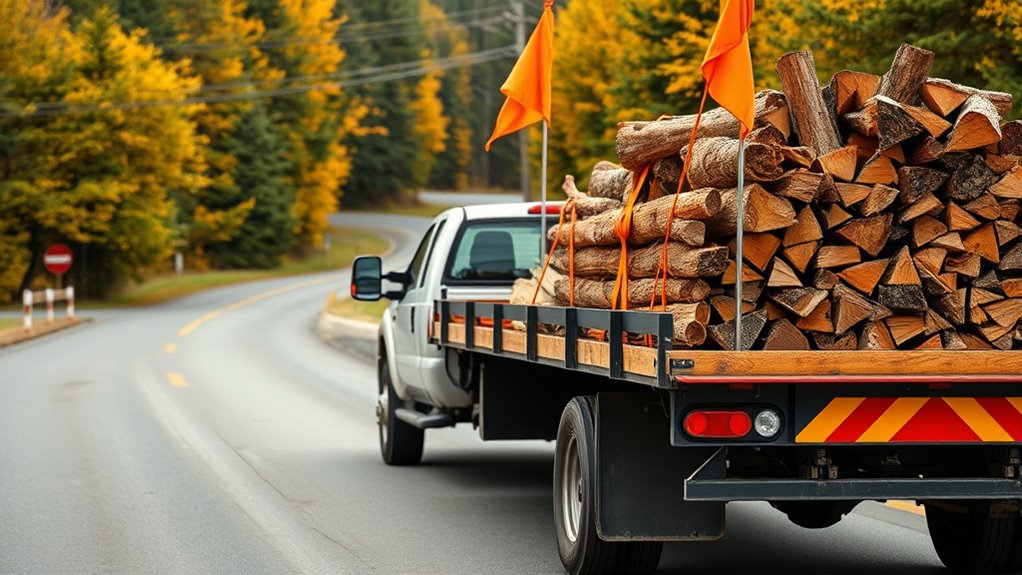
When transporting firewood, maintaining safe driving habits is essential to prevent shifts or accidents. To do this effectively, keep these tips in mind:
- Drive at moderate speeds to maintain control and prevent load movement.
- Avoid sudden turns or braking to reduce the risk of firewood shifting or falling.
- Maintain a safe following distance to give yourself enough time to react to road conditions.
Always check your trailer’s load before starting and periodically during your trip. Make sure the firewood is evenly distributed and securely tied down. Keep your mirrors adjusted for maximum visibility, and be extra cautious on curves and inclines. Following these tips helps ensure your firewood arrives safely and reduces the risk of accidents.
Unloading Firewood Safely and Efficiently
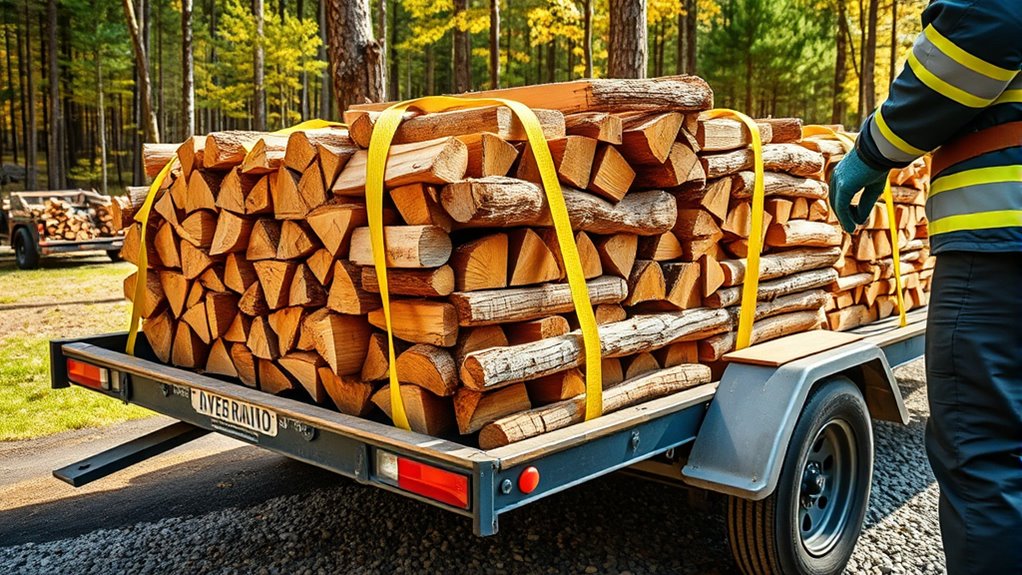
Unloading firewood safely and efficiently requires careful planning and attention. Before you start, guarantee the area around your trailer is clear of obstacles and other people. Position yourself on stable, level ground to prevent slips or falls. Use proper lifting techniques—bend your knees and lift with your legs rather than your back. If the firewood is heavy or bulky, consider using tools like a wheelbarrow or a tarp to streamline the process. When unloading, avoid rushing; take your time to prevent damage to the wood or injury to yourself. Communicate clearly with anyone helping you so everyone stays aware of the plan. Once all the firewood is off the trailer, double-check that the area is tidy and the firewood is stacked securely for easy access later.
Maintenance and Inspection of Your Trailer and Restraints

Regularly inspecting and maintaining your trailer and restraints is essential to guarantee safe transportation of firewood. Proper upkeep prevents accidents and ensures your equipment performs reliably. Start by checking the trailer’s tires for wear, proper inflation, and any damage. Next, examine the hitch and safety chains for rust, cracks, or looseness. Finally, inspect your restraints—straps and tie-downs—for fraying, tears, or corrosion, replacing any compromised components immediately. Here are three key steps:
- Verify tire condition and pressure before each trip.
- Tighten or replace hitch components and safety chains as needed.
- Ensure all restraints are secure and in good condition before loading.
Keeping up with these practices helps avoid breakdowns and keeps your firewood transport safe.
Frequently Asked Questions
How Do I Prevent Firewood From Shifting During Transit?
To prevent firewood from shifting during transit, you should secure it tightly. Use ratchet straps or bungee cords to hold the wood in place, ensuring they’re tight but not damaging the wood. Position the firewood evenly across the trailer to maintain balance, and add side supports if necessary. Regularly check the straps during your trip, and adjust them if you notice any movement to keep everything secure.
What Are the Best Practices for Covering Firewood for Weather Protection?
Think of covering firewood like wrapping a gift—you want it protected without suffocating it. You should use a breathable tarp or canvas cover that shields against rain and snow, but allows moisture to escape. Secure the cover tightly, especially at the edges, to prevent wind from exposing your firewood. Regularly check the cover during transit to make certain it stays in place and keeps the wood dry and ready for use.
How Often Should I Inspect Straps and Restraints During a Trip?
You should examine your straps and restraints frequently during your trip, ideally every 15 to 30 minutes. This helps guarantee they stay tight and secure, especially when driving on rough roads or through changing weather. Make it a habit to stop safely, check all tie-downs, and tighten any loose straps. Regular inspections prevent shifting or falling of your load, keeping you and others safe on the road.
Can I Transport Firewood on a Motorcycle Trailer Safely?
Did you know that improper cargo securement causes nearly 25,000 accidents annually? You can transport firewood on a motorcycle trailer safely if you follow proper precautions. Make sure the firewood is tightly packed and secured with strong straps or ropes. Distribute the weight evenly to prevent tipping, and double-check restraints before hitting the road. Always prioritize safety to avoid accidents and protect yourself and others on the road.
What Is the Maximum Load Capacity for Firewood on Common Trailer Types?
You want to know the maximum load capacity for firewood on common trailer types. Typically, utility trailers can handle between 1,000 to 3,500 pounds, while smaller trailers may support around 500 to 1,000 pounds. Always check your trailer’s manufacturer specifications and weight ratings before loading. Distribute the firewood evenly to prevent tipping, and avoid surpassing the rated capacity to ensure safe transportation.
Conclusion
Just like Icarus needed to stay grounded to avoid a fall, you must prioritize safety when transporting firewood. By choosing the right trailer, securing your load properly, and following safety guidelines, you can prevent mishaps and keep your journey smooth. Remember, even in the pursuit of warmth, caution keeps you soaring safely—so trust these tips and stay vigilant. Your careful approach guarantees your firewood arrives as intended, without the fiery fall of neglect.