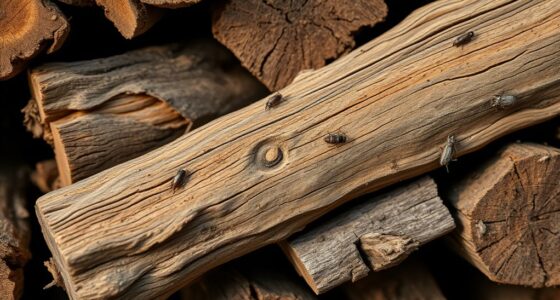
For ideal burning, you’ll want to season hardwoods like oak, hickory, and maple for 6 to 12 months, as their dense structure requires longer drying times. Softer woods such as pine, spruce, and cedar typically dry in 6 to 8 months. Proper stacking and storage speed up drying, but moisture content is key. If you keep these tips in mind, you’ll discover even more ways to get your firewood ready efficiently.

Get business pricing on tools and workshop supplies
- Business-only prices and quantity discounts
- Tax-exempt purchasing
- Multiple users, one account, clear invoices
Key Takeaways
- Hardwoods like oak and hickory typically need 6 to 12 months of seasoning.
- Softwoods such as pine and cedar generally dry in 6 to 8 months.
- Dense hardwoods require longer drying times due to their structure.
- Proper stacking and airflow speed up drying regardless of species.
- Use a moisture meter to ensure wood reaches about 20% moisture before burning.
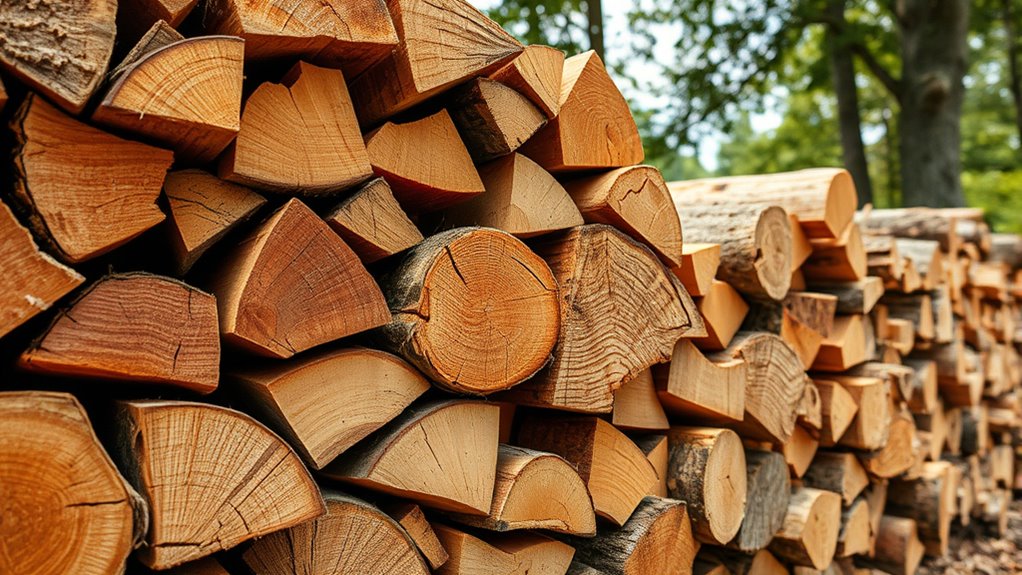
Have you ever wondered why some firewood burns better than others? The secret often lies in its moisture content and how you’ve seasoned it. Proper seasoning reduces the moisture level in your wood, making it burn more efficiently, produce less smoke, and generate more heat. When firewood isn’t adequately seasoned, the high moisture content causes it to smolder, produce excess creosote, and waste your fuel. To avoid these issues, understanding the right seasoning methods for different species is key to ensuring your firewood performs at its best.
Properly seasoned firewood burns cleaner, hotter, and more efficiently by reducing moisture content and preventing creosote buildup.
The amount of time it takes to season firewood depends largely on the species, as well as how you handle and store it. Hardwoods like oak, hickory, or maple generally take longer to dry because they have dense cell structures that hold onto moisture. Typically, these woods need around 6 to 12 months of proper seasoning. Softwoods such as pine, spruce, or cedar usually dry faster, often within 6 to 8 months, given their less dense nature. But more than just the time, the seasoning methods you choose have a big impact on the final moisture content of your wood.
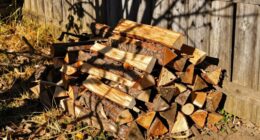
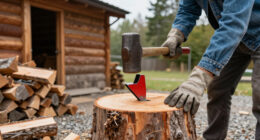
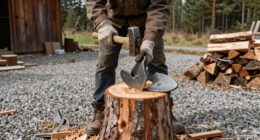
Proper seasoning begins with cutting your firewood to the right size, splitting it into manageable pieces, and stacking it correctly. You want to create a good airflow around each piece, so the wood dries evenly. Cover the top of your stack to protect it from rain and snow, but leave the sides open to allow air to circulate freely. This promotes faster drying and helps reduce the moisture content. Using a moisture meter can be a smart investment; it gives you a precise reading of the wood’s moisture level, enabling you to determine exactly when your firewood is ready to burn. Additionally, choosing self-watering plant pots with proper design principles, such as good airflow and moisture control, can help keep your stored wood dry if you incorporate the right materials into your storage setup.
Seasoning methods vary, but the goal is always to lower the moisture content to about 20% or less for ideal burning. Natural air drying remains the most common method—simply stacking your wood properly and waiting. For faster results, some people use kiln drying, which involves controlled heat and airflow. However, most homeowners rely on patience and proper stacking. Keep in mind that environmental factors like humidity and temperature influence drying times. If you live in a humid climate, it may take longer, and you’ll need to be more diligent with your seasoning methods.
In the end, understanding the relationship between moisture content and species-specific drying times helps you produce high-quality firewood. When you follow the right seasoning methods, your wood will ignite quickly, burn cleaner, and give you more warmth for every log. Properly seasoned firewood isn’t just about convenience; it’s about making sure you get the most out of each fire, all while protecting your stove or fireplace from unnecessary creosote buildup.
As an affiliate, we earn on qualifying purchases.
Frequently Asked Questions
Does Seasoning Time Vary for Different Wood Moisture Contents?
Yes, seasoning time varies with moisture content. When your firewood has high moisture content, it takes longer for the seasoning duration to reach ideal dryness. Wet wood with high moisture needs more time to dry out completely, while wood with lower moisture content seasons faster. Keep in mind that properly seasoned firewood typically has a moisture content below 20%, ensuring efficient burning and less smoke.
Can Seasoned Firewood Be Stored Outdoors Long-Term?
Yes, seasoned firewood can be stored outdoors long-term if you take proper precautions. You should use moisture meters to guarantee the wood’s moisture content is low enough, preventing rot and pests. Make sure your wood storage area is well-ventilated, elevated, and protected from rain and snow. With these steps, your firewood will stay dry, ready to burn, and last through harsh weather, making outdoor storage a practical, long-lasting solution.
Is There a Way to Tell if Firewood Is Over-Aged?
You can tell if firewood is over-aged by checking its moisture content and wood density. Over-aged wood tends to have very low moisture levels, often below 20%, making it brittle and difficult to burn efficiently. You might also notice it feels excessively dry and lightweight. Use a moisture meter for accuracy; if the moisture content is too low, the wood’s over-seasoned, which can lead to cracking and reduced heat output.
How Does Seasoning Time Affect Firewood’s Heat Output?
Seasoning time directly impacts your firewood’s heat output by reducing moisture content, which improves burn efficiency. When firewood is properly seasoned, it has a moisture content below 20%, allowing it to burn hotter and cleaner. If you don’t give it enough time to season, the excess moisture will cause incomplete combustion, resulting in less heat and more smoke. So, properly seasoned firewood maximizes your fire’s warmth and efficiency.
Are There Quick-Drying Methods to Season Firewood Faster?
You can’t rush Mother Nature, but you can try quick-drying methods to season firewood faster. Use moisture meters to monitor dryness and consider stacking your wood in seasoning containers with good airflow. Cover the top but keep sides open to prevent moisture buildup. Turning the wood regularly accelerates drying, and using a kiln or solar kiln can considerably cut down seasoning time. Remember, patience still pays off for ideal firewood.
Conclusion
No matter the species, properly seasoned firewood is essential for a safe, efficient fire. While it might seem like waiting takes too long, remember that well-seasoned wood burns cleaner, produces more heat, and reduces creosote buildup. Don’t rush the process—trust the seasoning time for the best results. Once your firewood is ready, you’ll enjoy warmer, longer-lasting fires with less hassle and mess. Patience truly pays off for a better fire experience.
Fall yard work Picks
leaf blowers
As an affiliate, we earn on qualifying purchases.