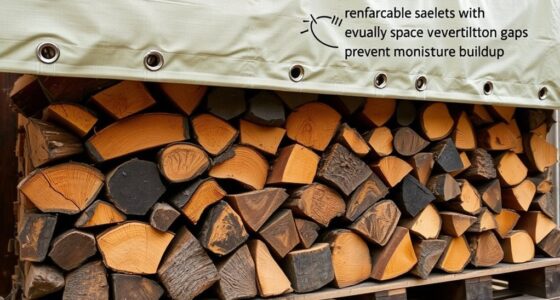
To avoid trapping moisture under tarps, choose breathable materials like mesh or fabric that allow air and humidity to pass through. Guarantee proper ventilation by creating small gaps or slack in the cover, and elevate the tarp to promote airflow beneath it. Regularly check the condition of both the tarp and stored items, adjusting as needed so moisture can escape. If you want to discover tips on maintaining dry, protected storage, keep exploring these strategies.
Key Takeaways
- Choose breathable, mesh, or fabric tarps that allow air and moisture to pass through.
- Create small gaps or slack in the tarp to facilitate proper ventilation.
- Elevate tarps off surfaces using blocks or stakes to promote airflow underneath.
- Incorporate vents, grommets, or layered covers to enhance airflow and moisture escape.
- Regularly check and adjust tarps to ensure they remain loose enough for ventilation and free of trapped moisture.

Tarps are a versatile tool for protecting your belongings, but if not used correctly, they can trap moisture and cause damage. Moisture buildup under a tarp can lead to mold, rot, and corrosion, especially if you’re covering items like wood, outdoor furniture, or equipment. To prevent this, it’s essential to choose breathable materials that allow moisture to escape and to ensure proper ventilation. Breathable tarps are designed with materials that permit air and moisture to pass through, reducing the risk of trapped humidity. When selecting a tarp, look for ones made with mesh or fabric that isn’t completely waterproof but still provides protection from rain and debris. This way, you can keep your items dry while allowing air circulation, which is key to preventing moisture buildup.
Proper ventilation is critical when using tarps for long-term storage or covering items in damp environments. You want to avoid sealing your belongings completely without airflow, as this traps humidity and fosters mold growth. Instead, create small gaps or leave some slack in the tarp so air can circulate freely. Elevating the tarp slightly off the surface, using blocks or stakes, can promote airflow underneath and help moisture escape. This setup ensures that any condensation that forms can evaporate quickly rather than lingering and causing damage. If you’re covering a large area, consider using multiple tarps or layered covers with space between them to enhance airflow and reduce moisture entrapment.
Another tip is to periodically check your tarps and the items underneath. Make sure that the tarp remains loose enough to allow air to move but secure enough to withstand wind and weather. Adjustments might be necessary after heavy rain or strong wind to maintain proper ventilation. When possible, opt for tarps with built-in vents or grommets that facilitate airflow. These features help air exchange and prevent moisture from accumulating under the cover. Remember, the goal is to strike a balance between protection from external elements and allowing internal airflow. This approach not only prolongs the lifespan of your belongings but also minimizes the risk of damage caused by trapped moisture. Additionally, selecting breathable tarps made with mesh or fabric can significantly improve ventilation and reduce humidity issues.
Frequently Asked Questions
Can Tarps Be Used Safely on All Types of Surfaces?
Yes, you can use tarps safely on many surfaces, but it’s important to follow tarp installation tips to prevent damage. For delicate surfaces, consider alternative moisture barriers like breathable fabrics or specialized covers, which prevent trapping moisture. Always guarantee the tarp isn’t directly touching sensitive surfaces and secure it properly to avoid leaks or tears. This way, you protect your surfaces effectively without risking moisture buildup.
How Often Should I Inspect Tarps for Moisture Buildup?
You should inspect your tarps for moisture buildup at least once a week, especially after rain or heavy dew. Regular inspection frequency guarantees you catch any signs of trapped moisture early. During inspection, look for damp spots, condensation, or mold. Moisture detection is key to preventing damage and mold growth. If you notice moisture, promptly remove or adjust the tarp to allow proper ventilation and keep your surface dry.
Are There Specific Tarp Materials Better for Moisture Prevention?
You should choose tarp materials like polyethylene or vinyl, which are known for their moisture-resistant fabrics. These materials help prevent water from seeping through and trapping moisture underneath. When selecting tarp material, look for ones specifically designed for outdoor use, as they’re more durable and resist mold and mildew. By opting for high-quality moisture-resistant fabrics, you guarantee your tarp provides better protection against moisture buildup and prolongs its lifespan.
What Are the Signs of Trapped Moisture Under a Tarp?
You’ll notice trapped moisture under a tarp through condensation formation, which appears as water droplets on the underside or surface. Over time, this moisture can lead to mold growth, especially in humid conditions. Check for a damp smell, discoloration, or fuzzy patches on the covered items. Regularly inspecting and adjusting the tarp’s tension helps prevent moisture buildup, protecting your belongings from damage and mold issues.
Does Weather Affect the Effectiveness of Tarps in Moisture Control?
Weather impact greatly affects tarp effectiveness in moisture control. Rain, snow, or high humidity can lead to moisture infiltration if your tarp isn’t properly secured or breathable. Did you know that 70% of tarp failures in outdoor settings are due to weather? To prevent trapped moisture, choose weather-resistant tarps, guarantee proper tension, and allow ventilation. This helps keep your belongings dry and prevents mold or rot caused by trapped moisture.
Conclusion
Just like a wise sailor avoiding storms by keeping their sails dry, you can protect your belongings by using tarps wisely. Remember, a well-placed tarp lets the wind and rain pass without trapping moisture, much like a clear sky after a storm. With careful setup, you’ll keep your items safe and dry, ensuring they stand the test of time. Stay vigilant, and let your tarp be the sturdy shield that keeps moisture at bay, just as the sun breaks through clouds.