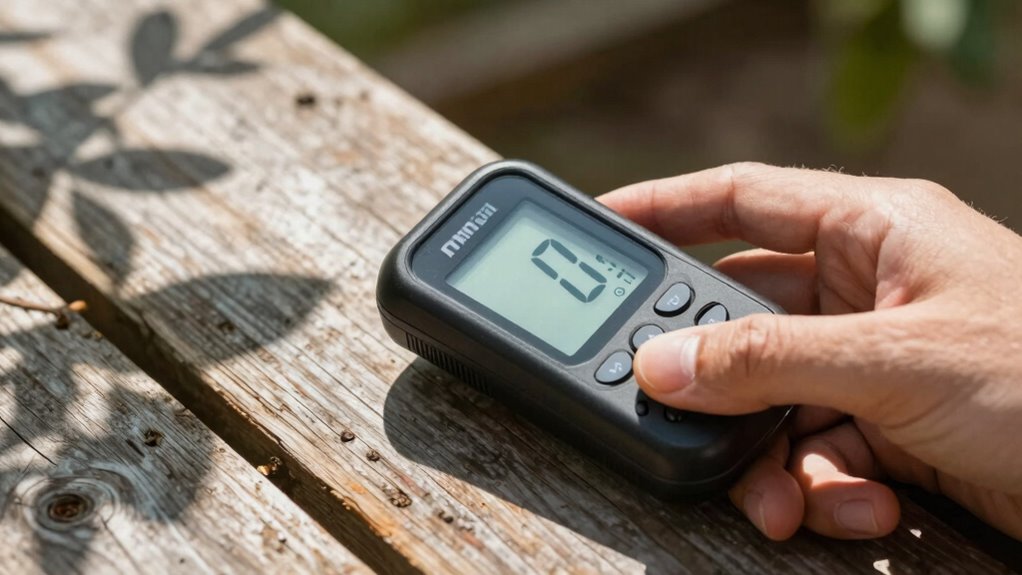

To avoid fooling yourself when using a moisture meter, regularly calibrate it according to the manufacturer’s instructions and test it with known standards to guarantee accuracy. Insert probes firmly into the material, making good contact without damaging the sensor, and take multiple measurements at different points. Be mindful of environmental factors like temperature and humidity, which can skew results. Following proper technique and understanding material variability will help you get reliable results—if you keep going, you’ll learn even more.

Get business pricing on tools and workshop supplies
- Business-only prices and quantity discounts
- Tax-exempt purchasing
- Multiple users, one account, clear invoices
Key Takeaways
- Regularly calibrate the moisture meter to ensure accurate readings.
- Take multiple measurements at different points for reliable results.
- Ensure good probe contact and proper insertion into the material.
- Consider environmental factors like temperature and humidity when interpreting data.
- Compare readings with industry standards and material-specific moisture ranges.
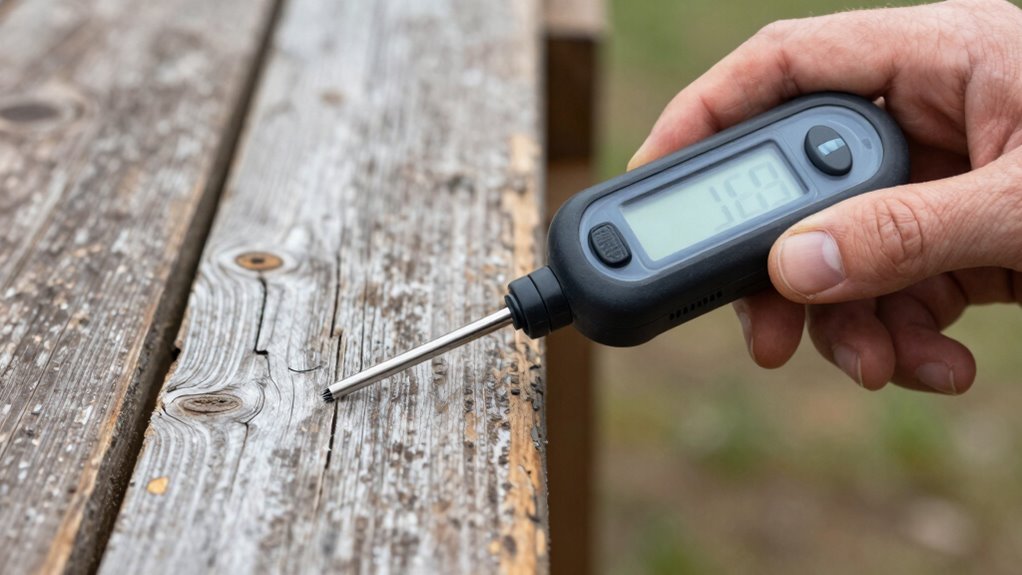
Using a moisture meter is a straightforward way to assess the moisture content in wood, drywall, or other materials, helping you prevent issues like mold, decay, or structural damage. But to get reliable readings, you need to focus on moisture content accuracy. That means guaranteeing your meter is properly calibrated before each use. Improper calibration can lead to false readings, causing you to overlook potential problems or take unnecessary actions. Always follow the manufacturer’s instructions for calibration, which may involve testing it with a known-dry or standard material to verify its accuracy. Regular calibration is especially critical if you’re working across different materials or environmental conditions, as moisture levels fluctuate and can impact the readings.
Calibrate your moisture meter regularly for accurate readings and reliable moisture level assessments.
When you’re ready to take a measurement, make sure the meter’s sensors are clean and in good condition. Dirt or damage can distort your readings, so wipe the sensors if necessary. Insert the meter’s probes directly into the material, ensuring good contact—press firmly but gently to avoid damaging the surface or the sensors. Keep in mind, the type of material affects how you take readings. For example, in wood, you might need to take multiple readings at different points to get an accurate picture, since moisture content can vary across the piece. Drywall, on the other hand, might only need a single reading if it’s uniform.
Don’t rely on just one measurement to make decisions. Take several readings, especially in different areas or depths, to confirm your results. If the readings seem inconsistent, double-check your calibration, probe placement, and contact quality. Remember, environmental conditions like temperature and humidity can influence moisture levels, so consider these factors when interpreting your data. If your moisture meter has different settings or modes, choose the one suitable for your material to improve accuracy. Being aware of material variability helps you better interpret your readings and avoid misjudging moisture levels. Additionally, understanding the correct moisture range for each material type guides you in making safer assessments. Knowing how environmental factors impact moisture readings can prevent misinterpretations and unnecessary concerns.
To ensure you’re making the most accurate evaluations, it’s also helpful to compare your readings against industry standards, which provide benchmarks for acceptable moisture levels in various materials. This context can assist in recognizing when a reading is abnormal and requires further investigation. Consistently practicing proper measurement techniques and understanding these standards will help you avoid misinterpretations and ensure the safety of your project or structure. Using a moisture meter properly, with attention to calibration and consistent measurement techniques, ensures you’re making informed decisions. It’s the best way to avoid fooling yourself and to keep your project or structure safe from moisture-related issues.
As an affiliate, we earn on qualifying purchases.
Frequently Asked Questions
Can Moisture Meters Be Used on All Types of Materials?
Moisture meters can’t be used on all types of materials because of material compatibility issues. Some meters are designed specifically for wood, while others suit concrete or drywall. Using the wrong type can give inaccurate readings and harm the meter. To guarantee meter longevity and accurate results, always check the manufacturer’s guidelines for material compatibility before testing. This way, you get reliable data and protect your device from damage.
How Often Should I Calibrate My Moisture Meter?
You should calibrate your moisture meter regularly—ideally before each use or at least once a week—to guarantee accuracy, considering calibration frequency. Always check the calibration against a known standard, especially if you’re working with different materials, since material compatibility can affect readings. Frequent calibration helps prevent errors and guarantees precise moisture measurements, no matter what material you’re testing. This way, you avoid misjudging moisture content and make informed decisions confidently.
What’s the Ideal Moisture Level for Different Wood Types?
Imagine holding a piece of wood, feeling its density and knowing its moisture absorption. For hardwoods like oak, aim for 6-8%, while softer woods like pine should be around 9-12%. Dense woods need lower moisture levels to avoid warping, whereas less dense types tolerate slightly higher levels. Use your moisture meter to gauge these ranges, ensuring your wood stays stable and properly conditioned for your project.
Are Digital Moisture Meters More Accurate Than Analog Ones?
Digital moisture meters generally offer more accurate readings than analog ones because their moisture sensors are more precise and consistent. They also often feature automatic calibration, reducing user error. However, to maintain accuracy, you should regularly check the calibration frequency, especially if you’re using the meter in different environments. Proper calibration guarantees your digital meter provides reliable data, helping you avoid false readings and make better-informed decisions.
How Do Environmental Conditions Affect Moisture Meter Readings?
Environmental conditions like temperature fluctuations and humidity variations can profoundly impact your moisture meter readings. When temperatures rise or fall, the moisture content in materials can appear higher or lower than it actually is. Similarly, humidity changes affect the moisture levels in the environment, skewing your results. To get accurate readings, test in stable conditions, calibrate your meter regularly, and consider the current environmental factors before interpreting your measurements.
Conclusion
Using a moisture meter accurately helps you avoid costly mistakes—did you know that improper moisture levels cause over 70% of flooring failures? By following the correct procedures, you guarantee reliable readings and make informed decisions. Remember, consistent calibration and proper probe contact are key. With these tips, you can confidently assess moisture levels and protect your investments, saving time and money in the long run. Don’t underestimate the power of precise measurement—your project depends on it.
Halloween Picks
halloween
As an affiliate, we earn on qualifying purchases.