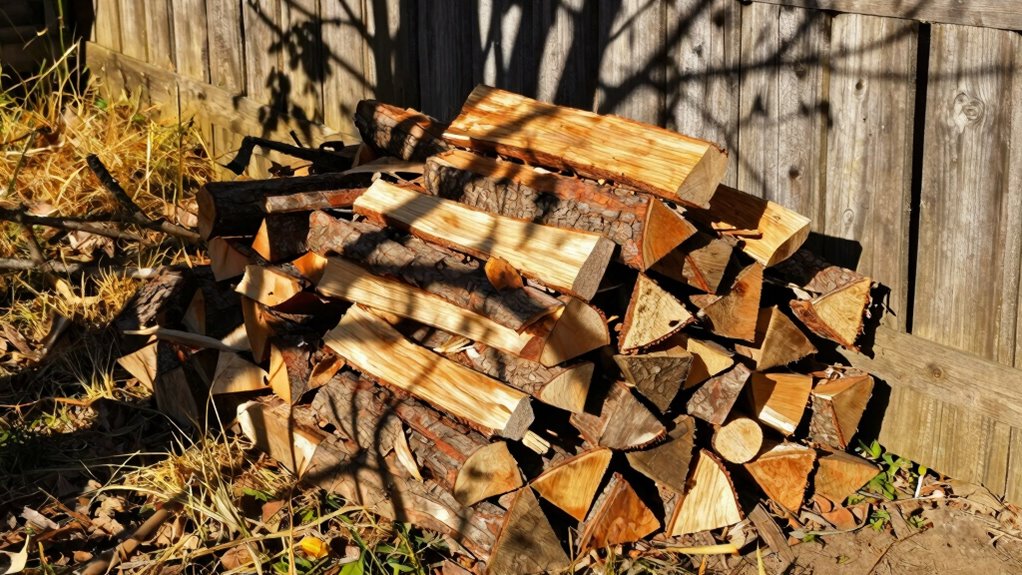

Your firewood stacks dry faster when you stack properly, ensuring good airflow around each piece. Placing your stacks in sunny, breezy spots and off the ground helps moisture escape more quickly. Proper orientation, like crisscross patterns, also boosts ventilation. Shaded, damp areas trap humidity, slowing drying. If you want to discover more tips on optimizing your firewood drying process, keep exploring how environment and technique play a role.

Get business pricing on tools and workshop supplies
- Business-only prices and quantity discounts
- Tax-exempt purchasing
- Multiple users, one account, clear invoices
Key Takeaways
- Better airflow due to proper stacking techniques enhances moisture evaporation.
- Exposure to direct sunlight accelerates drying compared to shaded areas.
- Stacks placed off the ground prevent moisture absorption from soil, speeding up drying.
- Ventilated and sheltered locations reduce humidity and promote faster moisture loss.
- Environmental factors like wind and absence of rain exposure improve drying efficiency.
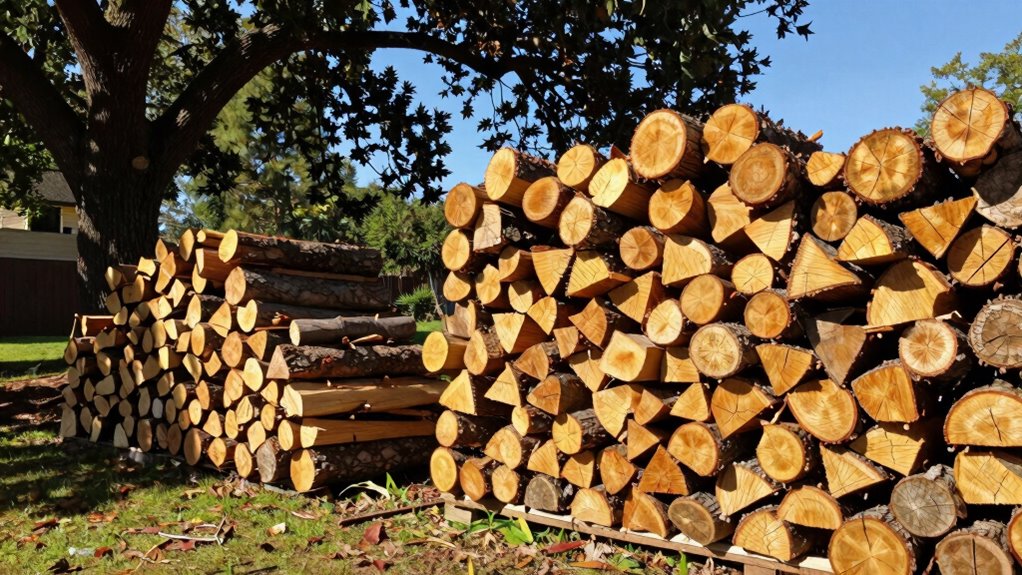
Have you ever noticed that firewood dries faster in some yards than others? It’s not just about luck—several factors influence how quickly your firewood sheds its moisture. One of the most vital is the wood moisture content. When wood has a high moisture level, it takes longer to burn and produces more smoke. Conversely, well-dried, seasoned wood with low moisture content ignites easily and burns efficiently. The key to speeding up this drying process is understanding how to manage wood moisture, and that often comes down to the environment and how you stack your wood.
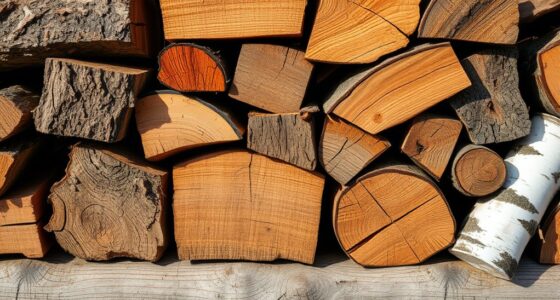
Another essential factor is stack orientation. The way you arrange your firewood can considerably impact how quickly it dries. Proper stack orientation allows for better airflow around each piece of wood, which helps moisture escape faster. If you stack your wood in a way that blocks air circulation, it traps dampness and prolongs the drying process. Ideally, you should stack your firewood in a crisscross pattern or with enough space between each piece to promote air movement. Positioning your stack in an area that receives direct sunlight and is protected from rain also accelerates drying. Sunlight helps evaporate moisture, while shelter prevents new dampness from seeping in.
Proper stack orientation promotes airflow, speeding up firewood drying and preventing prolonged dampness.
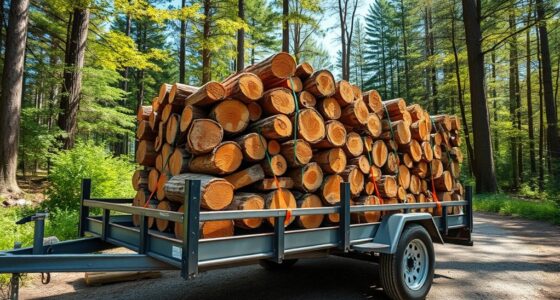
The placement of your firewood stack relative to prevailing winds makes a difference, too. When you position your stack in a spot that catches a breeze, it helps wick away excess moisture and maintain a consistent airflow around the wood. Conversely, stacking in a shaded, enclosed area can trap humidity, slowing down the drying process. The height of the stack matters as well—keeping it off the ground on a pallet or platform helps prevent moisture absorption from the soil, which can keep wood damp and extend drying time. Ensuring good airflow and proper air circulation is crucial for efficient drying. Additionally, using proper stacking techniques can further optimize airflow and moisture evaporation. Creating an environment with good ventilation can significantly influence how fast your firewood dries.
Using appropriate seasoning methods can also significantly reduce drying time by preparing the wood properly before stacking. You’ll notice that in yards where firewood is stacked with good airflow, exposed to sunlight, and kept away from damp ground, the wood dries much faster. It’s all about creating conditions that promote evaporation and airflow. Proper wood storage practices can make a substantial difference in how quickly your firewood is ready to burn. So, when you’re stacking your firewood, pay attention to these details. Adjust your stack orientation and choose a dry, sunny spot, and you’ll find your firewood is ready to burn much sooner, with less hassle and cleaner fires.
Frequently Asked Questions
Does the Type of Firewood Affect Drying Time?
Yes, the type of firewood affects drying time because different woods have varying moisture content and wood density. Hardwoods like oak or hickory typically take longer to dry due to higher density and moisture levels, while softwoods like pine dry faster because of lower density and moisture content. You’ll notice that selecting the right firewood type can make your drying process more efficient and guarantee better burning quality.
How Does the Season Impact Firewood Drying?
Like a sponge soaking up water, your firewood absorbs moisture differently depending on the season. During summer and warm months, higher temperatures and longer daylight hours lower moisture levels, helping wood dry faster. Increased air circulation in these seasons also accelerates drying, while in winter, cold and damp conditions keep moisture trapped. You’ll find that seasonality considerably impacts how quickly your firewood reaches ideal dryness for burning.
Can Nearby Trees Influence Firewood Drying Speed?
Nearby trees can influence firewood drying speed because different tree species shed leaves or needles at varying rates, affecting airflow and moisture levels. Additionally, soil moisture from nearby trees can raise ground humidity, slowing evaporation. If your yard has dense or water-retaining tree species, the firewood may take longer to dry. Proper spacing and choosing trees that don’t retain excess soil moisture help guarantee faster drying.
What Role Does Firewood Thickness Play in Drying?
Imagine slicing through a thick log, noticing its dense core and layered grain. Thicker firewood retains moisture longer due to higher moisture content and reduced exposure; its dense porosity slows evaporation. Thin logs, with more surface area and less internal moisture, dry faster. You’ll find that adjusting thickness helps control drying speed—thinner pieces shed moisture quickly, while thicker ones require patience for the wood to reach ideal dryness.
Does the Age of the Firewood Stack Matter?
Yes, the age of your firewood stack matters because older stacks typically have lower moisture content, making the wood easier to dry. Over time, moisture escapes, especially if the wood has good air circulation. Denser wood retains moisture longer, so a newer stack of dense wood may take longer to dry than an older, less dense pile. Properly aged firewood guarantees better combustion and less smoke.
Conclusion
You now know that factors like airflow, sunlight, and wood type influence how quickly your firewood dries. Remarkably, a study found that properly stacked wood can dry up to 50% faster than haphazardly piled logs. So, take the time to arrange your firewood carefully, and you’ll enjoy dry, ready-to-burn logs sooner. It’s a simple step that can make a big difference in how warm and cozy your fireside evenings become.
Fall yard work Picks
leaf blowers
As an affiliate, we earn on qualifying purchases.