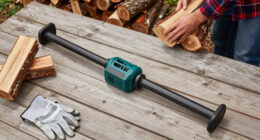
To optimize your firewood lot, choose a flat, drainable spot away from your house and pests. Build sturdy landings near stacks for easy loading, using durable materials like gravel. Elevate stacks on pallets to improve airflow and prevent rot. Create wide, clear pathways for carts or wheelbarrows, keeping everything organized by size or type. Proper layout guarantees your firewood stays dry and accessible—continue exploring for more tips to perfect your setup.

Get business pricing on tools and workshop supplies
- Business-only prices and quantity discounts
- Tax-exempt purchasing
- Multiple users, one account, clear invoices
Key Takeaways
- Position landings near main stacks on durable, level surfaces for efficient loading and unloading.
- Elevate firewood stacks on pallets or supports to ensure proper airflow and prevent moisture buildup.
- Design wide, clear pathways for easy access with wheelbarrows or carts, avoiding obstructions.
- Arrange stacks with space between them and structures to promote ventilation and reduce pest risks.
- Plan layout for logical grouping by size or usage, maintaining organization and safety throughout the lot.

Are you wondering how to organize your firewood lot for maximum efficiency and safety? The key lies in thoughtful firewood storage and proper lot organization. When you plan your layout carefully, you’ll find it easier to access your firewood, keep it dry, and prevent pests or decay. Start by selecting a flat, well-drained area away from your home’s foundation to reduce the risk of pests migrating indoors. This spot should be close enough to your home for convenience but far enough to avoid fire hazards or excessive moisture exposure.
Creating designated landings—flat, stable areas where you can load and unload firewood—helps streamline the process. These landings act as staging zones, preventing heavy logs from damaging your soil or grass. Position them near your main storage stacks for easy transfer, and ensure they’re level and sturdy. Durable materials like gravel or compacted dirt work well, but avoid soft or muddy surfaces that could sink or become unstable over time. With clear landings, you minimize the effort needed to move logs in and out, making your lot organization more efficient.
Designate flat, stable landings near stacks using gravel or compacted dirt for easy, safe firewood handling.
When it comes to stacking firewood, the goal is to maximize airflow to keep the wood dry and prevent rot. Stacks should be raised off the ground on pallets, cinder blocks, or other supports to facilitate air circulation underneath. Arrange your firewood in neat, tight rows with enough space between stacks and stacks within stacks to promote ventilation. Avoid stacking directly against buildings or fences, as this can trap moisture and encourage pests. Instead, maintain a small gap—about a foot—around the stacks.
Access is another critical factor in lot organization. Design your layout so you can easily reach all stacks without climbing or squeezing between objects. Create clear pathways, ideally wide enough for a wheelbarrow or cart, to move logs efficiently. Keep your firewood storage in a logical sequence—perhaps by size, type, or frequency of use—so you can grab what you need quickly. Regularly inspect and rearrange your lot as needed, removing any debris or fallen branches that could obstruct pathways or harbor pests.
As an affiliate, we earn on qualifying purchases.
Frequently Asked Questions
How Do I Choose the Best Location for My Firewood Landings?
You should choose a location that’s dry, well-drained, and close to your home for easy access. Look for a shady spot to keep the wood dry and prevent rot, following firewood storage tips. Make certain there’s good airflow around your outdoor woodpile ideas to dry the wood thoroughly. Avoid low-lying areas prone to flooding, and position your landings on level ground to make stacking and access simple and safe.
What Materials Are Ideal for Constructing Firewood Stacks?
Oh, because nothing says sophistication like choosing materials that guarantee your firewood stays as dry as your sarcasm is sharp. Opt for sturdy, breathable materials like pallets, metal racks, or seasoned wood itself—anything that keeps moisture out and stack stability high. Avoid flimsy options that turn your carefully stacked firewood into a soggy mess, because wet firewood ruins the mood faster than a bad pun. Be smart, stay dry.
How Can I Prevent Pests From Infesting Stored Firewood?
To prevent pests from infesting your stored firewood, focus on pest control and proper storage tips. Keep firewood stacks elevated off the ground to improve airflow and prevent moisture buildup, which attracts pests. Store your wood in a well-ventilated, dry area, and avoid direct contact with the soil. Regularly inspect and rotate stacks, and consider using pest-repellent treatments or barriers around storage sites to keep unwanted critters at bay.
What Are the Safety Considerations for Firewood Access Paths?
A stitch in time saves nine, so prioritize safety when creating firewood access paths. Make certain your paths are clear of obstructions, well-lit, and stable to prevent trips and falls. Keep pathways wide enough for emergency access and to avoid fire spread risks. Regularly inspect for hazards like loose debris or uneven surfaces, and maintain clear routes to quickly reach or evacuate your firewood storage area if needed.
How Often Should I Rotate or Rest My Firewood Stacks?
You should rotate or rest your firewood stacks at least once a year during seasonal maintenance. This helps guarantee proper moisture control, preventing mold and rot. By moving the oldest wood to the front and re-stacking fresh wood behind, you allow air to circulate better, reducing moisture buildup. Regularly rotating your stacks keeps your firewood dry and ready for use, extending its quality and safety.
Conclusion
So, there you have it—your perfect firewood lot layout. Follow these simple rules, and you’ll turn your backyard into a lumber lover’s paradise… or at least a place where firewood doesn’t roll away every time the wind blows. Just remember, a well-organized firewood lot is the key to impressing neighbors and avoiding the dreaded “firewood chaos” look. Happy stacking—may your stacks be tall, your landings sturdy, and your access never clogged!
Fall Picks
fall essentials
As an affiliate, we earn on qualifying purchases.