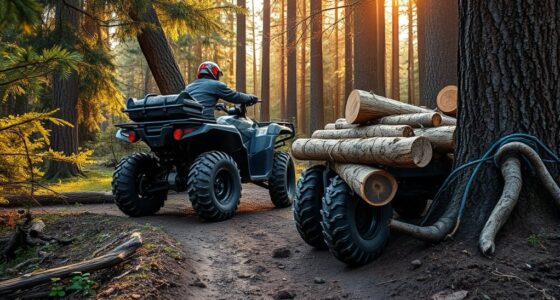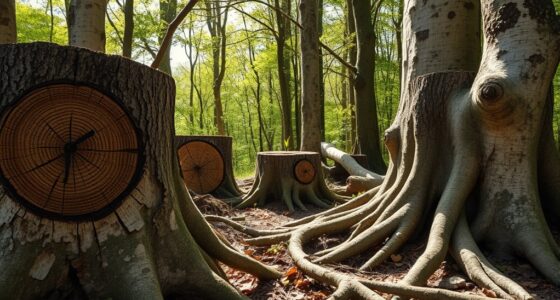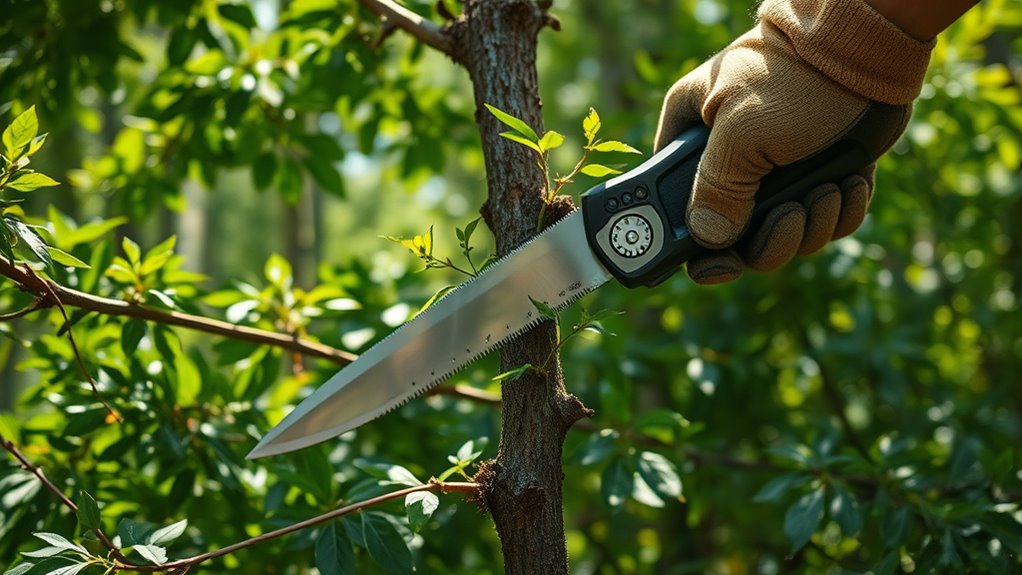

Using hand tools for low-impact harvesting allows you to minimize environmental disruption and protect surrounding ecosystems. You can selectively harvest mature or diseased trees with precise cuts, reducing waste and soil disturbance. This method promotes healthy forest growth, preserves biodiversity, and maintains the landscape’s natural beauty. It also cuts down on noise, pollution, and habitat damage caused by machinery. If you keep exploring, you’ll discover more ways to practice responsible land management and sustainable forestry.
Key Takeaways
- Utilizes traditional hand tools to minimize environmental disturbance during harvesting activities.
- Enables selective removal of mature or diseased trees, reducing waste and damage.
- Promotes soil health and biodiversity by avoiding heavy machinery and preserving natural habitats.
- Decreases noise, air pollution, and carbon footprint compared to mechanized methods.
- Supports sustainable forestry by maintaining ecosystem integrity and encouraging forest regeneration.

When you choose to harvest with hand tools, you minimize environmental disruption and protect the health of the ecosystem. This approach aligns with the principles of sustainable forestry, which emphasizes balancing resource use with ecological preservation. Using traditional techniques, such as hand saws, axes, and pruning tools, allows you to selectively harvest trees without damaging surrounding vegetation or soil. Unlike mechanized methods, hand tools enable precise cuts, reducing waste and preventing unnecessary harm to the forest’s structure. This careful approach ensures that younger trees and understory plants remain undisturbed, supporting biodiversity and fostering healthier forest growth over time.
By opting for low-impact harvesting with hand tools, you’re actively participating in a practice that respects the natural balance of forest ecosystems. Traditional techniques have been refined over generations, emphasizing skillful cuts that promote rapid healing and minimize pathogen entry points. These methods also reduce noise pollution and air pollution associated with machinery, maintaining a quieter, cleaner environment. When you work with hand tools, you’re less likely to cause soil compaction or erosion, common issues with heavy machinery that can lead to long-term habitat degradation. Instead, your careful, deliberate movements help preserve the soil’s integrity, which is *crucial* for nutrient cycling and plant regeneration. Additionally, using hand tools fosters a deeper understanding of the forest’s natural processes and encourages sustainable practices.
Furthermore, engaging in sustainable forestry through traditional techniques fosters a deeper connection to the land. It encourages responsible stewardship, where you’re mindful of the forest’s regenerative capacity. This approach often involves selective logging—removing only mature or diseased trees—ensuring the forest continues to thrive and provide resources for future generations. Hand tools allow you to assess each tree individually, making informed decisions based on its health and growth stage. This selective process minimizes waste and maximizes the sustainable yield of forest resources.
In addition, by practicing low-impact harvesting, you help preserve scenic landscapes and recreational areas. People value forests not only for their timber but also for their aesthetic and ecological benefits. Your careful harvesting methods maintain the natural beauty of the environment, supporting outdoor activities and tourism. This sustainable approach also reduces the carbon footprint associated with resource extraction, contributing to efforts against climate change. Overall, using traditional techniques with hand tools demonstrates a commitment to responsible forest management, ensuring that our natural landscapes remain vibrant and healthy for generations to come.
Frequently Asked Questions
What Safety Gear Is Recommended for Low-Impact Harvesting?
You should wear protective gloves to prevent cuts and blisters, and eye protection to guard against debris. Always choose sturdy gloves suited for handling tools and make sure your safety glasses or goggles fit well and stay in place. By wearing this safety gear, you reduce the risk of injury, allowing you to work confidently and efficiently during low-impact harvesting with hand tools. Stay vigilant and prioritize your safety at all times.
How Do Weather Conditions Affect Hand-Tool Harvesting Methods?
While gentle shifts in weather can influence your harvesting timing, they also impact how you approach hand-tool harvesting. Rain or high humidity can increase moisture considerations, making wood more delicate and prone to damage. Cold conditions might slow your work, while dry weather generally facilitates cleaner cuts. Always monitor weather patterns closely and plan your harvesting schedule accordingly to guarantee ideal results and minimize environmental impact.
Can Low-Impact Harvesting Be Scaled for Commercial Operations?
Yes, you can scale low-impact harvesting for commercial operations by focusing on sustainable supply and economic feasibility. You’ll need to optimize techniques, train workers, and invest in efficient tools to guarantee productivity stays high without compromising environmental values. By balancing careful resource management with cost-effective practices, you can successfully expand these methods, meeting market demands while preserving ecosystems and maintaining long-term profitability.
What Maintenance Is Required for Hand Tools Used in Harvesting?
You need to maintain your hand tools regularly to guarantee efficiency and safety. Statistics show that poorly maintained blades can reduce cutting performance by up to 30%. Sharpen your blades frequently to keep them effective, and inspect handles for cracks or splinters, repairing or replacing them as needed. Proper maintenance includes cleaning tools after use, oiling metal parts, and storing them in a dry place to prevent rust.
How Do Different Plant Species Respond to Low-Impact Harvesting Techniques?
Different plant species respond uniquely to low-impact harvesting techniques based on their species resilience and harvesting sensitivity. You’ll notice some species recover quickly and maintain productivity, showing high resilience, while others may need more careful handling due to their sensitivity. By understanding these differences, you can tailor your approach, minimizing damage and promoting sustainable use. This guarantees long-term health of the ecosystem and the continued availability of valuable plant resources.
Conclusion
By choosing hand tools over heavy machinery, you minimize environmental damage and protect delicate ecosystems. It’s a quiet, gentle approach that contrasts sharply with the noise and disruption of large-scale harvesting. As you work with care and precision, you preserve the landscape’s natural beauty, proving that sometimes, less is more. In a world keen for speed, your mindful methods stand as a reminder that sustainable harvesting doesn’t have to sacrifice efficiency for impact.