
To manage your woodlot effectively, it’s crucial to understand key silviculture terms. Terms like forest management, site preparation, planting techniques, forest structure, spacing, thinning, pruning, pest control, and biodiversity help you make informed decisions for healthy, sustainable growth. Knowing these concepts ensures you promote proper tree development, control pests, and maintain forest health. If you want to deepen your understanding of these important concepts, keep exploring these essential silviculture terms.
Key Takeaways
- Silviculture involves practices like planting, thinning, and pest control to promote healthy, sustainable forests.
- Stand Density refers to the number of trees per unit area, affecting growth, competition, and forest health.
- Rotation Age is the optimal time to harvest trees, balancing growth and economic return.
- Site Preparation includes clearing competing vegetation and soil conditioning to improve tree establishment.
- Forest Inventory involves measuring and monitoring tree species, size, and health to inform management decisions.
Have you ever wondered what the key terms in silviculture mean? If you’re a woodlot owner, understanding these terms can make a big difference in how you manage your land. Silviculture is essentially the art and science of growing and caring for forests, and it involves many concepts that help you make informed decisions. One of the fundamental ideas is forest management, which refers to the practices you implement to maintain, protect, and enhance your woodland. Effective forest management guarantees your woodlot remains healthy, productive, and sustainable over time. It involves planning, monitoring, and applying various techniques to promote desired tree growth, control pests, and conserve biodiversity.
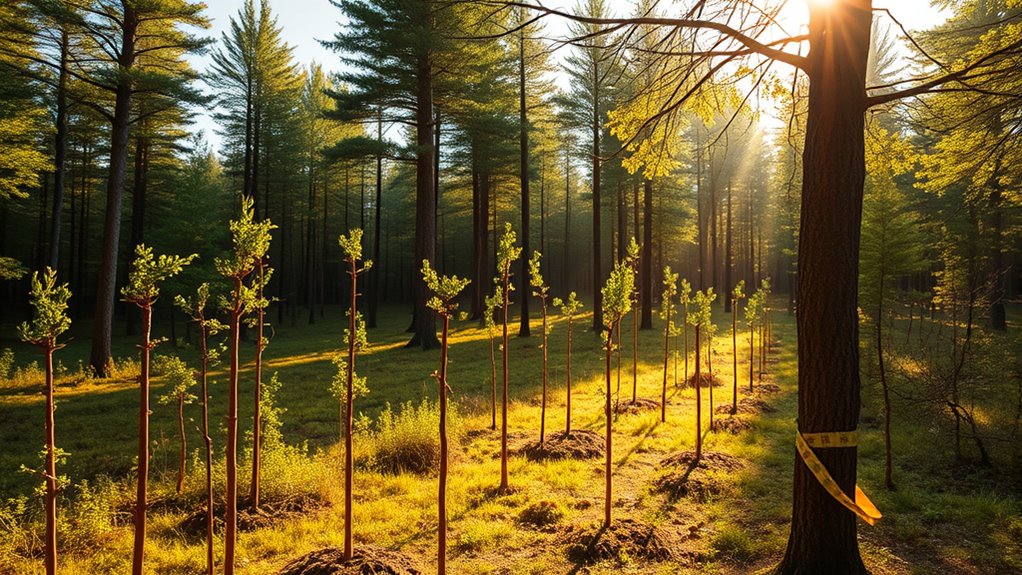
A critical part of forest management is understanding and applying the right tree planting techniques. When you decide to reforest an area or improve your stand, the methods you use for planting can greatly influence the success of your efforts. Tree planting techniques include choosing the appropriate species, preparing the site properly, and planting at the right time. For example, selecting native species adapted to your climate improves survival rates and growth. Proper site preparation might involve clearing competing vegetation or ensuring good soil contact with the roots. Timing is also essential; planting during the right season helps trees establish quickly and reduces stress. You might use various planting methods, such as direct seeding, transplanting seedlings, or using specialized machinery for larger reforestation projects.
Understanding these techniques allows you to optimize your efforts and avoid common pitfalls, like planting too deeply or in unsuitable conditions. It’s also important to reflect on the spacing between trees, as this impacts growth and forest structure over time. Proper spacing guarantees adequate sunlight, air circulation, and access to nutrients, which are fundamental for healthy development. As you learn more about forest management, you’ll discover that integrating your knowledge of tree planting techniques with ongoing maintenance—like thinning, pruning, and controlling pests—can drastically improve your forest’s health and productivity.
Being familiar with these terms and practices helps you make smarter decisions about your land. Whether you’re planting new trees, managing an existing forest, or planning future harvests, understanding silviculture concepts gives you a solid foundation. It empowers you to take an active role in guaranteeing your woodlot’s vitality and sustainability for years to come. So, immerse yourself in these terms, learn the techniques, and apply them carefully. Your forest’s health and your success as a woodlot owner depend on it. Developing a comprehensive understanding of silviculture can further enhance your management skills and ensure long-term success.
Frequently Asked Questions
How Can I Identify the Best Silviculture Method for My Woods?
To identify the best silviculture method for your woods, start with thorough silviculture planning that considers your land’s unique characteristics. Assess your goals, tree species, and site conditions, then research and compare different methods. Selecting appropriate methods involves understanding their impacts on growth and health. Consult local forestry experts or extension services for tailored advice, ensuring your chosen approach aligns with your objectives and maximizes your woodland’s potential.
What Are the Signs of Unhealthy or Declining Forest Health?
Your forest’s health signals distress like a doctor’s warning light. Look for forest pest signs such as chewed leaves, boreholes, or unusual insect activity. Check soil nutrient deficiencies—stunted growth, yellowing leaves, or poor regeneration indicate problems. Declining trees may exhibit thinning canopies, dead branches, or abnormal leaf color. By catching these signs early, you can take action to restore your woods before serious damage occurs.
How Often Should I Conduct Forest Inventory Assessments?
You should conduct forest inventory assessments at least every 3 to 5 years, following forest health monitoring and inventory frequency guidelines. Regular assessments help you track changes in tree growth, species diversity, and signs of disease or pests. This schedule guarantees you stay proactive in managing your woodlot, allowing you to make informed decisions about thinning, harvesting, or conservation efforts, keeping your forest healthy and sustainable over time.
What Financial Assistance Programs Are Available for Silviculture?
Funding fosters forests! You can access federal grants and state incentives designed to support silviculture efforts. These programs provide financial assistance for practices like planting, thinning, and managing your woodlot sustainably. By applying for these grants and incentives, you empower your property’s potential, promote healthy growth, and protect natural resources. Stay proactive, research available programs, and take advantage of these financial opportunities to nurture your woodland wonderland effectively.
How Does Climate Change Impact Silviculture Practices?
Climate change impacts silviculture practices by requiring you to focus on climate adaptation strategies, such as selecting resilient tree species and adjusting planting times. You can also enhance carbon sequestration by managing your woodlot to maximize biomass growth. These practices help your forest withstand changing conditions, reduce vulnerability, and contribute to climate change mitigation efforts while maintaining healthy, productive forests.
Conclusion
Now that you’ve learned these silviculture terms, you’re better equipped to nurture your woodlot like a skilled gardener tending a delicate, thriving garden. Think of each term as an essential tool in your kit, shaping the future of your forest. With this knowledge, you can guide your land to flourish, turning it into a vibrant tapestry of growth and life—an enduring legacy rooted in understanding and care. Your woods await your confident, informed touch.