
TL;DR

Get business pricing on tools and workshop supplies
- Business-only prices and quantity discounts
- Tax-exempt purchasing
- Multiple users, one account, clear invoices
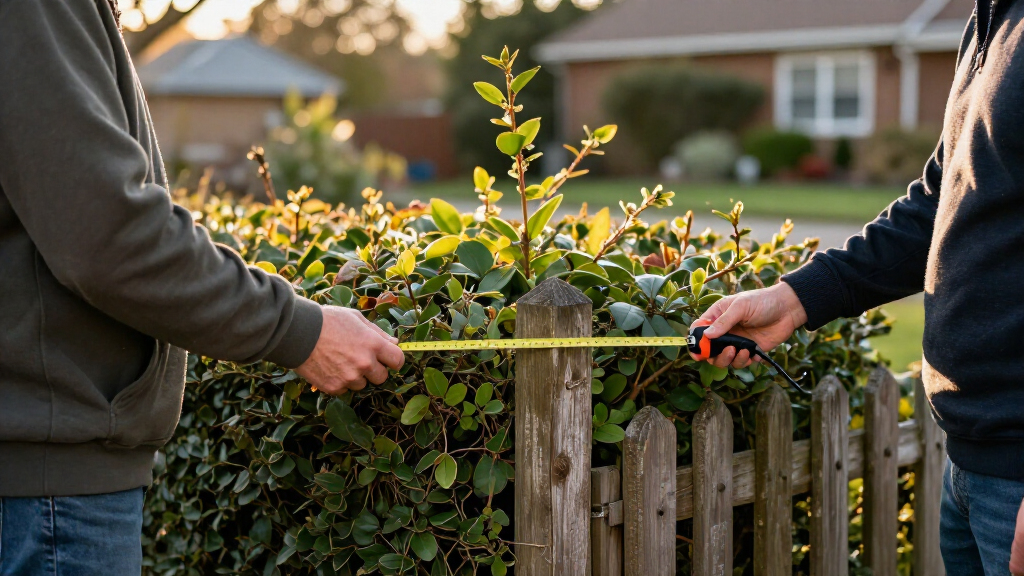
There is no reliable “left-hand rule” for deciding who owns a boundary tree or hedge, according to an Ideal Home report. Property deeds and the tree’s position relative to the legal boundary are useful starting points, but a fence alone may not settle the question. Rules on overhanging branches, protected trees and nesting birds can also limit what owners may do.
Homeowners should check property deeds and the tree’s position against the legal boundary before deciding who owns or can prune a tree or hedge between neighbouring properties, according to an Ideal Home report featuring property and gardening experts. The report warns that the popular “left-hand rule” for garden boundaries is a property myth, and says a fence’s location does not necessarily prove where the legal boundary lies.
The report recommends starting with the property deeds, which can be accessed through HM Land Registry. A thick red line on a plan usually shows the general extent of the property, but is not precise to the millimetre. Gardening and greenhouse expert Lucie Bradley of Harvst Automatic Watering says deeds may also contain “T” marks: a mark on one side of a boundary can indicate responsibility for that boundary feature, while paired marks forming an “H” can indicate shared responsibility. These signs are clues to investigate, not a substitute for resolving an unclear boundary.
The tree’s trunk or main stem is another important indicator. MoneySuperMarket home insurance expert Kara Gammall says a tree whose trunk is wholly on one property will generally belong to that landowner, even if branches or roots extend into a neighbour’s garden. If the trunk crosses the boundary, ownership can be more complicated. The report advises discussing care or major work with the neighbour; where a tree or hedge appears to straddle the line, agreement is especially relevant before irreversible pruning or removal.
For branches or roots that cross onto a neighbour’s land, Gammall says a person generally has the right to prune back encroaching growth to the boundary, but should not cross onto the neighbour’s property or cut beyond it without permission. She recommends speaking to the neighbour before substantial pruning because it could affect the tree’s health or stability. A tree may also be subject to a Tree Preservation Order (TPO), and nesting birds may be legally protected, so homeowners should check restrictions before starting work.
Pruning Rights Depend on the Boundary
Getting ownership wrong can turn ordinary garden maintenance into a dispute or lead to damage to a neighbour’s property. It can also expose a homeowner to legal consequences if work breaches protections. The practical distinction is between growth that has crossed a boundary and the tree itself: a right to cut back encroaching branches does not automatically confer ownership of the tree or permission to remove it.
The report cites Tiger.co.uk managing director and home insurance expert Ian Wilson, who says pruning a tree covered by a TPO without permission can carry fines of up to £20,000. That figure is attributed to Wilson’s warning in the report; the applicable rules and consequences depend on the circumstances. Checking with the local council before work is a sensible step, particularly if the tree may be protected or the proposed work is extensive.
garden boundary property deed check
As an affiliate, we earn on qualifying purchases.
As an affiliate, we earn on qualifying purchases.
Deeds, Trunks and Garden Fences
Boundary questions often arise when branches overhang a garden, roots spread across a property line, or a hedge needs substantial work. The Ideal Home report says homeowners may assume that a fence identifies the legal boundary, but fences can move over time and are not necessarily conclusive evidence. Deeds and historic property documents may help clarify the position.
The report does not present a single rule that settles every case. Deed plans show general property extents, and marks on a plan can indicate responsibility, while the location of a trunk may help establish which land it stands on. Where documents and physical features do not provide a clear answer, the report’s experts point to discussion with the neighbour rather than unilateral action.
“The place to start when trying to find out who owns a tree or hedge is to check your house deeds.”
— Lucie Bradley, gardening and greenhouse expert at Harvst Automatic Watering
When the Boundary Is Not Clear
The report does not identify a specific property dispute or give a legal ruling on any individual boundary. A deed plan may show only the general extent of a property, and fences may have shifted, so the precise line can remain uncertain. Trees with trunks that straddle that line can raise further questions about ownership and responsibility.
Nor does the report establish that every “T” or “H” mark will settle a particular case; the meaning and relevance of documents depend on the property. The rights and restrictions applying to a particular tree also cannot be determined from the article alone. Homeowners need to check the records and any local protections that apply to their address.
Check Council Records Before Work
Before pruning or removing a tree, homeowners can compare their deeds with the garden boundary, review relevant historic documents and speak with the neighbour. If the tree may be protected, the report advises checking the local council’s TPO and conservation-area information and contacting the council for specific details. A third-party TPO checker may offer an approximate indication, but the report says council confirmation is needed.
If ownership remains disputed, or planned work is extensive, the homeowner should seek appropriate professional or legal advice rather than assume the fence, a boundary mark or an overhanging branch settles the matter. The next step depends on what the documents and council records show; the report describes no further official action or case-specific outcome.
Key Questions
Does the “left-hand rule” show who owns a boundary tree?
No. The Ideal Home report describes the left-hand rule as a widespread property myth. Check the deeds and other relevant documents instead of relying on that rule.
Who usually owns a tree whose trunk is on one side of the boundary?
MoneySuperMarket expert Kara Gammall says a tree whose trunk is entirely on one property will generally belong to that landowner, even if its branches or roots extend into the neighbour’s garden. The legal boundary and property documents still matter.
Can I cut branches that overhang my garden?
The report says a homeowner generally may prune growth that crosses onto their side, back to the boundary. Do not enter the neighbour’s land or cut beyond the boundary without permission, and check for tree protections before work.
How can I check whether a tree is protected?
Contact the local council or check its online records for Tree Preservation Orders and conservation areas. An online checker may provide an approximate indication, but the report advises confirming details with the council.
Source: rss
Fall Picks
fall essentials
As an affiliate, we earn on qualifying purchases.