To heat your garage or shop with firewood effectively, install a proper wood stove on a non-combustible surface and verify it’s vented safely through a chimney. Stockpile seasoned, dry firewood off the ground in organized stacks covered with breathable material. Regularly inspect and maintain your stove and chimney for safety and efficiency. Proper setup and handling improve heat output, reduce hazards, and save costs—continue exploring for detailed steps to get started confidently.

Get business pricing on tools and workshop supplies
- Business-only prices and quantity discounts
- Tax-exempt purchasing
- Multiple users, one account, clear invoices
Key Takeaways
- Install a properly sized, vented wood stove on a non-combustible surface for safe and efficient heating.
- Store seasoned firewood outdoors on raised platforms with breathable covers to ensure dryness and quick access.
- Use well-seasoned wood to maximize heat output, reduce smoke, and promote cleaner combustion.
- Maintain regular inspection and cleaning of the stove and chimney to prevent fire hazards and ensure optimal performance.
- Organize your firewood storage area for safety, easy access, and to prevent pests and moisture buildup.
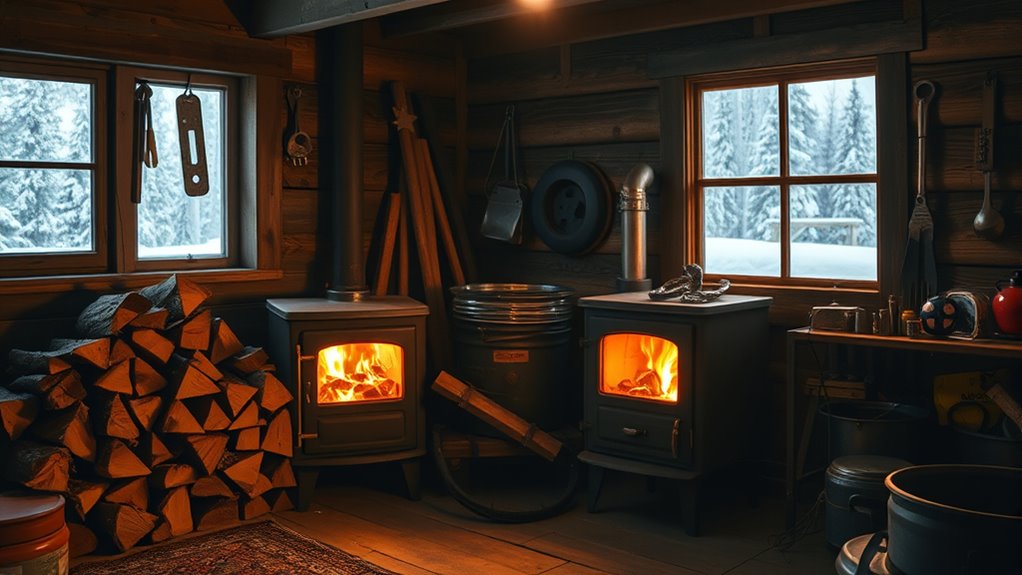
Heating a garage or shop with firewood can be an effective and cost-efficient solution, especially if you have a steady supply of wood. When you’re considering this approach, one of your first priorities should be proper wood stove installation. A well-installed stove ensures safety, efficiency, and consistent warmth. You want to choose a stove that’s appropriately sized for your space and complies with local codes. Proper venting is critical; you need a chimney or flue that effectively directs smoke outside, preventing dangerous buildup indoors. Securing the stove on a non-combustible surface, like a concrete pad, minimizes fire hazards. Once installed, regularly inspecting and maintaining your stove and chimney helps keep it running safely and efficiently. Proper wood stove installation isn’t a task to take lightly—it’s worth investing in professional help if you’re unfamiliar with the process.
Next, you’ll need to think about firewood storage solutions. Proper storage keeps your wood dry, seasoned, and ready to burn, which maximizes heat output and reduces smoke. Stack your firewood off the ground on a raised platform or pallet to prevent moisture absorption from the ground. Cover the top of the stack with a breathable tarp or a dedicated firewood cover to protect against rain and snow but allow air circulation. Good airflow is essential to keep your firewood dry and properly seasoned, which makes your fires burn hotter and cleaner. You can organize your firewood by size or type, making it easier to access what you need without disturbing the entire stack. A well-thought-out storage area also minimizes clutter and keeps your workspace safe. If you’re tight on space, consider vertical stacking or using firewood racks designed specifically for outdoor storage. Additionally, understanding the importance of proper firewood seasoning will ensure your wood burns efficiently and safely.
Having your firewood neatly stored and properly seasoned means you’ll spend less time tending to moisture issues or dealing with inefficient burns. When you load your stove, always select the best-dried wood, which ignites faster and produces more heat with less smoke. Additionally, keep a small supply of seasoned firewood close by for easy access during colder months, but store most of your wood away from the building to prevent pests or moisture from entering your workspace. Combining good firewood storage solutions with a professional wood stove installation creates a reliable heating setup that’s safe, economical, and effective. With the right planning and maintenance, you’ll enjoy consistent warmth in your garage or shop without relying heavily on electricity or gas, saving you money over time.
As an affiliate, we earn on qualifying purchases.
Frequently Asked Questions
How Do I Prevent Firewood From Attracting Pests in My Garage?
To prevent pests from being attracted to your firewood in the garage, start with proper pest prevention strategies. Store firewood off the ground on a rack or pallet, and keep it away from your garage walls. Use airtight containers or cover the wood with a tarp to deter pests. Regularly inspect and rotate your firewood, and avoid bringing in infested logs. These storage tips help keep pests at bay and protect your space.
What Safety Precautions Are Necessary When Burning Firewood Indoors?
A stitch in time saves nine, so prioritize safety when burning firewood indoors. Always guarantee proper ventilation safety to prevent carbon monoxide buildup, and keep a fire extinguisher nearby in case of emergencies. Regularly check smoke and carbon monoxide detectors, and never leave a fire unattended. Properly store and dry your firewood to reduce smoke and creosote. These precautions help you enjoy warmth safely and responsibly.
How Do I Efficiently Store Firewood for Winter Use?
To efficiently store firewood for winter, focus on seasonal storage by stacking it off the ground and in a well-ventilated area. Use a cover to protect it from rain while allowing airflow to control moisture. Keep firewood away from your garage or shop walls to prevent pests and mold. Regularly check for dryness, ensuring the wood stays moisture-free for easy, safe burning all winter long.
Can I Use a Regular Fireplace or Stove for Garage Heating?
You can use a regular fireplace or stove for garage heating if you prioritize safety and proper installation. Guarantee fireplace safety by installing a quality chimney and maintaining clearances. For stoves, professional stove installation is essential to prevent fire hazards and ensure efficient operation. Avoid using indoor fireplaces directly in garages unless specifically designed for such use, as improper setup can pose serious safety risks. Always follow manufacturer guidelines and local codes.
What Are the Environmental Impacts of Burning Firewood Indoors?
Burning firewood indoors affects your environment by increasing carbon emissions, which contribute to climate change. It also impacts indoor air quality, releasing pollutants like particulate matter, carbon monoxide, and volatile organic compounds that can harm your health. To minimize these effects, guarantee proper ventilation and use well-seasoned wood. Regular maintenance of your stove or fireplace helps reduce emissions, keeping both your indoor air cleaner and your carbon footprint smaller.
Conclusion
Heating your garage or shop with firewood is like igniting a cozy, roaring heart inside a chilly shell. It’s a timeless dance of crackling flames and warm, inviting glow that transforms cold, concrete walls into a comforting haven. With the right setup, you’ll turn frosty mornings into warm, productive days. Remember, firewood’s warmth isn’t just heat—it’s a flickering promise of comfort and resilience, lighting your workspace with the glow of tradition and self-reliance.
Fall Picks
fall essentials
As an affiliate, we earn on qualifying purchases.