
During a power outage, safely using wood heat involves storing seasoned firewood, keeping a fire extinguisher nearby, and ensuring proper ventilation to prevent carbon monoxide buildup. Make sure your chimney or flue is clean and unobstructed to prevent creosote fires. Regularly inspect your stove’s seals and vents for damage. Monitoring your setup helps keep your home warm and safe during outages. Continue exploring how to maximize safety and efficiency with wood heat.
Key Takeaways
- Stockpile seasoned, dry firewood and kindling in advance to ensure reliable heat during outages.
- Regularly inspect and maintain your stove, chimney, and vents for safe operation and efficiency.
- Keep a fire extinguisher nearby and learn proper usage to handle any fire emergencies.
- Ensure proper ventilation to prevent dangerous carbon monoxide buildup inside the home.
- Never leave fires unattended and maintain clear space around heating appliances to reduce fire risk.

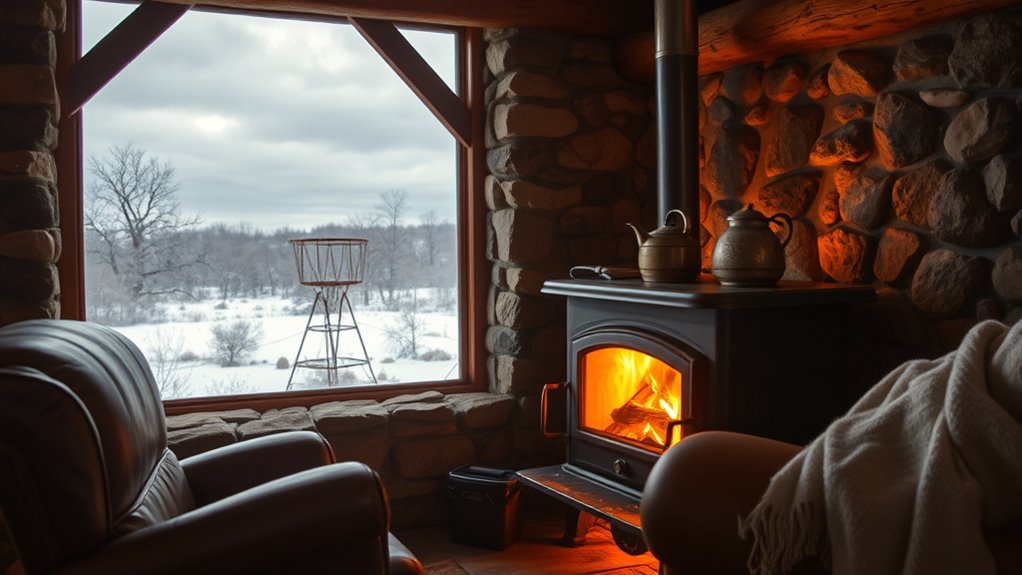
During a power outage, wood heat can be a reliable and efficient way to keep your home warm. When the lights go out, your wood stove or fireplace becomes an essential source of heat, but it also demands careful attention to fire safety. Making sure your wood heating system is safe is vital to prevent accidents or fires. Before the cold weather hits, perform maintenance tips like cleaning out ash and creosote buildup from your chimney or stove pipe. Regularly inspect your stove’s door seals, glass panes, and vents to make sure they’re in good condition. This not only keeps your system operating efficiently but also minimizes the risk of smoke or harmful fumes entering your home. Remember, a well-maintained stove reduces the chance of dangerous chimney fires and makes sure you get the most heat from your wood.
During a power outage, you might rely heavily on your wood heat source, so it’s wise to keep some basic fire safety measures in mind. Never leave a burning fire unattended, especially if you have pets or children around. Keep a fire extinguisher nearby, and make sure you know how to use it in case of an emergency. It’s also smart to keep combustible items—like paper, curtains, or furniture—away from the stove or fireplace to prevent accidental fires. Ventilation is essential; always make sure your chimney or flue is clear of obstructions, and never block vents or air intakes that help the fire burn safely. Proper airflow not only supports efficient burning but also helps prevent dangerous carbon monoxide buildup inside your home. Additionally, understanding the role of color accuracy in your home heating appliances can help you monitor proper combustion and identify issues early.
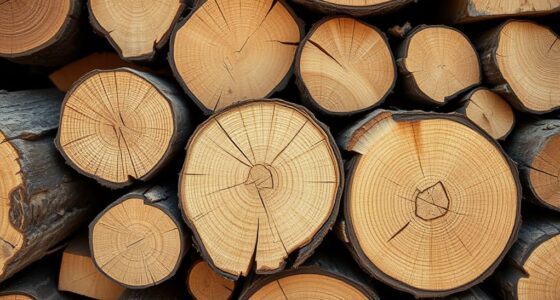
In terms of maintenance tips, you should check your firewood supply regularly. Use seasoned, dry wood for cleaner burns and fewer creosote deposits, which can ignite and cause chimney fires. Store your firewood properly, off the ground and covered, to keep it dry and ready for use. During a power outage, it’s a good idea to have a stockpile of seasoned wood on hand, along with kindling and fire starters, so you’re prepared to keep the fire going without relying on electricity. Additionally, periodically inspect your chimney or flue for any signs of wear or blockages, especially after a long period of use or if you notice smoke backing into your home. Proper maintenance not only prolongs the life of your heating system but also makes sure your safety during those critical cold nights when power is out.
Frequently Asked Questions
How Do I Safely Store Firewood for Long-Term Use?
You should store your firewood in a dry, well-ventilated area to guarantee proper firewood storage. Stack it off the ground on pallets or a rack to prevent moisture absorption. Cover the top with a tarp to protect from rain, but leave the sides open for good airflow. Proper long-term drying is essential, so rotate your firewood regularly and check for mold or pests before use.
What Are the Best Types of Wood for Heating?
You want the best wood for heating, so choose types of hardwood like oak, maple, and hickory, which burn longer and produce more heat. Avoid softwood for long-term warmth, as it burns faster and creates more creosote. Hardwoods provide consistent, reliable heat, while softwoods are good for quick fires. Prioritize seasoned, dry wood to maximize warmth and efficiency. Hardwoods and softwoods serve different needs, so select wisely for your heating goals.
How Can I Prevent Indoor Air Pollution From Wood Heat?
To prevent indoor air pollution from wood heat, you should prioritize good indoor air quality by ensuring proper ventilation strategies. Regularly open vents or use exhaust fans to circulate air and reduce smoke buildup. Burn seasoned, dry wood to minimize smoke emissions, and keep your stove well-maintained. Avoid overloading the stove, and consider installing air purifiers with HEPA filters to further improve air quality indoors.
What Maintenance Is Required for Wood Stoves During Outages?
Like a well-tuned instrument, your wood stove needs care during outages. You should regularly inspect and clean the chimney to prevent creosote buildup, which improves fuel efficiency and safety. Check the door seals and ash pan, ensuring they’re airtight. Remove ashes to maintain proper airflow, and keep an eye on the fire’s draft. These simple steps make certain your stove runs smoothly and safely, even without power.
How Do I Start a Fire Safely in an Emergency?
To start a fire safely in an emergency, make certain your wood stove or fireplace is clear of ash and debris. Use dry, seasoned wood and open the damper or flue fully. Light the fire with long matches or a lighter, keeping your face and body away from the flames. Follow fire safety guidelines and stay attentive during emergency preparedness to prevent accidents. Never leave the fire unattended until it’s fully extinguished.
Conclusion
When the power goes out, having wood heat is your ace in the hole. It keeps you warm, safe, and prepared for the unexpected. Just remember, it’s better to be safe than sorry, so stock up and learn how to use your wood stove efficiently. With a bit of planning, you’ll weather any storm and come out on top. Stay prepared, stay warm, and don’t let a power outage catch you off guard.