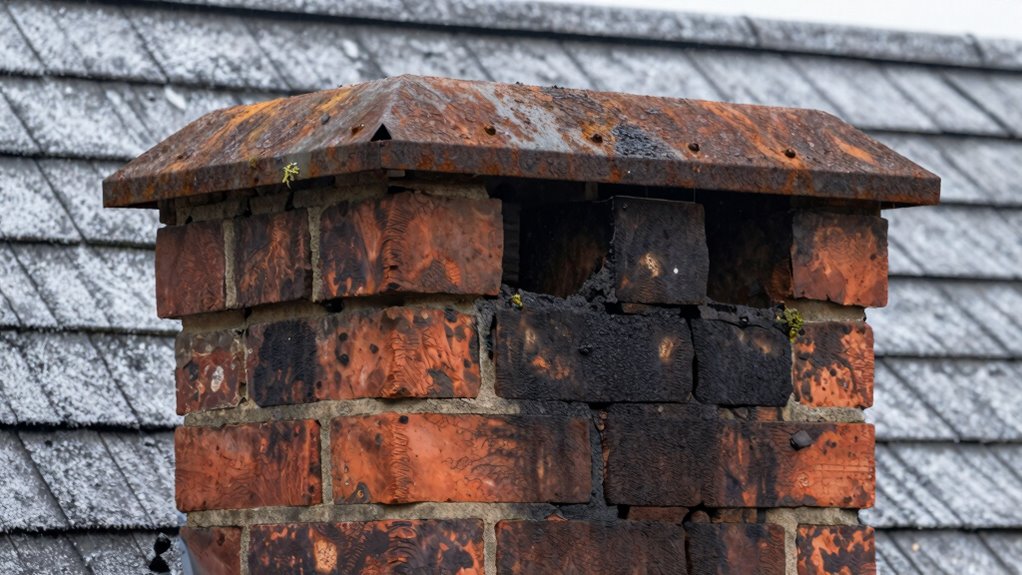
To spot chimney problems before winter, regularly check for creosote buildup, such as thick, glazed deposits or soot around the fireplace. Look for signs like smoky smells, smoke leaking indoors, or downdrafts, which indicate venting issues. Examine the exterior for cracked bricks, rusted caps, or debris blocking the chimney. Spotting these early signs helps prevent costly repairs and safety hazards. Keep examining your chimney closely—you’ll uncover more tips to stay safe this winter.

Get business pricing on tools and workshop supplies
- Business-only prices and quantity discounts
- Tax-exempt purchasing
- Multiple users, one account, clear invoices
Key Takeaways
- Regularly inspect for thick, glazed creosote or soot buildup indicating potential fire risk.
- Check for smoke leaks, downdrafts, or unusual smells during fireplace use.
- Look for cracks, loose mortar, rust, or damage on chimney exterior and cap.
- Examine the chimney liner for cracks, deterioration, or discoloration.
- Schedule professional inspections to identify hidden issues before winter demands increase.
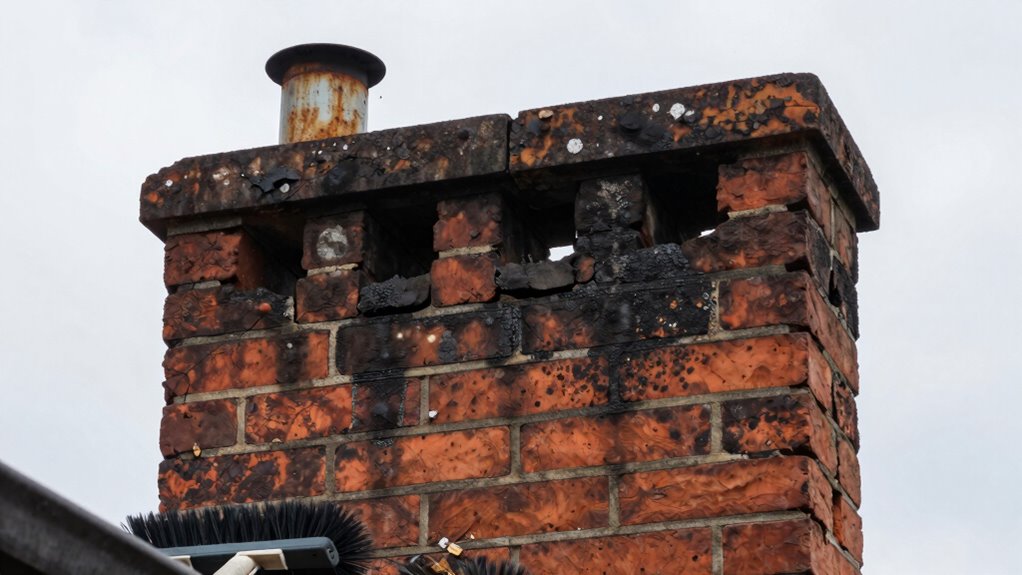
Your chimney plays an essential role in safely venting smoke and gases from your home, so spotting problems early can prevent costly repairs and potential hazards. Regular chimney inspection is fundamental for identifying issues before they escalate, especially as winter approaches when you’ll rely on your fireplace or stove more heavily. One of the most common problems to watch for is venting issues, which can cause dangerous smoke buildup inside your house or carbon monoxide leaks.
Regular chimney inspections prevent costly repairs and ensure safe venting before winter’s heavy use.
During your chimney inspection, pay close attention to signs of blockages or creosote buildup. Creosote is a dark, tar-like substance that accumulates inside your chimney from burning wood. If it’s thick or glazed, it can restrict airflow and increase the risk of chimney fires. You might notice a strong, smoky smell or see black soot around the fireplace opening—both signs that a professional inspection is needed. Additionally, look for any obstructions like bird nests, leaves, or debris lodged in the chimney cap or flue. These blockages hinder proper venting and can cause dangerous smoke to spill back into your home.
Another indicator of venting issues is the presence of smoke inside the house when you’re using your fireplace. If smoke leaks into the room instead of venting outside, it’s a clear sign that your chimney isn’t functioning correctly. This could be due to downdrafts, improper chimney height, or a partially blocked flue. You should also check for signs of deterioration on the chimney exterior, such as cracked bricks, loose mortar, or rusted chimney caps. Structural damage can compromise the chimney’s ability to vent properly and must be addressed promptly. Recognizing early signs of chimney deterioration can help prevent more serious problems later on.
Additionally, being aware of chimney venting issues and their causes can help you take preventative measures. Furthermore, pay attention to the condition of the chimney liner, which is essential for safe venting. Cracks or deterioration in the liner can cause heat transfer to surrounding materials or allow toxic gases to escape into your home. Regular inspections can help detect liner damage early before it worsens. It’s also important to ensure proper chimney maintenance to keep the system functioning efficiently and safely. In some cases, inadequate maintenance or improper installation can lead to venting problems that are difficult to diagnose without professional help. If you notice any discolored or damaged areas during your inspection, it’s time to call in a professional to evaluate and repair the liner.
As an affiliate, we earn on qualifying purchases.
Frequently Asked Questions
Can Chimney Issues Cause Indoor Air Quality Problems?
Yes, chimney issues can cause indoor air quality problems. If your chimney isn’t venting properly, indoor pollutants like smoke, carbon monoxide, and other toxins can seep into your home. This creates ventilation concerns, making it harder to keep the air clean and safe. Regular chimney inspections and maintenance help prevent these issues, ensuring proper ventilation and protecting your indoor environment from harmful pollutants.
How Often Should I Schedule Professional Chimney Inspections?
You should schedule professional chimney inspections annually, especially before winter. Regular inspection scheduling helps identify any issues like creosote buildup or cracks that could cause hazards. During these inspections, chimney cleaning is also recommended if buildup is significant. Staying proactive guarantees your chimney functions safely and efficiently, preventing costly repairs and indoor air quality problems. Don’t wait until you notice a problem—annual inspections are your best safeguard.
Are Chimney Problems Common in Newer Homes?
Did you know that chimney problems occur in about 15% of newer homes? While modern chimney designs and strict building codes improve safety, issues can still arise. Poor installation or subpar materials can cause blockages, leaks, or structural damage. Regular inspections help catch these problems early, ensuring your chimney functions safely and efficiently during winter. Staying vigilant with maintenance is key, even in newer homes built to current standards.
What Are the Signs of Chimney Water Damage?
You’ll notice chimney water damage through staining on the chimney exterior or inside your home near the fireplace. Look for water stains, efflorescence, or dampness, which indicate moisture issues. Mortar deterioration is also a key sign, with crumbling or cracked mortar joints allowing water intrusion. Address these signs promptly to prevent further damage, such as structural issues or mold growth, especially before winter worsens the problem.
Can Chimney Blockages Affect Fireplace Efficiency?
Did you know that chimney blockages cause up to 30% of fireplace inefficiencies? When your chimney is blocked, creosote buildup and chimney mold can worsen, reducing airflow and heat output. This means your fireplace struggles to burn efficiently, wasting fuel and increasing safety risks. Regular inspections help prevent blockages, ensuring proper ventilation and maintaining your fireplace’s performance before winter hits.
Conclusion
As winter’s chill approaches, it’s no coincidence that catching chimney issues early keeps your home warm and safe. By noticing small cracks or strange odors now, you prevent bigger problems when the cold hits hard. Regular inspections and prompt repairs become your best defense, turning a potential disaster into a simple fix. So, keep an eye on your chimney’s health; the sooner you act, the sooner you enjoy a cozy, worry-free winter.
Halloween Picks
halloween
As an affiliate, we earn on qualifying purchases.