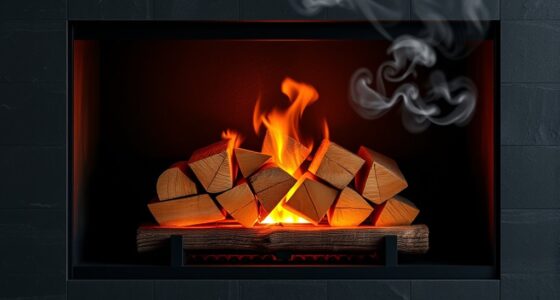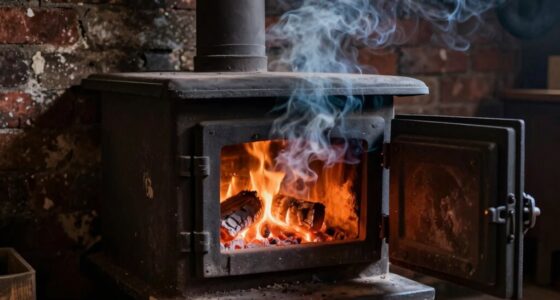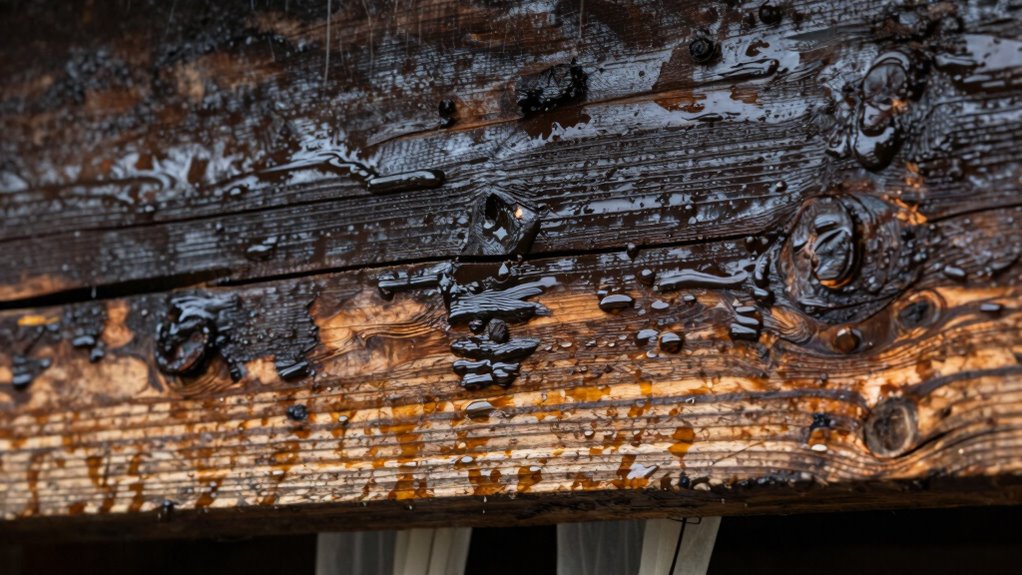

If your fireplace burns unevenly, check for wet wood—you’ll notice damp, heavy logs that produce more smoke and burn sluggishly. Draft problems, on the other hand, cause cold spots, flickering flames, or tissue fluttering near gaps, leading to heat loss and discomfort. While wet wood hampers ignition and efficiency, drafts make rooms feel colder despite a fire. Keep exploring to find out how to identify each issue and improve your fireplace performance.
Key Takeaways
- Wet wood feels damp, cold, and may produce mold, while drafts cause cold spots and air movement near the fireplace.
- Wet wood burns sluggishly, creates smoke and soot, whereas drafts result in uneven heat distribution and chilly rooms.
- Signs of wet wood include excessive smoke and difficulty igniting; drafts are indicated by flickering flames and tissue movement near gaps.
- To identify wet wood, check logs for moisture or mold; for drafts, test seams and gaps with a lit match or tissue.
- Properly seasoned wood is dry and stored in a covered area; sealing gaps and installing draft stoppers help fix draft issues.
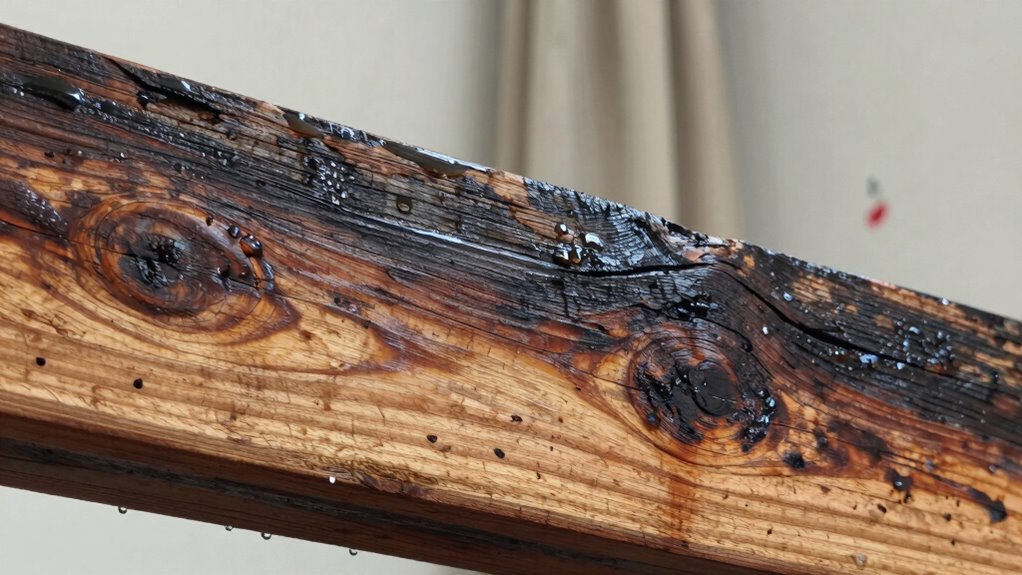
When your fireplace or wood stove isn’t providing enough heat, the problem often comes down to wet wood or drafts. Distinguishing between these issues can save you time and frustration, especially during colder months. Wet wood introduces moisture intrusion, which hampers efficient burning because it takes energy to evaporate the excess moisture rather than producing heat. You’ll notice that wet logs tend to produce more smoke, less flame, and generate creosote buildup in your chimney. They also tend to be heavy and feel damp or cold to the touch, even after drying outside. On the other hand, drafts are airflow issues that cause heat loss in your home. Drafts can originate from gaps around windows, doors, or vents, pulling cold air into your living space and making your stove or fireplace struggle to maintain warmth.
To tell the difference, start by inspecting your wood. If it feels damp or shows signs of mold or mildew, moisture intrusion is likely the culprit. Wet wood often produces a hissing sound when burned and results in a smoky or sooty fire. If your logs are dry but your home feels chilly near the fireplace, then airflow issues could be the main problem. Check for drafts around your fireplace or stove by holding a lit match or a piece of tissue near seams, vents, or gaps. If the flame flickers or the tissue moves, you’ve identified airflow issues.
Moisture intrusion from wet wood isn’t always immediately obvious, especially if the logs were stored outdoors without proper covering. You might notice that your fires struggle to ignite or burn unevenly, which indicates excess moisture. Conversely, airflow issues often cause inconsistent heating, drafts that make it uncomfortable near the fireplace, or even cold spots in your room. Addressing moisture intrusion means choosing properly seasoned wood—preferably stored in a dry, covered area for at least six months. For airflow issues, sealing gaps, adding draft stoppers, or installing a fireplace door can notably improve heat retention. Additionally, using a high-quality projector can help you monitor and analyze moisture levels more precisely if you have integrated smart home systems.
Understanding the distinction between wet wood and drafts helps you troubleshoot more effectively. If your fire isn’t burning cleanly, focus on dry, seasoned wood first. If the room feels cold despite a good fire, inspect your home’s seals and vents for leaks. Recognizing these differences enables you to take targeted action, ensuring your fireplace or stove functions efficiently and keeps your home warm and cozy.

15" Apple & Cherry Firewood Logs with Fire Starters Set – Kiln-Dried Firewood for Fire Pit, Seasoned Wood for Fireplace, Campfire & Pizza Oven – Split Wood for Solo Stove – 1200 cu. in., 15-20lb
Premium Quality Firewood: Our kiln-dried firewood logs are perfect for any use, whether you need oak firewood, birch…
As an affiliate, we earn on qualifying purchases.
As an affiliate, we earn on qualifying purchases.
Frequently Asked Questions
Can Wet Wood Cause Mold Growth in My Home?
Yes, wet wood can cause mold growth in your home because moisture buildup creates an ideal environment for mold spores to thrive. When wood stays damp, it’s prone to wood decay, which further promotes mold development. To prevent this, guarantee proper ventilation and fix leaks promptly. Regularly inspect wooden structures for signs of moisture and decay, and dry out any wet wood to keep your home safe and mold-free.
How Long Does It Take for Wood to Dry Completely?
It typically takes anywhere from a few days to several weeks for wood to dry completely, depending on moisture content and drying conditions. If you keep the wood in a well-ventilated area with low humidity, it’ll dry faster. Generally, you want the moisture content to drop to around 15% or lower before using it. Keep an eye on the drying time and moisture levels to make certain it’s ready.
Are Draft Problems More Common in Certain Seasons?
Draft problems are more common during seasonal variations, especially in fall and winter when weather impact causes temperature fluctuations. You might notice drafts more when it’s cold outside because the air moves more easily through gaps. During these seasons, your home’s insulation may be less effective, making drafts feel stronger. To reduce this, check for gaps and seal them, especially before the colder months, to keep your home warm and energy-efficient.
What Tools Can Help Identify Drafts Accurately?
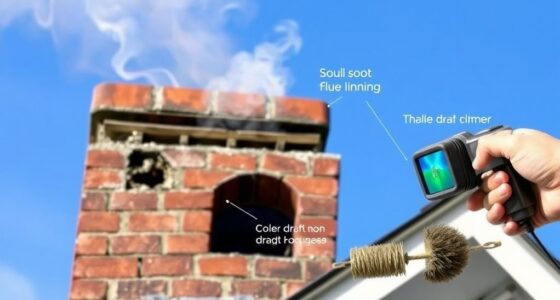
Imagine you’re Sherlock Holmes in your own home, solving the mystery of drafts. Thermal imaging cameras are your high-tech magnifying glass, revealing cold spots invisible to the naked eye. A smoke pen, like a modern magic wand, shows air movement by creating visible smoke trails. Together, these tools help you pinpoint drafts accurately, making your home more comfortable and energy-efficient with less guesswork.
Does Sealing Drafts Affect Indoor Air Quality?
Sealing drafts can improve indoor air quality by reducing unwanted air exchange, but it may also limit natural ventilation. You can counteract this by adding indoor plants, which help filter the air naturally, and using air filtration devices to maintain fresh air. This way, you keep drafts in check while ensuring your home stays healthy and well-ventilated, balancing energy efficiency with good indoor air quality.

Magnetic Fireplace Blanket for Heat Loss Indoor Fireplace Covers Keep Drafts Out Stops Heat Loss Fireplace Draft Stopper with Built-in 12 Strong Magnet for Iron Fireplace Frame Fireplace Screen 39×32
ENERGY SAVINGS: Helps prevent drafts, odors and debris from entering your home through a fireplace or wood stove….
As an affiliate, we earn on qualifying purchases.
As an affiliate, we earn on qualifying purchases.
Conclusion
By understanding whether your home’s issues stem from wet wood or drafts, you can take the right steps to fix them. Remember, wet wood whispers of unseen moisture, while drafts shout through gaps and cracks. Ignoring these signs is like ignoring a warning bell—your comfort and safety depend on recognizing the difference. So, don’t let these problems sneak in unnoticed; confront them head-on before they turn into bigger, more costly concerns.

Flat Gasket Tape for Stoves and Fireplaces, Self Adhesive Flat Gasket, 5/8" x1/8" Length 72" Wood Stove Fiberglass Tape
Self Adhesive Gasket Tape – Gasket's one side has high temperature resistant glue, no need to add silicone…
As an affiliate, we earn on qualifying purchases.
As an affiliate, we earn on qualifying purchases.

Wood Moisture Meter for Wood, Like Hardwood and Softwood Replaceable Pin Moisture Tester with Batteries
Instant & Accurate Readings – Measures up to 12mm deep for precise wood moisture results. Save readings with…
As an affiliate, we earn on qualifying purchases.
As an affiliate, we earn on qualifying purchases.