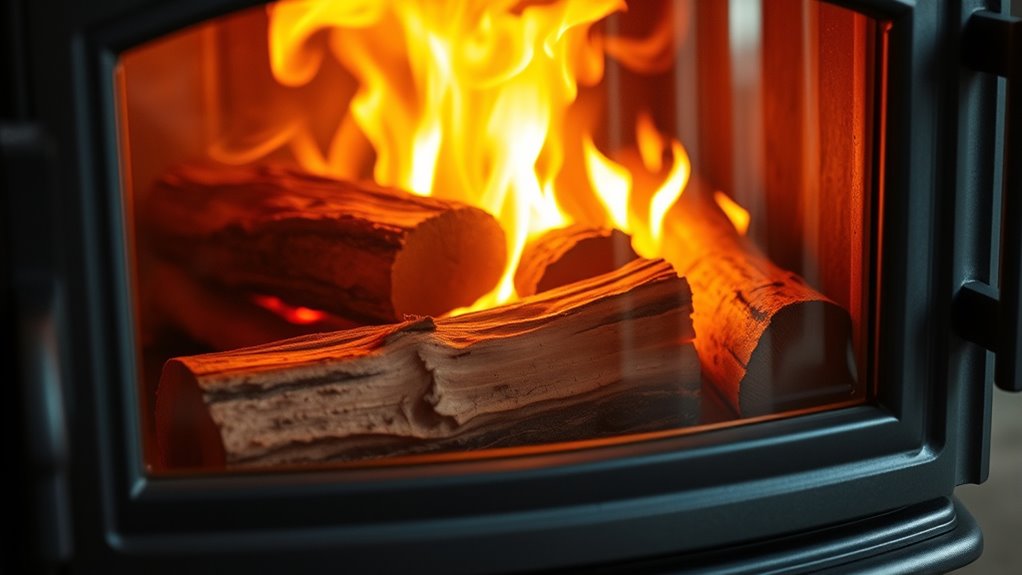

Your wood stove’s efficiency mainly depends on proper airflow, which affects combustion and heat output. Blocked vents or poor chimney draft can limit airflow, causing incomplete burning, excess smoke, and wasted fuel. Managing the burn rate with adjustable vents and using well-seasoned wood also enhances performance. Regular maintenance and correct loading techniques keep everything running smoothly. If you want to discover more ways to boost your stove’s efficiency, keep exploring these key factors.
Key Takeaways
- Proper ventilation ensures adequate airflow, preventing incomplete combustion and maximizing heat output.
- The burn rate, controlled by adjustable vents, influences fuel consumption and heat efficiency.
- Using well-seasoned, high-quality wood promotes cleaner burns and better heat production.
- Regular stove maintenance prevents airflow obstructions that reduce efficiency.
- Correct loading techniques and airflow management optimize combustion and heat transfer.

Are you getting the most heat out of your wood stove? If not, one of the first things to check is whether ventilation issues are limiting its efficiency. Proper airflow is essential because it controls how well your stove burns and how much heat it radiates into your home. When ventilation is restricted—due to blocked vents, poor chimney draft, or inadequate air supply—the fire can’t burn properly. This results in incomplete combustion, which not only wastes fuel but also produces excess smoke and creosote buildup. Ensuring your stove has a clear, unobstructed airflow path helps maintain a steady, efficient burn, maximizing heat output and reducing fuel consumption.
Another critical factor influencing efficiency is the burn rate. The burn rate determines how fast the wood burns and how much heat it generates over time. If you burn wood too quickly, you’ll use up your fuel faster than necessary, and the stove may overheat or become difficult to control. Conversely, burning too slowly can cause the fire to smolder, producing less heat and creating excess smoke. Finding the right balance means adjusting your fire to optimize the burn rate for your specific stove and the type of wood you’re using. Properly seasoned wood, which has been dried to the right moisture level, ignites more easily and burns more efficiently at an ideal burn rate.
Controlling the burn rate is also linked to how you manage your air intake. Many stoves have adjustable air vents, allowing you to fine-tune the airflow and maintain a consistent fire. When you open the vents slightly, you increase the air supply, helping the fire burn hotter and more efficiently. When you want to slow down the burn, closing the vents reduces airflow, conserving fuel and lowering heat output. Striking this balance ensures you get the most heat with the least amount of wood, which saves money and boosts overall efficiency.
In addition to ventilation and burn rate, other factors like the quality of your wood, proper loading techniques, and regular maintenance also impact your stove’s performance. But addressing ventilation issues and managing the burn rate are the most immediate ways to improve efficiency. By paying close attention to airflow and fire control, you’ll generate more heat from less wood, keep your home warmer, and reduce waste. Making these adjustments might seem simple, but they can considerably enhance how well your wood stove performs, saving you money and effort in the long run. Understanding proper ventilation can significantly improve your stove’s efficiency and safety.
Frequently Asked Questions
How Does the Type of Wood Impact Stove Efficiency?
The type of wood markedly impacts your stove’s efficiency. Hardwoods like oak or maple, with low wood moisture and high fuel quality, burn hotter and longer, making the stove more efficient. Softwoods, which tend to have higher moisture content and lower fuel quality, burn less efficiently and produce more creosote. To maximize efficiency, always choose dry, seasoned wood with low moisture and good fuel quality.
Can Stove Placement Affect Overall Heating Efficiency?
Yes, stove placement can profoundly influence your heating effectiveness. If you position your stove in a central spot, it promotes better room airflow, allowing warm air to circulate evenly. Avoid placing it near drafty windows or outside walls, which can cool the stove and reduce heat output. Proper placement guarantees ideal heat distribution, making your home warmer and more energy-efficient.
What Role Does Stove Maintenance Play in Efficiency?
You might think stove maintenance isn’t essential, but it’s key to efficiency. Regularly optimizing airflow ensures proper combustion, making your stove burn hotter and cleaner. Don’t forget ash removal; a buildup can block airflow and reduce heat output. When you keep your stove clean and well-maintained, you maximize heat, reduce fuel waste, and extend its lifespan. Skipping maintenance costs you energy and money in the long run.
Do Different Stove Designs Influence Energy Output?
Different stove designs definitely influence energy output. For example, stoves with sleek aesthetics often feature advanced airflow systems that enhance combustion, while user-friendly interfaces make it easier to control heat levels precisely. A well-designed stove maximizes efficiency by directing heat effectively and minimizing waste. So, choosing a stove with thoughtful aesthetics and an intuitive interface can boost your energy output, helping you stay warm while saving fuel.
How Does Insulation Impact Stove Performance?
Imagine cozy warmth radiating through your home; insulation plays a key role in that. When your insulation quality is high, it creates thermal barriers that keep heat from escaping, boosting your stove’s efficiency. Without proper insulation, heat leaks out, making your stove work harder. Good insulation minimizes heat loss, ensuring the stove performs at its best, saving fuel, and maintaining consistent warmth. So, proper insulation directly enhances your stove’s effectiveness and your comfort.
Conclusion
Now that you know what influences your wood stove’s efficiency, imagine what could happen if you optimize these factors. Will you notice warmer rooms, lower fuel bills, or maybe both? The secret lies in the details you control—airflow, wood quality, maintenance. Are you ready to release your stove’s full potential? The next step could transform your heating experience in ways you never expected. Don’t wait—your cozy, efficient winter is just around the corner.