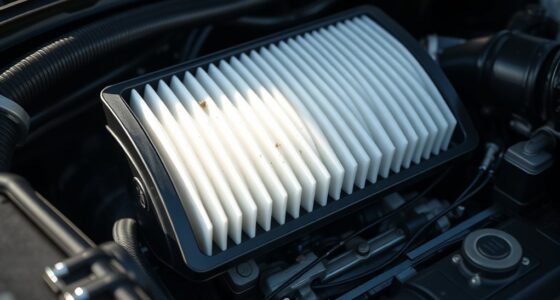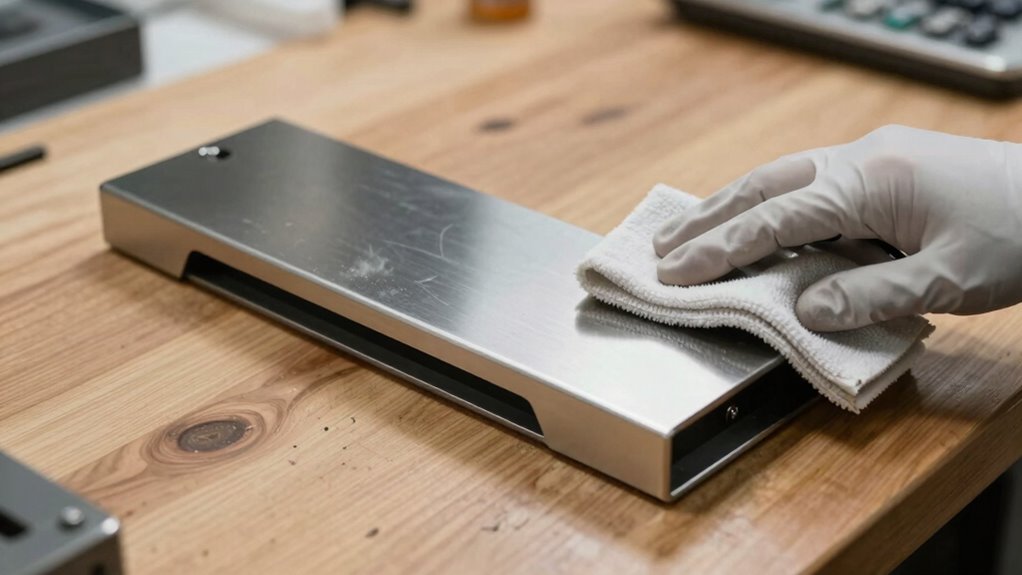

After a long day, unplug your splitter and let it cool completely. Use compressed air or a stiff brush to quickly remove loose sawdust and debris from blades, vents, and hard-to-reach areas. For sticky grime or sap, apply a gentle cleaner and wipe down surfaces with a microfiber cloth. Dry everything thoroughly to prevent rust. Staying brief and efficient makes maintenance faster—and if you keep going, you’ll discover even more tips to keep your equipment in top shape.

Get business pricing on tools and workshop supplies
- Business-only prices and quantity discounts
- Tax-exempt purchasing
- Multiple users, one account, clear invoices
Key Takeaways
- Turn off and unplug the splitter, then let it cool completely before starting cleaning.
- Use compressed air or a blowgun to quickly remove sawdust and loose debris from blades and vents.
- Apply a mild degreaser to sticky spots and scrub with a stiff brush or microfiber cloth.
- Wipe down all surfaces with a damp cloth, then dry thoroughly to prevent rust.
- Conduct a quick inspection for damage or wear, lubricate moving parts if needed, and store properly.
After a long workday, cleaning your splitter quickly and effectively is essential to keep it in top shape for future use. The key is to prioritize safety precautions and use the right cleaning tools to make the process smooth and efficient. Before you start, ensure the splitter is turned off, unplugged, and has completely cooled down to prevent any accidental injuries. Wearing safety gloves and goggles protects you from sharp edges, splinters, or lingering debris. Taking these safety precautions prevents mishaps and creates a safer working environment.
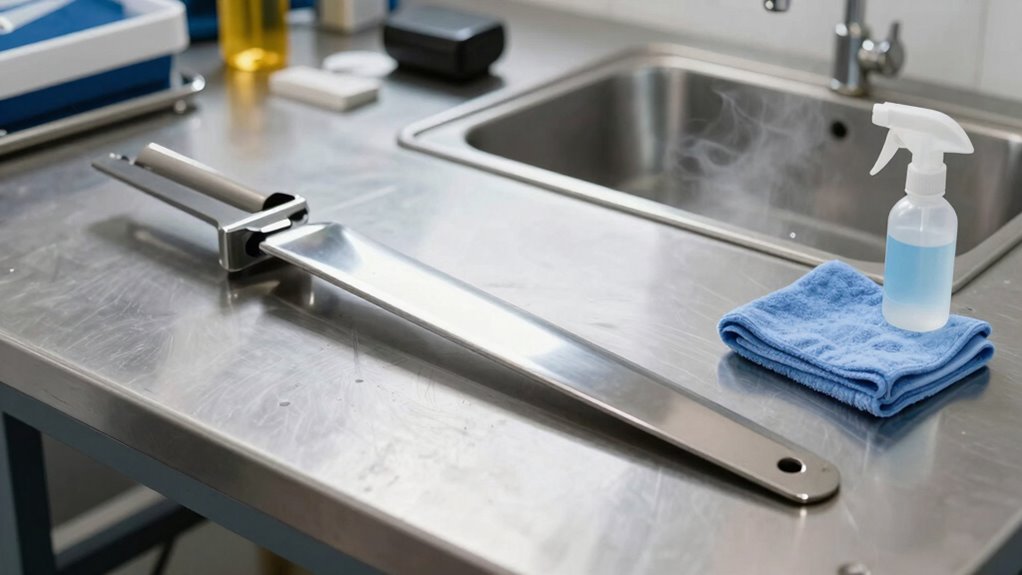
Once safety is secured, gather your cleaning tools. A sturdy wire brush or a putty knife helps remove stubborn dirt and dried sap from blades and surfaces. A stiff-bristled brush is great for sweeping away loose debris, while a rag or microfiber cloth can wipe down surfaces for a clean finish. For stubborn grime, a mild degreaser or wood cleaner works wonders—just be sure to follow the manufacturer’s instructions. Avoid harsh chemicals that could damage the splinter’s components or pose safety risks. An air compressor or a blowgun can be handy for blowing out sawdust and debris from hard-to-reach places, saving you time and effort.
Gather cleaning tools like wire brushes, microfiber cloths, and compressed air for efficient, safe equipment maintenance.
Start by removing loose debris with the brush or a compressed air tool, focusing on the cutting blades, engine vents, and any crevices. Be gentle around moving parts to avoid damage. Next, apply your chosen cleaner to any sticky or greasy areas, letting it sit briefly to loosen buildup. Use a rag or brush to scrub away grime, paying attention to corners and joints. For blades, ensure you remove any sap or pitch buildup to maintain cutting efficiency. Regular cleaning also helps prevent corrosion and keeps your equipment operating smoothly, especially if you use power tools frequently. Incorporating proper cleaning techniques can help you achieve a more thorough clean and extend the lifespan of your equipment. Additionally, maintaining a regular schedule of cleaning and inspection can prevent unexpected breakdowns, saving you time and money in the long run. Properly cleaning and caring for your equipment also involves understanding how different cleaning agents interact with various materials, which can be found in manufacturer instructions. After thorough scrubbing, wipe everything down with a clean, damp cloth to remove residue and dry all surfaces completely to prevent rusting.
To finish, inspect your splitter for any signs of wear or damage that could compromise safety or performance. Lubricate moving parts if necessary, and store the machine in a dry, covered space. Regular cleaning not only extends the life of your splitter but also ensures it operates safely and efficiently when you need it next. By following safety precautions and using the right cleaning tools, you streamline the process, making quick work of post-workday cleanup while keeping your equipment in top condition.
air compressor for cleaning power tools
As an affiliate, we earn on qualifying purchases.
As an affiliate, we earn on qualifying purchases.
Frequently Asked Questions
Can I Clean My Splitter With Household Cleaning Products?
You shouldn’t clean your splitter with household cleaning products or home remedies. These chemicals can damage the delicate parts and affect its performance. Instead, use proper cleaning tools like a soft brush or compressed air, and if necessary, a gentle, manufacturer-recommended cleaner. Chemical cleaners aren’t safe for electronic components, so stick to the appropriate methods to keep your splitter in top condition and avoid costly repairs.
How Often Should I Clean My Splitter for Optimal Performance?
Think of your splitter as a finely-tuned engine—you need to keep it running smoothly. For peak performance, you should clean your splitter after every few uses or at least once a month, depending on how often you work. Regular maintenance scheduling prevents buildup that hampers performance. By staying proactive, you guarantee your splitter operates efficiently, extending its lifespan and keeping your projects on track without breakdowns.
Is It Safe to Use Water on Electrical Parts of the Splitter?
You should avoid using water directly on electrical parts of your splitter because of electrical safety risks and potential water damage. Water can cause short circuits, corrosion, or malfunction. Instead, use a dry cloth or compressed air to clean electrical components safely. This prevents water damage and guarantees your splitter stays in good working order, maintaining safety and performance without risking electrical hazards.
What Tools Are Best for Removing Stubborn Debris?
Did you know that using the right tools can cut debris removal time by up to 50%? For stubborn debris, a small wire brush or a putty knife works best for scraping away hardened material. A compressed air blower is also effective for blowing out debris from tight spots. Always select tools that are gentle enough to avoid damage but sturdy enough to tackle tough residue. Proper tool selection makes cleaning faster and safer.
Should I Apply Lubricant After Cleaning the Splitter?
Yes, you should apply lubricant after cleaning your splitter. Lubricant application helps maintain smooth operation and prevents rust, ensuring longevity. Once you’ve cleaned off debris, lightly coat the moving parts with a suitable lubricant. Incorporate regular maintenance scheduling into your routine to keep everything in top shape. This proactive step minimizes wear and tear, making your splitter more reliable and extending its lifespan over time.
Conclusion
After a long workday, cleaning your splitter quickly is essential to keep it in top shape. Did you know that neglecting proper cleaning can reduce your splitter’s efficiency by up to 30%? By following these simple steps, you’ll save time and guarantee your equipment lasts longer. Just remember, regular maintenance isn’t just about speed—it keeps you safe and your work smooth. Stay consistent, and your splitter will perform like new, day after day.
Halloween Picks
halloween
As an affiliate, we earn on qualifying purchases.