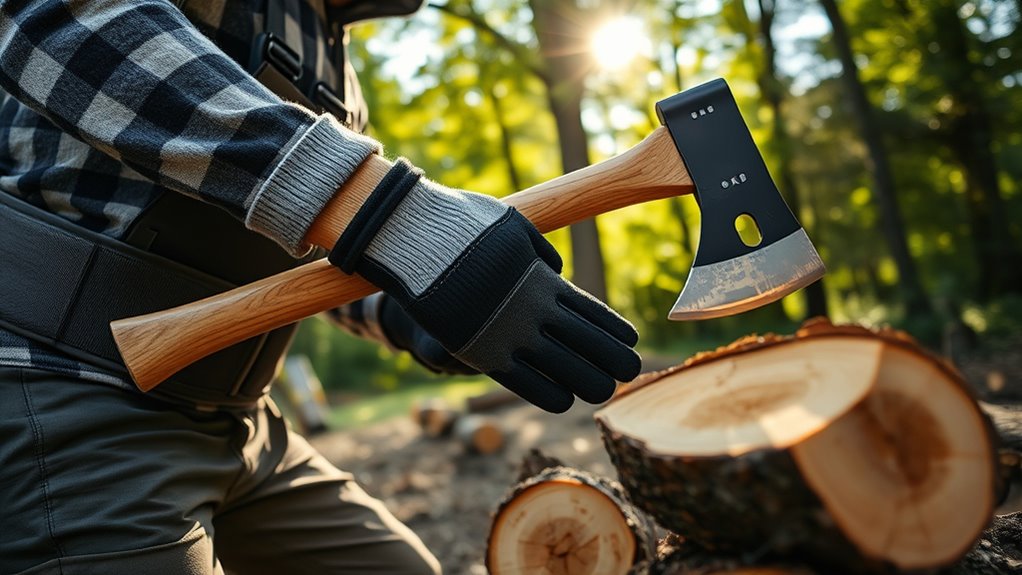

To reduce strain while splitting wood, set up your workspace with proper posture—stand with feet shoulder-width apart, keep your back straight, and adjust your work surface for neutral joint positioning. Choose ergonomic tools with comfortable handles, and lift with your legs, keeping the load close to your body. Take regular breaks to stretch and change positions, and small adjustments can make a big difference in comfort. Continue exploring for more tips to keep yourself safe and efficient.
Key Takeaways
- Maintain a stable, shoulder-width stance and keep your back straight during splitting tasks.
- Use tools with ergonomic handles that fit comfortably and reduce grip fatigue.
- Lift logs with your legs, keeping loads close to your body to minimize strain.
- Take regular breaks to stretch and adjust your posture for comfort and safety.
- Ensure your work surface is at an appropriate height to promote neutral joint positioning.
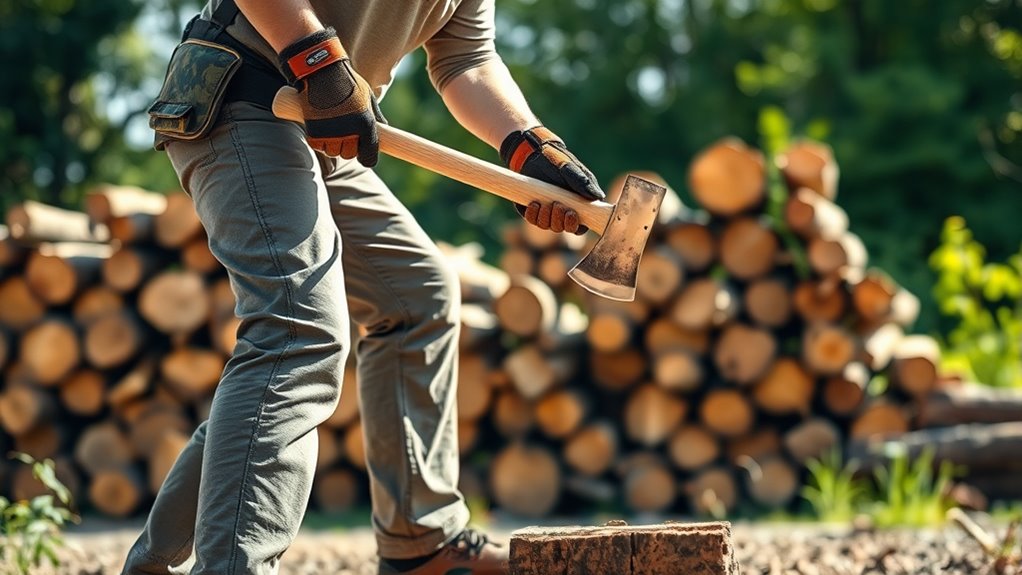
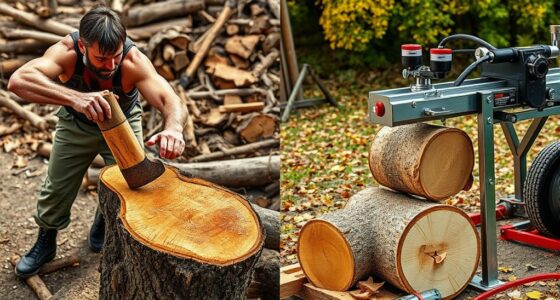
Have you ever wondered how your workspace can impact your health and productivity? When you’re splitting wood or handling heavy materials, the way you set up your workspace plays a vital role in preventing strain and injury. Proper posture is fundamental to avoiding unnecessary fatigue and musculoskeletal problems. To achieve this, you should stand with your feet shoulder-width apart, keep your back straight, and avoid leaning forward or twisting your torso. This alignment helps distribute the physical load evenly, reducing the risk of muscle strain. Additionally, adjusting the height of your work surface or using supports can keep your joints in a comfortable, neutral position. Maintaining proper posture isn’t just about comfort; it’s about safeguarding your body during physically demanding tasks. Choosing the right tools and equipment can make a significant difference in reducing strain and increasing efficiency. Tool design also considerably influences how much strain you experience while splitting. Well-designed tools fit comfortably in your hands, allowing you to maintain control without exerting excessive force. For example, a splitting axe with an ergonomic handle reduces grip fatigue and minimizes vibrations that can transfer to your arms and shoulders. The weight distribution of the tool matters, too—lighter, well-balanced tools require less effort and decrease fatigue over time. When selecting or customizing your tools, look for features that promote natural wrist angles and comfortable grips. Properly designed tools help you work more efficiently and reduce the likelihood of blisters, calluses, or repetitive strain injuries. Using the right tool design can turn a strenuous, tiring task into a more manageable activity, keeping you healthier in the long run. Beyond posture and tool design, pay attention to your body mechanics. Always lift with your legs, not your back, and keep the load close to your body to minimize strain. Take regular breaks to stretch and shift positions, preventing stiffness and fatigue. If you notice discomfort or pain, stop and reassess your setup—sometimes small adjustments can make a big difference. Investing in ergonomic tools and practicing proper posture not only enhances your safety but also boosts productivity. When you work smarter, you’re less prone to injury, and you’ll likely find that tasks become easier and less exhausting. Remember, ergonomics isn’t about avoiding effort; it’s about making your effort safer, more effective, and less taxing on your body. So next time you prepare to split or handle heavy materials, consider your posture and your tools—these simple steps can help you work smarter and stay healthier for years to come.
Frequently Asked Questions
What Are the Best Tools for Ergonomic Splitting?
The best tools for ergonomic splitting include lightweight, balanced axes or mauls that minimize strain and improve safety. Use splitter safety gear like gloves and eye protection to prevent injuries. Incorporate ergonomic techniques, such as proper stance and controlled movements, to reduce fatigue. Choose tools with comfortable grips and appropriate weight to lessen muscle strain. These practices help you stay safe and efficient while splitting wood.
How Can I Prevent Back Pain During Splitting?
Did you know that improper lifting causes 1 in 10 injuries? To prevent back pain, use proper lifting techniques—bend your knees, keep your back straight, and lift with your legs. Also, organize your workspace to minimize awkward movements and make sure everything’s within easy reach. Taking these steps reduces strain, helps maintain good posture, and keeps your back safe during splitting. Stay mindful and protect your back!
Are There Specific Exercises to Reduce Strain?
You should focus on stretching routines and core strengthening exercises to reduce strain. Incorporate dynamic stretches like hip flexor and hamstring stretches before splitting. Strengthen your core with planks and abdominal exercises to support your back. These routines improve flexibility and stability, helping prevent injury and reducing back pain. Consistently practicing these exercises will make splitting safer and more comfortable, allowing you to work longer without discomfort.
How Often Should I Take Breaks While Splitting?
Think of your body as a well-tuned instrument—regular tuning keeps it playing smoothly. Take a break every 20-30 minutes while splitting to prevent strain. During these pauses, check your hand positioning and adjust your splitting techniques if needed. Short breaks help reset your muscles, reducing fatigue and risk of injury. Stay mindful of these intervals, and your splitting work becomes easier and safer, like a melody that never misses a beat.
What Ergonomic Accessories Can Assist in Splitting Tasks?
To assist in splitting tasks, consider ergonomic accessories like supportive footwear, which helps reduce fatigue and improve stability. Using splitter safety gear, such as gloves and eye protection, keeps you safe during heavy work. An ergonomic seat or kneeling pad can also minimize strain on your back and knees. These accessories promote safety and comfort, allowing you to work more efficiently and reduce the risk of injury during splitting.
Conclusion
By paying attention to ergonomics while splitting, you’ll work smarter, not harder. Use proper posture, take breaks, and handle tools carefully to avoid unnecessary strain. Remember, it’s better to prevent problems now than deal with aches later—don’t let small issues snowball into bigger ones. When you implement these tips, you’ll stay safe and comfortable, making each task feel less like a grind. Keep these habits in mind, and you’ll be ahead of the game all the way.