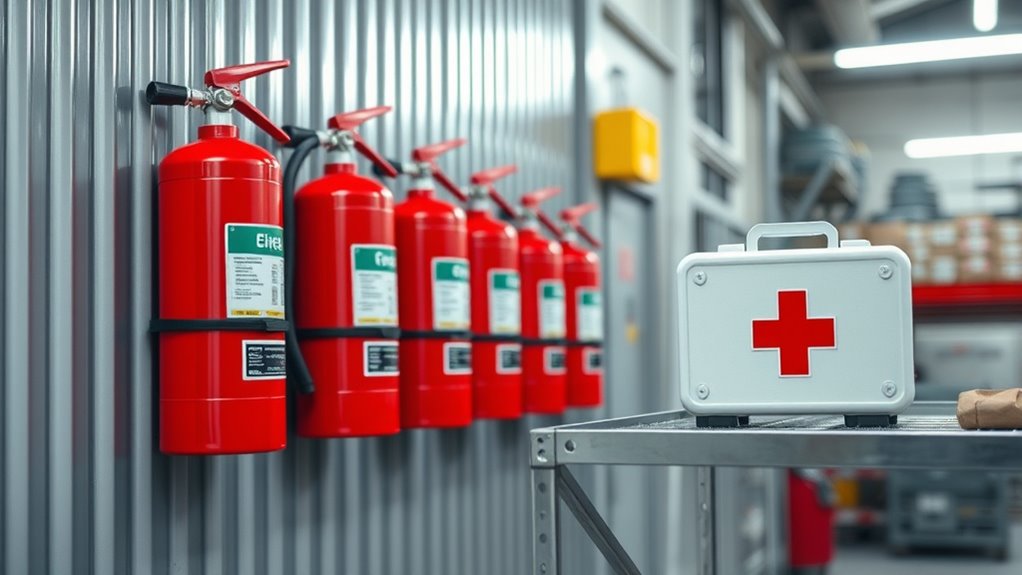

Having reliable fire extinguishers and well-stocked first aid kits on-site is vital for your safety and quick emergency responses. Regular inspections and proper maintenance ensure equipment is ready when needed, while familiarizing yourself with usage protocols helps prevent confusion during crises. Incorporating safety procedures into daily routines and ongoing training builds confidence and preparedness. If you keep exploring, you’ll discover more essential tips to create a safer environment for everyone.
Key Takeaways
- Ensure fire extinguishers are accessible, properly maintained, and regularly inspected for readiness.
- Stock and periodically check first aid kits to ensure supplies are complete and up-to-date.
- Train staff on correct fire extinguisher use and basic first aid skills for quick emergency response.
- Implement safety protocols and conduct drills to reinforce proper procedures during emergencies.
- Integrate safety equipment and procedures into daily operations to foster a proactive safety culture.
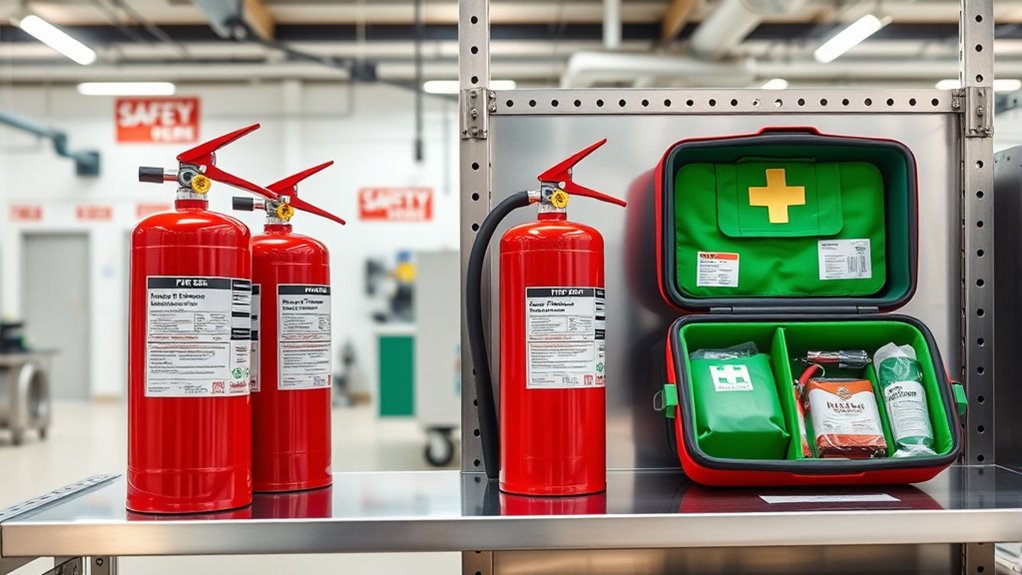
Having fire extinguishers and first aid kits readily available on site is vital for ensuring safety and responding quickly to emergencies. When you prioritize accessible safety equipment, you create a safer environment that minimizes injury and property damage in critical moments. But simply having these items on hand isn’t enough—your team must be familiar with fire safety protocols and emergency response planning to act effectively when it counts. Fire safety protocols outline the steps everyone should follow during a fire, helping to contain the incident and prevent chaos. These protocols include knowing how to use fire extinguishers correctly, understanding evacuation routes, and recognizing warning signs of fire hazards. Regular training sessions ensure that every team member understands their role, whether it’s operating a fire extinguisher or guiding others to safety. Emergency response planning takes this further by organizing how your team reacts to various emergencies, including fires, medical incidents, or chemical spills. It involves assigning responsibilities, establishing communication channels, and conducting drills to reinforce preparedness. When your staff is well-trained in emergency response planning, they can act swiftly and confidently, reducing confusion and ensuring everyone’s safety. It’s vital to integrate fire safety protocols into your overall safety management system so that they are not overlooked during busy or stressful situations. Clear signage, accessible safety equipment, and routine drills reinforce these protocols, making sure they become second nature. Make it a point to regularly inspect fire extinguishers, ensuring they are fully charged and operational, and replace or service them as needed. Likewise, keep first aid kits stocked with essential supplies, and check expiration dates on medications and bandages periodically. In addition, encourage your team to participate in first aid training, so they know how to provide basic care until professional help arrives. When emergencies happen, fast, coordinated action can make all the difference. Having a well-established plan that everyone understands allows you to respond efficiently, minimize injuries, and prevent escalation. Additionally, understanding pool safety considerations is crucial in maintaining a secure environment around your site. Having a well-established plan that everyone understands allows you to respond efficiently, minimize injuries, and prevent escalation. Remember, safety isn’t just about having the right equipment; it’s about knowing how to use it and preparing your team through ongoing training and clear protocols. Regularly review and update your fire safety protocols and emergency response plans to adapt to new risks or changes in your site. By doing so, you create a proactive safety culture that keeps everyone protected and ready to handle any emergency confidently.

4 Pcs Fire Extinguisher Mount Brackets, 2.36 x 1.57 x 2.36 in (Red)
- Material: Heavy-duty steel with corrosion resistance
- Weight Capacity: Supports up to 20 lb
- Easy Installation: Quick setup with basic tools
As an affiliate, we earn on qualifying purchases.
As an affiliate, we earn on qualifying purchases.
Frequently Asked Questions
How Often Should Fire Extinguishers Be Inspected?
You should inspect fire extinguishers monthly to guarantee they’re in good working order. Follow the inspection schedule recommended by the manufacturer and local safety regulations to stay compliant. Regular inspections are essential for proper extinguisher maintenance, allowing you to check for damage, pressure levels, and accessibility. By staying consistent with these inspections, you help ensure your fire safety equipment functions effectively during emergencies.
What Certifications Are Required for First Aid Responders?
You need a valid First Aid Certification to act as a responder, ensuring you’re qualified to provide immediate care. Often, organizations require responders to complete recognized training programs, such as CPR and basic first aid courses, to meet responder qualifications. This certification, which coincidentally can be obtained through reputable agencies, proves your skills and readiness, making it essential for safety and compliance on site.
Can Employees Use Fire Extinguishers Without Training?
You shouldn’t use fire extinguishers without proper fire extinguisher training, even during emergencies. Your employer should provide clear emergency response protocols and training to make certain you know how to operate a fire extinguisher safely. Without this training, you risk injury or making the situation worse. Always follow established protocols and only act if you’re confident and trained to handle the fire safely.
Are There Specific First Aid Supplies for Chemical Burns?
Yes, there are specific first aid supplies for chemical burns, like chemical burn kits, that contain items such as rinsing solutions and burn dressings. However, you should always have first aid training to properly use these supplies. With proper training, you can quickly respond to chemical burns, rinsing the affected area immediately and applying the appropriate dressings, reducing damage and promoting healing.
Where Should Fire Extinguishers Be Located for Maximum Safety?
You should place fire extinguishers in easily accessible locations within designated fire safety zones, ensuring they’re visible and near potential fire hazards. Position them near exits, kitchen areas, electrical equipment, and workshop zones for quick response. Regularly check their placement to prevent obstructions. Proper fire extinguisher placement enhances safety by enabling swift action during emergencies, minimizing damage, and protecting everyone on site.
Conclusion
Having fire extinguishers and first aid supplies on site isn’t just a good idea—it’s essential. Some might think emergencies won’t happen to them, but being prepared saves lives and minimizes damage when they do. Don’t wait until it’s too late; take proactive steps now. With the right tools and knowledge, you can handle unexpected situations confidently, protecting everyone around you. Stay prepared, stay safe—your quick response can make all the difference.