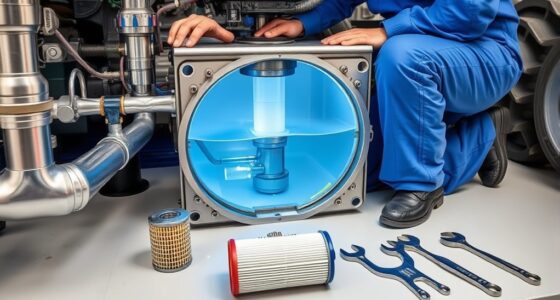

Small gear like trailer locks, chocks, and dollies may be compact, but they make a big difference in safety and security. Trailer locks prevent theft, chocks stop unwanted wheel movement, and dollies help with easy maneuvering. Proper use and regular maintenance of these tools protect your trailer, loads, and personnel. Keeping this gear in good condition prevents costly setbacks. Stick around to discover how each piece enhances your trailer safety and efficiency even further.

Get business pricing on tools and workshop supplies
- Business-only prices and quantity discounts
- Tax-exempt purchasing
- Multiple users, one account, clear invoices
Key Takeaways
- Small gear like locks, chocks, and dollies significantly enhance trailer security and safety during transportation and parking.
- Proper maintenance and regular inspections extend the lifespan and effectiveness of trailer locks, chocks, and dollies.
- Using chocks prevents unintended trailer movement, especially on inclined surfaces, ensuring safety for personnel and equipment.
- Dollies facilitate easier trailer maneuvering, reducing strain and minimizing risk of damage or accidents.
- Investing in quality small gear improves operational efficiency, reduces costly failures, and enhances overall safety.
When it comes to securing and maneuvering trailers safely, using the right equipment makes all the difference. Trailer locks, chocks, and dollies may be small tools, but they play an essential role in ensuring vehicle security and smooth operation. These devices are necessary for preventing theft, stabilizing trailers during loading or parking, and aiding in proper maneuvering. Without them, you risk damage, accidents, or worse, compromised security. Investing in quality gear and understanding maintenance procedures keeps your equipment reliable and your operation safe. Regularly inspecting and maintaining these small components helps prevent unexpected failures and prolongs their lifespan.
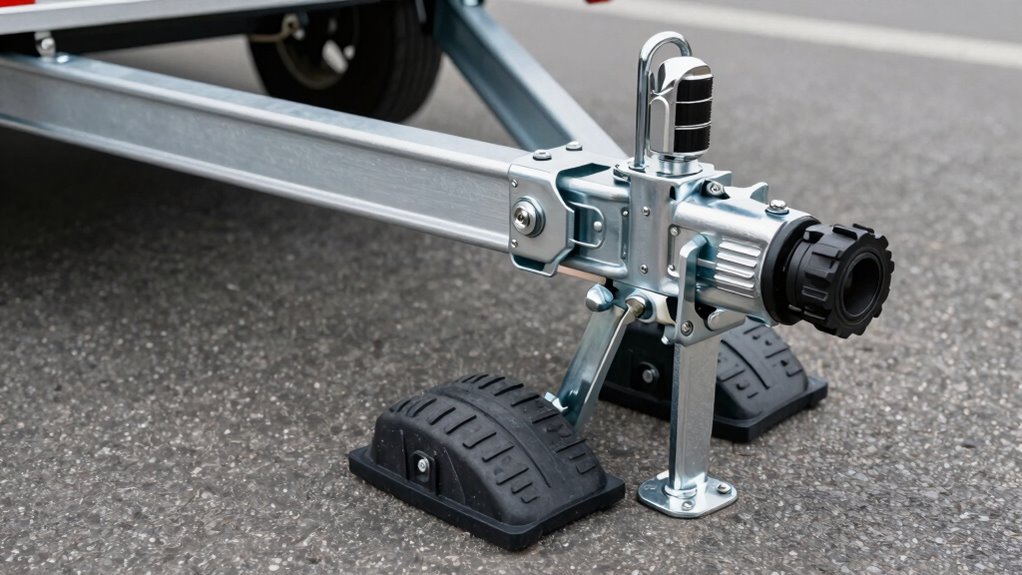
Trailer locks are your first line of defense against theft. They secure the coupler or hitch, making it nearly impossible for someone to detach or steal the trailer without your knowledge. When you choose a lock, consider its durability and resistance to tampering. Regularly inspecting and maintaining these locks is critical—clean off dirt and debris, lubricate moving parts, and check for signs of rust or wear. Proper maintenance procedures extend the life of your locks and ensure they function flawlessly when needed.
Trailer locks protect against theft; regularly clean, lubricate, and inspect to ensure reliable, long-lasting security.
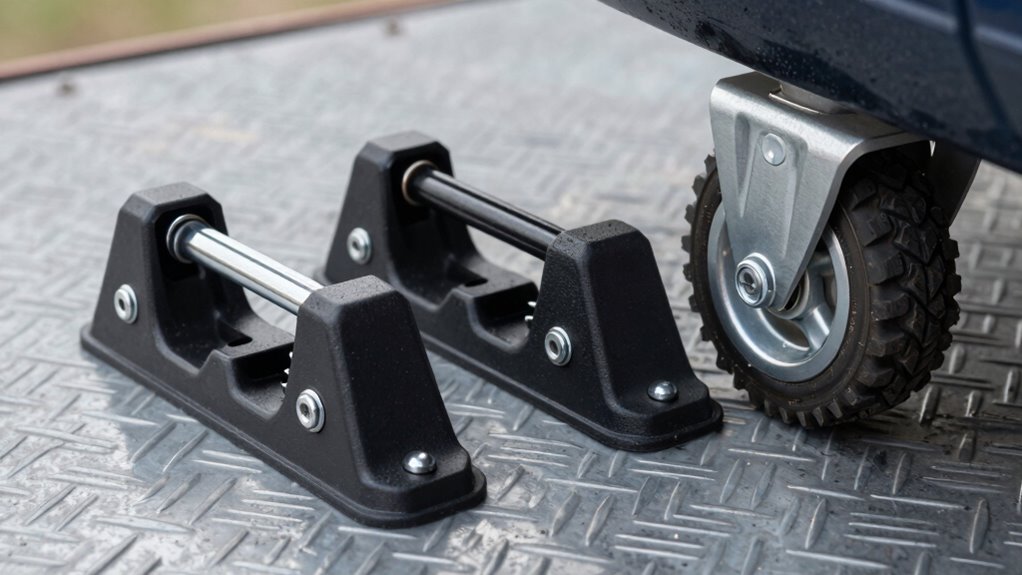
Chocks are equally important for vehicle security and safety during parking or loading. They prevent unwanted movement by blocking the trailer wheels, especially on inclined surfaces. Using chocks correctly involves placing them snugly against the tires and ensuring they are stable before leaving the trailer unattended. For maintenance, periodically inspect chocks for cracks, deformation, or other damage, replacing them when necessary. Well-maintained chocks guarantee that your trailer won’t roll unexpectedly, protecting both your equipment and personnel.
Dollies, which are used to move trailers more easily, contribute greatly to operational efficiency. They allow you to maneuver heavy loads in tight spaces, reducing strain on your vehicle and minimizing potential damage. Proper use involves attaching dollies securely and ensuring they’re in good condition. Maintenance procedures include checking for worn wheels, damaged frames, or loose connections. Regularly inspecting and servicing dollies help maintain their stability and safety, making your moves smoother and safer.
Small gear like locks, chocks, and dollies might seem insignificant, but their impact on overall safety and security is considerable. They support your vehicle security by preventing theft and unauthorized movement, and they assist in proper maintenance procedures to keep your equipment in top shape. When you prioritize regular inspection, cleaning, and timely replacement of worn parts, you’re investing in safer operations and reducing costly setbacks. In addition, understanding small trailer equipment and its proper use can greatly enhance your safety practices. In the end, these simple tools act as silent protectors, ensuring your trailers are secure, your loads are safe, and your workflows remain efficient.
As an affiliate, we earn on qualifying purchases.
Frequently Asked Questions
Are Trailer Locks Theft-Proof?
Trailer locks aren’t completely theft-proof, but they considerably improve security. You benefit from advanced security features like tamper-resistant designs and sturdy material durability that make it harder for thieves to break in. While no lock is entirely foolproof, choosing high-quality locks with these features deters theft attempts. Always combine locks with other security measures, like chocks and surveillance, to maximize protection for your trailer.
How Often Should Trailer Chocks Be Replaced?
You should replace trailer chocks every few years, like renewing a worn-out pair of shoes, to keep safety tight. The replacement frequency depends on the trailer material—plastic, rubber, or metal—and how often you use them. Regular inspections reveal cracks, wear, or damage, signaling it’s time for new chocks. Staying proactive guarantees your trailer remains secure, preventing accidents and saving you from bigger repairs down the road.
Can Dollies Be Used on Uneven Surfaces?
Dollies generally aren’t ideal for uneven surfaces because surface stability and traction considerations are compromised. When you try to use a dolly on uneven terrain, it can become unstable, increasing the risk of slipping or tipping. For better safety and efficiency, stick to flat, stable surfaces. If you must work on uneven ground, look for specialized equipment designed to handle irregular terrain or use additional stabilizing measures.
What Is the Maximum Weight Capacity for Trailer Chocks?
You’re hitting the nail on the head. The maximum weight capacity for trailer chocks varies depending on the trailer material and chock types. Generally, heavy-duty rubber or concrete chocks can handle up to 30,000 pounds, while plastic or lightweight models are lower. Always check the manufacturer’s specs to verify you select a chock that matches your trailer’s weight, keeping your gear safe and secure.
Are There Legal Requirements for Trailer Locking Devices?
Yes, there are legal requirements for trailer locking devices to guarantee trailer security. You must follow locking regulations that vary by state or region, typically mandating the use of approved locking devices to prevent theft. These regulations aim to enhance trailer security during parking or transit. By complying with locking regulations, you help protect your trailer from unauthorized access and theft, ensuring safe and secure trailer operations.
Conclusion
So, next time you think these tiny tools are just extras, remember—they’re the real unsung heroes. Without trailer locks, chocks, and dollies, your big haul could turn into a big headache. It’s funny how such small gear can make such a huge difference—proof that sometimes, the smallest things really do have the biggest impact. So, don’t overlook these little guys; after all, they’re the quiet protectors of your entire journey.
Fall yard work Picks
leaf blowers
As an affiliate, we earn on qualifying purchases.