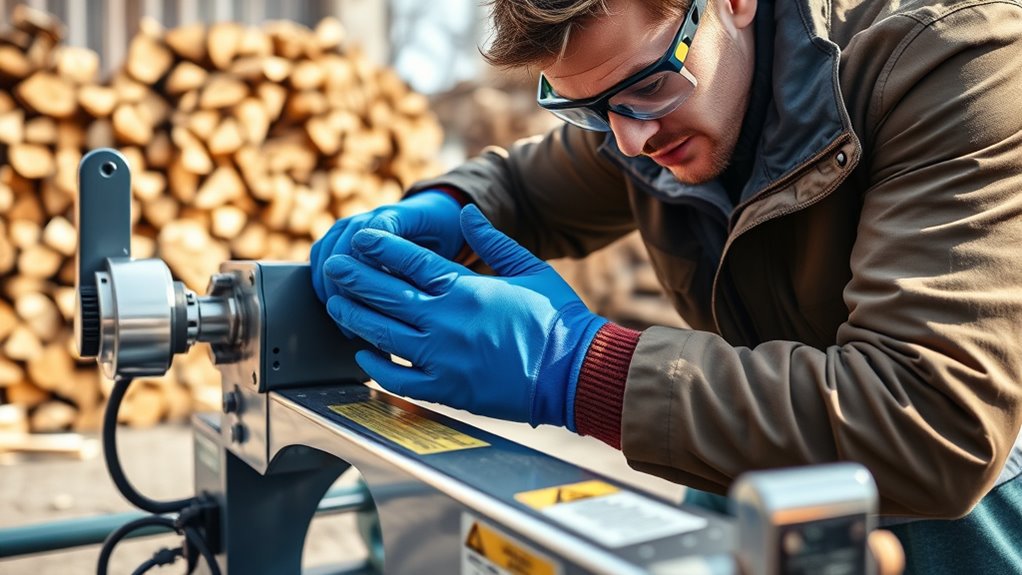

To maintain your electric log splitter safely, always disconnect it from power before inspecting or cleaning. Wear the proper PPE, like safety goggles and gloves, to protect yourself. Regularly check for wear or damage, particularly to cords and switches. Keep the work area tidy and well-lit, and never bypass safety features. Following these steps helps prevent injuries and keeps your machine running smoothly. Keep going to discover more vital safety tips and best practices.

Get business pricing on tools and workshop supplies
- Business-only prices and quantity discounts
- Tax-exempt purchasing
- Multiple users, one account, clear invoices
Key Takeaways
- Regularly inspect cords, plugs, switches, and moving parts for wear or damage before use.
- Disconnect power before performing maintenance or cleaning to prevent accidental startup.
- Clean debris and sawdust after each use to avoid buildup that could cause malfunctions.
- Store the splitter in a dry, secure place and ensure all safety features are intact.
- Follow manufacturer instructions carefully and wear appropriate PPE during operation and maintenance.
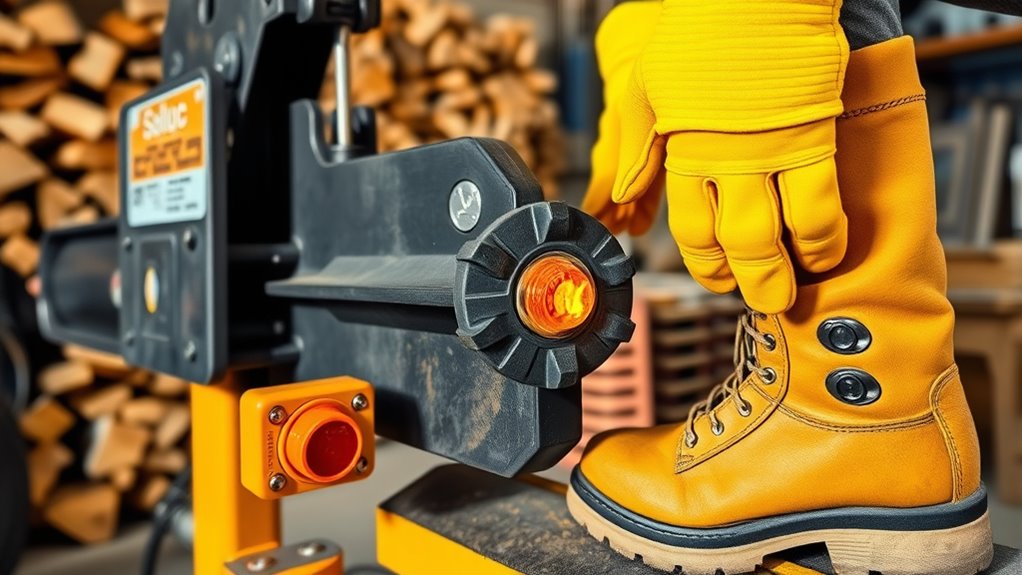
Using electric log splitters can make your firewood preparation easier and safer, but it’s imperative to follow proper safety practices. One of the most important measures you can take is to always wear appropriate personal protective equipment. Safety goggles protect your eyes from flying debris, while sturdy gloves shield your hands from splinters and accidental contact with the splitter’s moving parts. Hearing protection is also a good idea, especially if you’re working for extended periods, as the noise from the splitter can be surprisingly loud. Steel-toe boots help prevent injuries if logs or tools drop unexpectedly. Wearing proper gear not only minimizes injury risk but also helps you stay focused and comfortable during operation.
Always wear proper protective gear for safe, focused electric log splitting.
In addition to protective gear, understanding emergency shutdown procedures is indispensable. Electric log splitters are designed to be safe, but accidents can still happen if you’re not prepared. Familiarize yourself with the location and operation of the emergency stop or shutdown button before you start working. This quick-access control allows you to instantly cut power to the machine if you notice a problem or if someone gets too close. Always verify the power cord and outlet are in good condition, as frayed wires or damaged outlets can cause electrical hazards. When working, keep your hands away from the splitting wedge and other moving parts, and never bypass safety features or attempt to modify the machine.
Maintenance plays an essential role in safe operation. Regularly inspect your electric log splitter for signs of wear or damage. Check the cord, plug, and switch for any issues, and clean the machine after each use to prevent debris buildup that could interfere with its operation. When performing maintenance, always disconnect the power supply first to prevent accidental activation. Keep the work area clear of clutter and ensure adequate lighting. Proper storage of the splitter, in a dry and secure place, reduces the risk of electrical faults or damage. Additionally, understanding the scientific skepticism surrounding some safety claims can help you critically assess the safety features and recommendations provided by manufacturers.
Training and understanding the machine’s operation are equally important. Read the manufacturer’s instructions carefully, and never operate the splitter under the influence of alcohol or medications that impair judgment. If you’re unsure about any safety protocol, consult the manual or seek advice from a professional. By implementing these safety measures—wearing personal protective equipment, knowing emergency shutdown procedures, maintaining your equipment, and being well-informed—you can enjoy working with your electric log splitter while minimizing the risk of injury. Staying vigilant and cautious ensures you’re prepared for any unexpected situations and keeps your firewood chores safe and efficient.
electric log splitter safety gloves
As an affiliate, we earn on qualifying purchases.
As an affiliate, we earn on qualifying purchases.
Frequently Asked Questions
Can Electric Log Splitters Be Used Indoors Safely?
Yes, you can use electric log splitters indoors safely if you follow proper indoor safety precautions. Make sure to keep the area well-ventilated and avoid moisture to prevent electrical hazards. Use grounded outlets and inspect cords regularly for damage. Always read the manufacturer’s instructions, wear protective gear, and keep children or pets away. These steps help decrease electrical hazards and ensure safe operation indoors.
What Safety Gear Is Recommended When Operating Electric Log Splitters?
Think of safety gear as your armor when operating an electric log splitter. You should always wear protective gloves to shield your hands from splinters and debris, and safety goggles to protect your eyes from flying chips. These essentials keep you safe from potential hazards and make sure you handle the machine confidently. Don’t skip this gear—it’s your first line of defense against accidents, making your work safer and more enjoyable.
How Often Should Safety Inspections Be Performed on the Splitter?
You should perform safety inspections on your electric log splitter before each use to ensure maximum safety. Follow a consistent inspection schedule, ideally weekly or after extensive use, to catch any potential issues early. Checking safety check frequency helps prevent accidents caused by worn or damaged parts. Regular inspections include examining cords, switches, and hydraulic components, so stay vigilant and maintain a routine to keep your splitter operating safely.
Are There Specific Safety Precautions for Children Nearby?
You should keep children supervised at all times when operating or nearby the electric log splitter. Establish a safety zone around the equipment, ensuring kids stay outside this area to prevent accidents. Never allow children near the splitter during use, and always supervise them closely. Creating a clear safety zone and maintaining constant supervision helps protect children from potential hazards and keeps everyone safe during operation.
What Should I Do if the Splitter Malfunctions During Use?
If your splitter malfunctions, don’t panic and start performing emergency shutdown maneuvers like a Hollywood hero. First, unplug the machine immediately to prevent further damage or injury. Then, focus on equipment troubleshooting—check for jammed logs or loose wires. Keep safety in mind, and if you’re unsure, consult the manual or call a professional. Your quick action keeps everyone safe and your splitter in working order.
Conclusion
Remember, safety with electric log splitters is your shield against accidents. Think of it like a well-choreographed dance—each step carefully planned and executed. Always wear protective gear, stay alert, and follow the manufacturer’s instructions. By doing so, you’ll keep yourself safe and your equipment in top shape. When you treat safety as your trusted partner, you turn potential hazards into nothing more than a faint shadow passing by.
Fall yard work Picks
leaf blowers
As an affiliate, we earn on qualifying purchases.