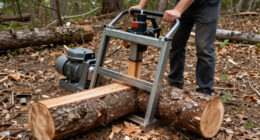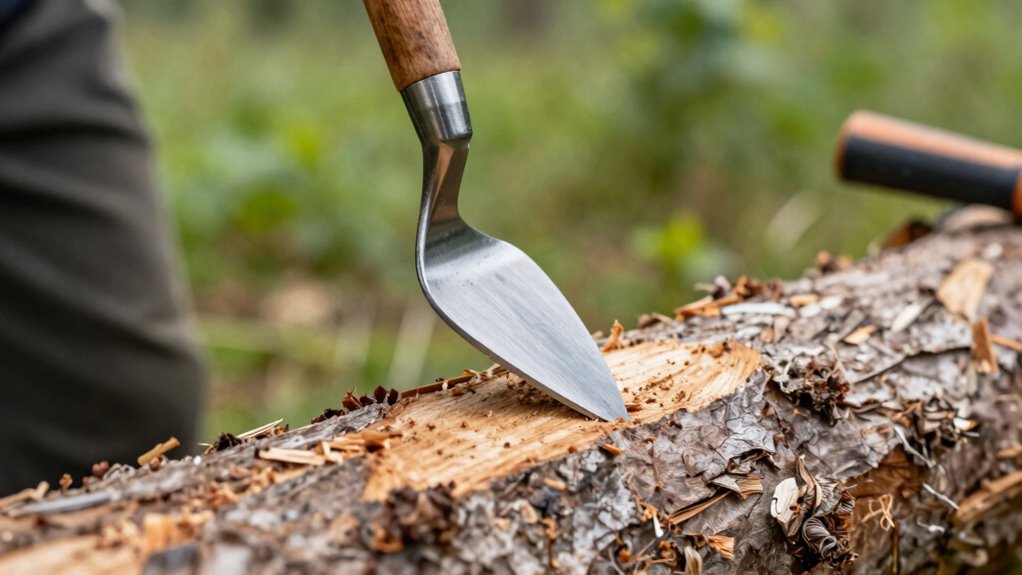

Yes, you should sharpen your splitter wedge to keep it effective and guarantee safe operation. Start by inspecting it for cracks or damage—replace if needed. Use a coarse stone or file to remove nicks, then hone with a finer tool, maintaining a consistent angle. Proper maintenance extends the wedge’s lifespan and reduces safety risks. For detailed steps and tips, continue to explore the right approach for sharpening your splitter wedge.
Key Takeaways
- Yes, sharpening a dull wedge restores cutting efficiency and reduces the force needed, promoting safer operation.
- Inspect the wedge for cracks or damage before sharpening to ensure safety and effectiveness.
- Use proper sharpening techniques, maintaining a consistent angle and steady pressure for a sharp, durable edge.
- Regular maintenance, including sharpening, extends the wedge’s lifespan and maintains optimal splitting performance.
- Always reassemble and secure parts properly after sharpening to prevent accidents and ensure safe, effective use.
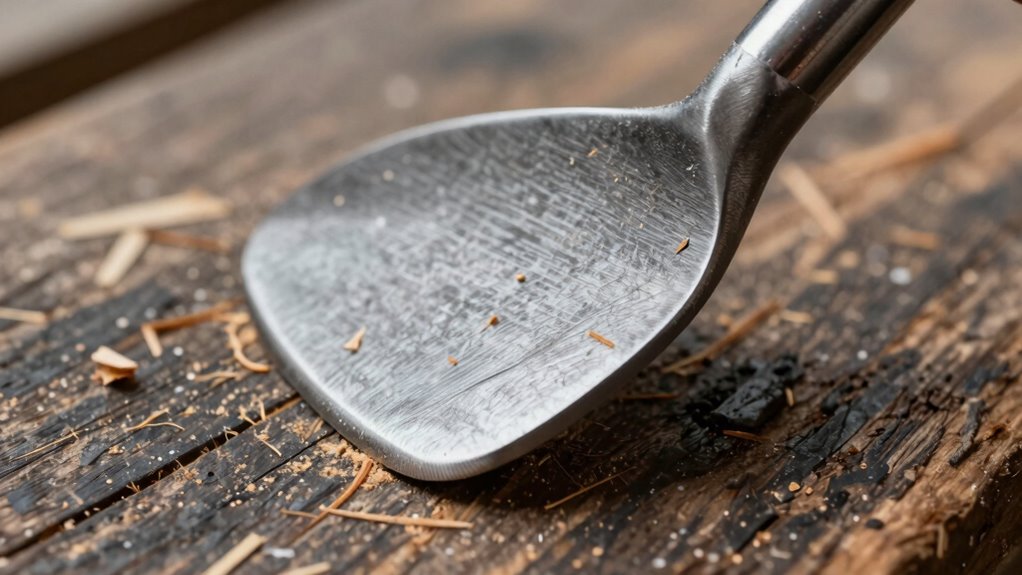
When it’s time to sharpen, start by inspecting the wedge for any cracks or severe damage. If it’s heavily damaged, replacing it might be a safer option rather than sharpening. If the wedge is just dull, you can proceed. Use a coarse sharpening stone or a file to remove any nicks or unevenness on the wedge’s edge. Keep the angle consistent—most wedges are sharpened at around 20 to 30 degrees—to ensure a clean cut. Apply steady, even pressure as you work along the edge, maintaining control to avoid slipping. After initial sharpening, switch to a fine file or stone to hone the edge and achieve a sharper, more durable cut. Additionally, understanding the importance of proper equipment maintenance can significantly extend the lifespan of your splitter and its components. Regularly checking the wedge’s condition can help identify early signs of wear or damage, ensuring timely maintenance. Remember that sharpening should be part of your routine maintenance schedule to keep the wedge in top condition. Proper blade care can also help maintain the sharpness for longer periods. Incorporating correct sharpening techniques can further ensure that the process is effective and safe.
It’s important to remember that sharpening isn’t a one-time task. Regular maintenance ensures your wedge stays sharp and effective. Once sharpened, reassemble any parts you removed and double-check that everything is secured properly. Keep in mind that a sharp wedge not only makes splitting easier but also minimizes safety risks. Dull wedges cause excessive force, which can lead to accidents, injuries, or damage to the splitter. Incorporating routine checks into your hammer maintenance routine, and always following safety precautions, can help prevent injuries. Properly maintained equipment, combined with careful sharpening, guarantees safer operation and extends the lifespan of your splitter. When done correctly, sharpening your wedge is a straightforward process that greatly improves your splitting experience while keeping you safe.
As an affiliate, we earn on qualifying purchases.
Frequently Asked Questions
How Often Should I Sharpen My Splitter Wedge?
You should sharpen your splitter wedge whenever you notice a decrease in cutting efficiency or if it becomes dull or chipped. Regular wedge maintenance guarantees peak performance and prevents unnecessary strain on your splitter. How often you sharpen depends on usage—every few months for frequent use, or when you observe less effective splitting. Keeping the wedge sharp maintains its effectiveness and prolongs its lifespan.
Can I Sharpen the Wedge With Household Tools?
You can sharpen the wedge with household tools, but it’s not ideal for preserving the wedge’s durability or optimizing sharpening frequency. Using improper tools risks damaging the wedge’s edge, reducing its effectiveness and lifespan. For best results, invest in proper sharpening tools like a file or grinder. Regularly sharpening with the right tools ensures your wedge stays sharp, durable, and ready for efficient splitting, saving you time and effort in the long run.
What Are the Signs Indicating the Wedge Needs Sharpening?
You’ll notice your wedge needs sharpening if it shows reduced wedge durability, meaning it struggles to split wood effectively. If you find you’re relying more on hammer impact to drive it in, that’s a sign it’s dull. A dull wedge won’t bite into wood as well, making splitting harder and risking damage. Sharpening restores its cutting edge, improving performance and reducing the need for excessive force.
Is It Safe to Sharpen the Wedge Myself?
Sure, you can sharpen a splitter wedge yourself—if you enjoy risking injury and have the right wedge material. Wedge material varies, and some, like hardened steel, demand precision and safety gear. Sharpening safety is paramount; neglect it, and you might turn a simple task into a trip to the ER. If you’re confident and cautious, go ahead, but otherwise, leave it to the pros before you end up with more than just a dull wedge.
What Are the Best Sharpening Tools for a Splitter Wedge?
You should use a file or grinding stone to sharpen your splitter wedge, as these tools help maintain wedge durability through proper sharpening techniques. A fine-toothed file is ideal for precise control, while a grinding wheel can quickly restore the edge. Make sure you follow the correct sharpening techniques to avoid dulling the wedge or compromising its strength. Regular sharpening keeps your splitter efficient and extends its lifespan.
Conclusion
So, if you want your splitter wedge to slice through wood like a hot knife through butter, don’t skip sharpening. A dull wedge is like trying to chop with a butter knife—you’re just wasting time and energy. Take the right approach, sharpen it properly, and watch your splitter conquer even the toughest logs with the force of a wildfire. Trust me, your woodpile will thank you, and your muscles will breathe a sigh of relief!