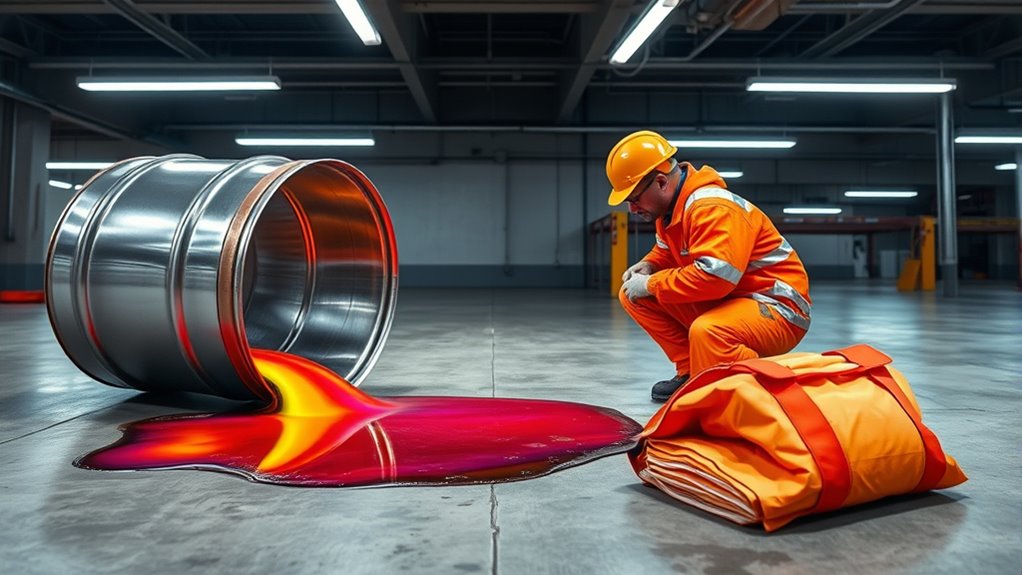

To prevent spills on the job, identify and properly label hazardous materials, use secondary containment systems, and conduct routine inspections. Keep spill kits nearby with absorbents, neutralizers, and PPE to respond quickly if an accident occurs. Train your team on spill procedures and conduct regular drills to stay prepared. Document spills and review your processes regularly to improve safety. Continue exploring methods to keep your worksite safe and environmentally responsible.

Get business pricing on tools and workshop supplies
- Business-only prices and quantity discounts
- Tax-exempt purchasing
- Multiple users, one account, clear invoices
Key Takeaways
- Identify and label potential spill materials, storing them securely to prevent accidental releases.
- Keep spill response kits accessible with absorbents, PPE, and neutralizers for immediate use.
- Train staff regularly on spill response procedures and proper cleanup techniques.
- Conduct routine inspections to detect leaks or hazards early and prevent spills.
- Document spill incidents thoroughly to improve prevention measures and ensure regulatory compliance.
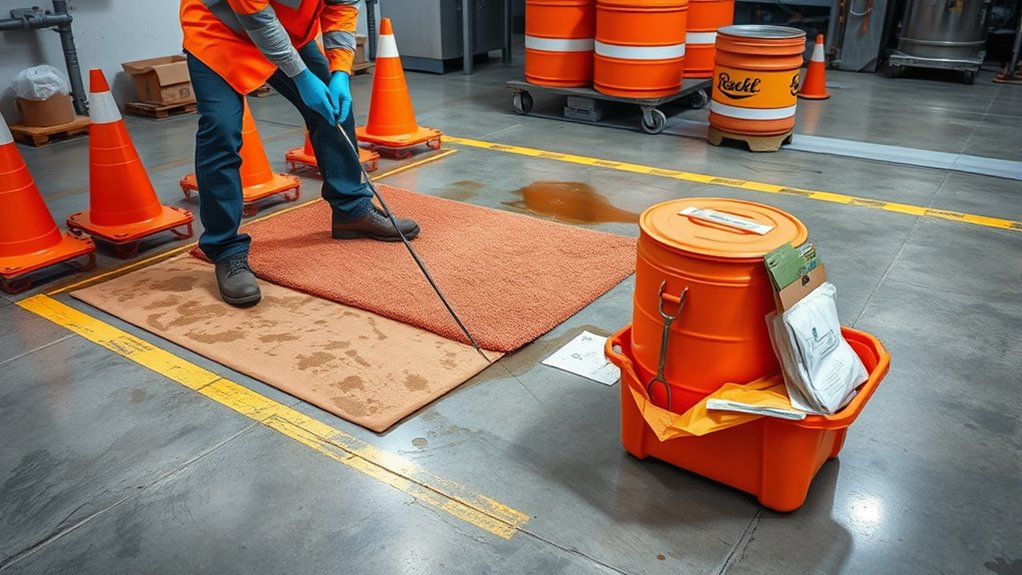
Spills can happen unexpectedly, but taking proactive steps can substantially reduce their impact. When you’re working on a job site, being prepared for a spill is essential. Having a solid spill response plan in place ensures you can act quickly and effectively, minimizing damage to the environment and keeping you in compliance with regulations. Environmental compliance isn’t just about following rules—it’s about protecting the surrounding ecosystem and your company’s reputation. By understanding the importance of spill response, you can prevent small incidents from escalating into costly environmental violations.
Proactive spill response plans protect the environment, ensure compliance, and prevent costly incidents on job sites.
Start by identifying the materials most likely to spill and where they are stored. Proper labeling and secure containment are your first lines of defense. Use secondary containment systems like spill pallets or berms to catch leaks before they spread. Regular inspections of storage areas help catch potential issues early, so you’re not caught off guard when a spill occurs. When a spill does happen, your immediate response should be swift. Quickly evaluating the size of the spill and the type of material involved helps determine the appropriate cleanup method and safety precautions. Always keep spill kits nearby—these kits should include absorbent materials, neutralizing agents, and personal protective equipment. Using the right tools not only speeds up cleanup but also prevents further contamination and injury. Incorporating auras of awareness can help workers stay alert to potential hazards and environmental risks during operations.
Training your team in spill response procedures is essential. Everyone involved should know their role and how to use spill response equipment properly. Conduct regular drills to keep skills sharp and ensure everyone understands the importance of environmental compliance. Proper training helps reduce response time and minimizes environmental impact. It also reinforces the importance of following all safety protocols, so workers remain protected throughout the cleanup process. After a spill, document what happened, including how it was contained and cleaned up. Documentation not only helps with regulatory compliance but also provides valuable insights for improving future spill response plans.
Preventing spills in the first place is always better than dealing with the aftermath. Implementing best practices, such as secure storage, routine inspections, and staff training, can greatly lower the risk. Remember, a swift, well-coordinated spill response isn’t just about minimizing environmental damage; it’s about demonstrating your commitment to safety and compliance. When you’re prepared, you can handle spills confidently, protecting your team, the environment, and your company’s reputation. Staying proactive and aware ensures you’re always ready for the unexpected, maintaining a safe and compliant workplace at all times.
spill response kit for job sites
As an affiliate, we earn on qualifying purchases.
As an affiliate, we earn on qualifying purchases.
Frequently Asked Questions
What Are the Most Common Causes of Spills on the Job Site?
You often cause spills due to poor hazard identification and neglecting equipment maintenance. When you overlook potential hazards, like loose fittings or unstable containers, spills become more likely. Similarly, skipping routine equipment checks can lead to leaks or malfunctions that cause spills. Staying vigilant, conducting regular hazard assessments, and maintaining your tools properly help prevent spills before they happen, keeping your worksite safer and cleaner.
How Often Should Spill Response Equipment Be Inspected?
You should inspect spill response equipment at least monthly to guarantee it’s ready when needed. Studies show that proper inspection frequency reduces spill response time by 30%, minimizing environmental impact. Regular equipment maintenance helps catch potential issues early, preventing costly delays during an emergency. Keep a detailed log of inspections to track the condition of your spill response gear and ensure it’s in ideal shape for any incident.
Are There Specific Training Requirements for Spill Cleanup Personnel?
Yes, spill cleanup personnel need specific training requirements to handle spills effectively. You should guarantee they meet certification standards set by OSHA or EPA, which include proper hazardous material handling and cleanup procedures. Regular training updates are essential to keep skills current and comply with regulatory requirements. By adhering to these standards, you help safeguard health, safety, and the environment during spill response efforts.
What Are the Legal Penalties for Spill Violations?
You face serious legal consequences if you violate spill regulations, including hefty fines and potential criminal charges. Penalty enforcement is strict, aiming to hold you accountable for environmental harm or safety risks. Authorities may impose fines, require corrective actions, or even pursue criminal prosecution if violations are severe. To avoid these penalties, guarantee you follow all spill prevention and cleanup protocols diligently and report spills immediately.
How Can Spill Prevention Measures Be Integrated Into Daily Operations?
You can integrate spill prevention strategies into daily operations by making them part of your daily safety routines. Start each shift with a quick inspection of equipment and storage areas, ensuring everything’s secure. Train your team regularly on spill prevention, emphasizing proper handling and cleanup procedures. Use spill containment materials and label hazardous areas clearly. Consistently reinforce these practices, so spill prevention becomes a natural part of your daily work habits.
Conclusion
By staying vigilant and following proper spill prevention and cleanup procedures, you keep your worksite safe and efficient. Think of it like tending a garden—you need to catch weeds early before they take over. When you act quickly and carefully, you prevent small spills from turning into big problems. Remember, your proactive efforts protect everyone and the environment, making your job as smooth as a well-oiled machine. Keep safety first, and spills won’t stand a chance.
Halloween Picks
halloween
As an affiliate, we earn on qualifying purchases.