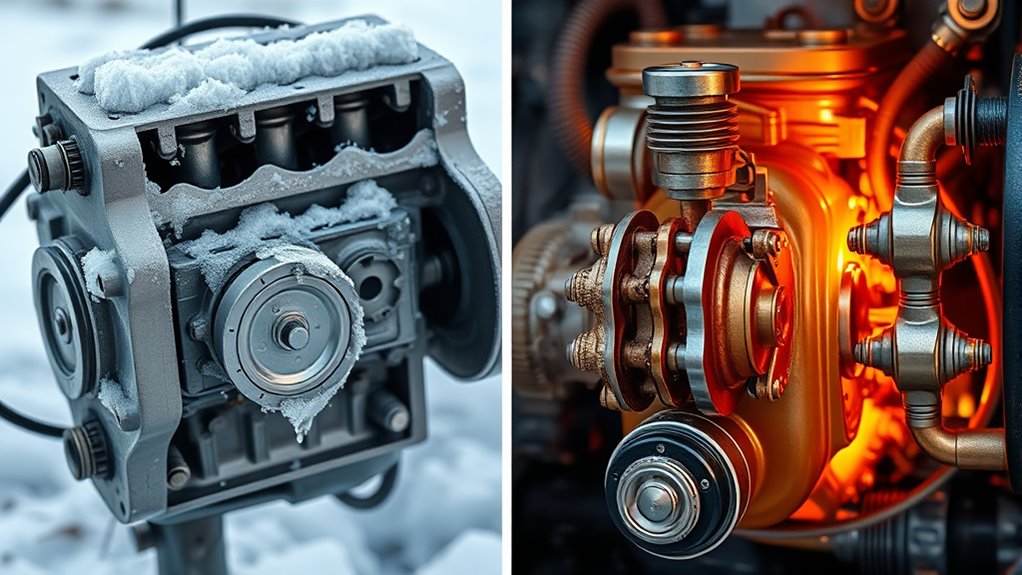

When starting your vehicle, if the engine is cold, give it a gentle turn or press the start button, avoiding excessive cranking to prevent battery drain. You can use a block heater or warm the engine first for better performance. When the engine is warm, a quick, smooth start is best—no need for prolonged cranking. Proper techniques for each situation help protect your vehicle and keep it running smoothly; discover more tips to optimize your start-up.
Key Takeaways
- Cold engines require gentle cranking and possibly warming devices to ensure a strong spark and easier startup.
- Warm engines start quickly with minimal effort, avoiding prolonged cranking to prevent strain on components.
- Warming a cold engine reduces fuel consumption, emissions, and engine wear during startup.
- For cold starts, avoid excessive cranking to prevent battery drain; use block heaters if available.
- Warm engine procedures focus on smooth, brief starts to maintain engine health and maximize efficiency.

Starting procedures are essential for guaranteeing a safe and efficient beginning to any operation or process. When you’re dealing with engines, the way you start them can considerably influence their performance, longevity, and overall efficiency. Whether the engine is cold or warm makes a big difference in how you approach the process. Cold engines, for instance, require a different starting routine compared to warm engines to maximize battery health and fuel efficiency. Recognizing these differences helps you avoid unnecessary wear and tear, saving you money and frustration in the long run.
When starting a cold engine, your first priority should be to give the battery enough time to provide a strong spark. Cold conditions cause the battery’s chemical reactions to slow down, which can weaken its output. To counter this, turn the key or press the start button gently and avoid cranking the engine excessively. Multiple attempts can drain the battery faster and lead to reduced battery health over time. If the engine doesn’t start after a few seconds, wait a moment before trying again. This allows the battery to recover and prevents unnecessary strain. Using a device like a block heater or letting the engine warm up for a few minutes can also help improve starting performance, reducing the amount of fuel needed and increasing fuel efficiency. A well-warmed engine starts more smoothly, consumes less fuel during startup, and minimizes emissions. Studies indicate that properly warming up an engine can also help maintain optimal glycolic acid levels in engine components, which contributes to smoother operation and longevity.
Once the engine is warm, starting becomes simpler, and your focus shifts to maintaining proper procedures to keep the engine healthy and efficient. For warm engines, you can turn the key or press the start button without extended cranking. Because the engine and battery are already at an ideal temperature, this minimizes the risk of stress on both components. Proper warm starts also help maintain maximum fuel efficiency, as the engine doesn’t have to work as hard to reach operating temperature. Remember to avoid over-revving or attempting to start the engine repeatedly if it doesn’t catch immediately. Consistent, gentle starts help preserve battery health and ensure the engine runs smoothly once it’s running.
Frequently Asked Questions
How Does Engine Temperature Affect Fuel Efficiency During Startup?
When your engine is cold, it’s less fuel-efficient because engine oil viscosity is higher, making it harder for parts to move smoothly. Plus, cold temperatures reduce fuel atomization, causing incomplete combustion. As your engine warms up, oil viscosity drops, improving lubrication and fuel atomization, which boosts efficiency. So, a warm engine runs more smoothly and conserves fuel better during startup, saving you money and reducing emissions.
Are There Specific Lubricants Recommended for Cold Engine Starts?
You should use engine oil formulated for cold starts, which flows more easily at low temperatures. Look for lubricants with appropriate viscosity ratings, like 0W-20 or 5W-30, as they provide better lubrication during startup. Additionally, consider oils with lubrication additives that enhance cold-weather performance by reducing friction and wear. This combination guarantees your engine remains protected and runs smoothly, even in chilly conditions.
What Are the Signs of a Cold Engine That Won’t Start?
They say, “A problem shared is a problem halved,” so if your engine won’t start, look for signs like slow cranking or unusual noises. A cold engine that won’t start often shows increased starter motor strain and sluggish response, especially if the engine oil viscosity is too thick in cold weather. These signs indicate it’s time to check your battery, oil, and possibly give the engine a little help to start.
How Long Should a Warm Engine Idle Before Driving?
You should let your warm engine idle for about 30 seconds to a minute before driving. This allows the engine warm-up, ensuring the oil circulates properly and the components reach ideal temperature. Avoid long idle times, as excessive idling wastes fuel and causes unnecessary wear. A brief warm-up period helps your engine run smoothly, improves fuel efficiency, and reduces emissions, making your drive more efficient and environmentally friendly.
Does Cold Weather Impact Battery Performance During Startup?
Yes, cold weather impacts battery performance during startup. Cold temperatures cause battery degradation, reducing its ability to deliver enough power for the engine to start smoothly. You might face cold start issues, with longer cranking times or difficulty starting your vehicle. To mitigate this, keep your battery well-maintained, ensure terminals are clean, and consider a battery heater if you live in extremely cold climates.
Conclusion
Whether you’re starting a cold or warm engine, remember the importance of proper procedures. Take your time, stay safe, and follow the steps carefully. Consistent caution creates confidence, preventing problems and prolonging engine life. By prioritizing patience and preparedness, you’ll promote smooth starts and sustained success. So, stay steady, be mindful, and master your motor’s mindset—making every start simple, secure, and stress-free.