
Using the wrong hydraulic oil might seem harmless, but it quietly harms your system over time. Incompatible oil can cause faster breakdowns, poor lubrication, and increased wear on parts, often without immediate signs. Contaminants and improper viscosity can slip past filters and damage pumps, leading to costly repairs. Maintaining the correct oil type is essential for system health and longevity. Keep going if you want to uncover simple steps to prevent these unnoticed issues.
Key Takeaways
- Using incompatible hydraulic oil can cause rapid breakdown and poor lubrication, often unnoticed until significant damage occurs.
- Wrong oil types may lead to increased contamination, accelerating component wear and system inefficiency.
- Inappropriate oil viscosity impairs proper flow and film strength, risking unnoticed damage during operation.
- Consistently using the wrong oil undermines filtration effectiveness and contaminant removal.
- Regularly verifying oil type and specifications is crucial to prevent silent, costly system failures.

Have you ever wondered what keeps hydraulic systems running smoothly? It’s often the quality of the hydraulic oil you use and how well it’s maintained. One critical aspect many overlook is the importance of proper oil filtration and viscosity control. These elements are essential to ensuring your hydraulic system operates at peak efficiency and avoids costly breakdowns. When the oil gets contaminated or its viscosity isn’t properly managed, it can lead to increased wear and tear, reducing the lifespan of your equipment. Yet, many operators don’t realize they might be using the wrong type of hydraulic oil or neglecting these essential maintenance steps.
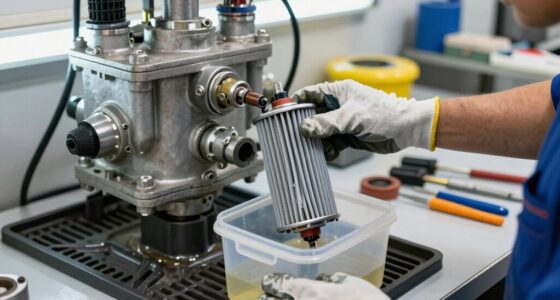
Oil filtration is your first line of defense against system failures. Over time, hydraulic oil picks up dirt, debris, metal particles, and other contaminants that can clog filters, damage pumps, or cause uneven wear on components. Regular oil filtration helps remove these impurities, maintaining clean oil that lubricates effectively. Without proper filtration, contaminants circulate through the system, accelerating component degradation and increasing the risk of costly repairs. You need to make certain your filtration systems are functioning correctly and that oil changes include thorough cleaning and filtering to prevent these issues.
Regular oil filtration prevents contaminants from damaging components and prolongs equipment lifespan.
Another vital factor is viscosity control. Hydraulic oil must have the right viscosity for your system’s operating conditions. If the oil’s viscosity is too high, it causes excessive resistance, making the system work harder and increasing energy consumption. Conversely, if it’s too low, the oil won’t provide enough lubrication or form a proper film between moving parts, leading to increased friction and potential damage. Maintaining the correct viscosity ensures smooth operation, ideal power transfer, and minimizes wear. This means regularly checking oil viscosity and adjusting or replacing the oil as needed, especially when operating in extreme temperatures or under heavy loads.
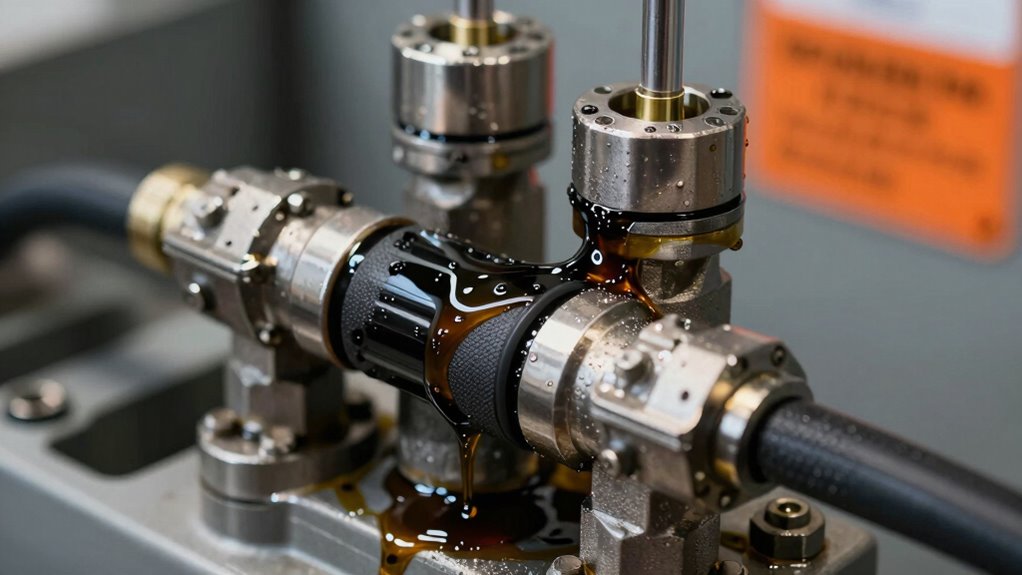
Many people don’t realize that choosing the wrong type of hydraulic oil—one that doesn’t match their system’s specifications—can be just as damaging as neglecting oil filtration or viscosity control. Different systems require different oil formulations, and using an incompatible type can cause rapid breakdown, poor lubrication, or increased contamination. That’s why understanding your machinery’s requirements and selecting the appropriate oil makes all the difference. Proper oil compatibility with your equipment helps prevent unnecessary wear and prolongs service life. Combining the right oil with diligent filtration and viscosity management creates a reliable foundation for your hydraulic system, reducing downtime and extending its lifespan.
In short, making certain your hydraulic system runs smoothly involves paying close attention to oil filtration and viscosity control. These measures are small but powerful steps that prevent bigger problems down the line. When you prioritize using the correct oil and maintaining proper filtration and viscosity, you’re not just protecting your equipment—you’re also saving time, money, and headaches.
Frequently Asked Questions
How Often Should Hydraulic Oil Be Replaced?
You should replace your hydraulic oil according to the recommended replacement schedule, typically every 2,000 to 4,000 hours of operation or annually. Regular oil changes guarantee peak performance and prevent equipment damage. Check your equipment manual for specific intervals, as factors like usage intensity and environment can influence the need for more frequent oil replacement. Staying on schedule helps maintain hydraulic system health and efficiency.
Can Using Incorrect Hydraulic Oil Damage Equipment?
Using incorrect hydraulic oil can seriously damage your equipment—about 60% of hydraulic failures are linked to oil issues. When oil isn’t compatible or has viscosity issues, it causes increased wear and overheating. This leads to costly repairs or replacements. Always check oil compatibility and viscosity requirements before refilling. Proper oil guarantees smooth operation, reduces downtime, and extends your equipment’s lifespan, saving you money in the long run.
What Are Signs of Hydraulic Oil Contamination?
You’ll notice hydraulic oil contamination through signs like increased equipment noise, sluggish operation, or unusual vibrations. Contamination causes include dirt, water, or metal particles, which can be detected using methods like visual inspection, fluid analysis, or magnetic particle testing. Regular monitoring helps you catch contamination early, preventing damage and costly repairs. Staying vigilant and performing routine checks guarantees your hydraulic system stays clean and operates smoothly.
Does Hydraulic Oil Affect Machine Efficiency?
Think of hydraulic oil as the lifeblood of your machine. If the oil’s viscosity is off or the additives are poor, it’s like trying to run a marathon in quicksand—your machine struggles. When the oil’s quality drops, efficiency plummets, causing sluggish responses and increased wear. You’ll notice decreased performance, higher energy consumption, and potential breakdowns. Keep the oil clean and proper to maintain smooth, efficient operation.
Are There Eco-Friendly Hydraulic Oil Options?
Yes, eco-friendly oils are available for hydraulic systems. You can choose biodegradable lubricants that reduce environmental impact while maintaining performance. These eco-friendly oils are designed to break down naturally, preventing pollution and protecting ecosystems. Switching to biodegradable lubricants not only helps your machinery operate efficiently but also aligns with sustainable practices, making it a smart choice for environmentally conscious operations.
Conclusion
So, next time you’re selecting hydraulic oil, ask yourself: are you truly choosing the right type? Overlooking this simple step can lead to costly failures and downtime. Don’t let the “wrong type” slip by unnoticed—your equipment’s performance depends on it. Staying vigilant means avoiding unnecessary repairs and keeping everything running smoothly. After all, isn’t it worth taking a moment to verify you’re using the correct oil before it’s too late?