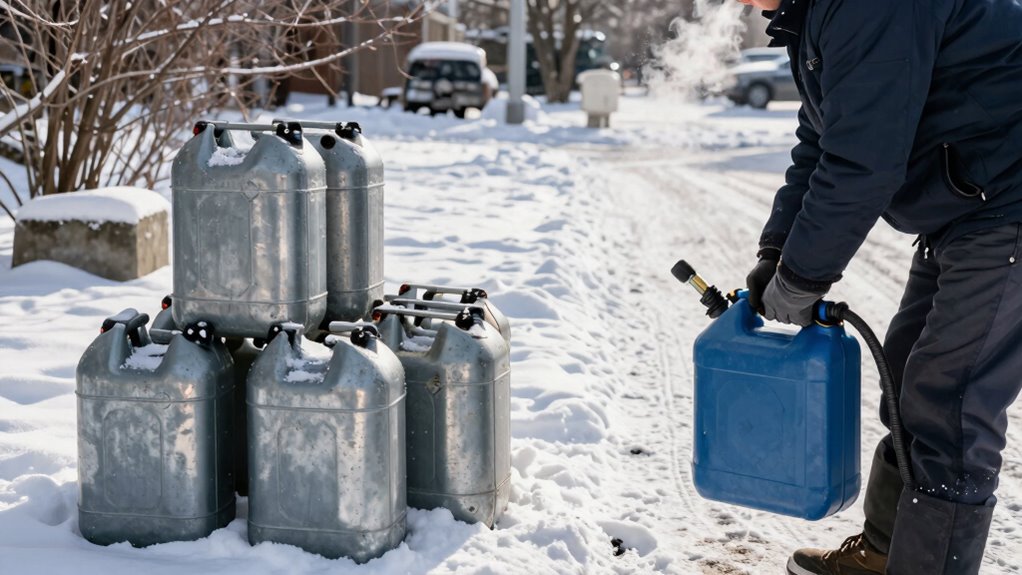

To protect your engine during winter storage, you should add a fuel stabilizer to your gas tank and run the engine for a few minutes. This circulates the stabilizer through the entire fuel system, preventing gumming and varnish buildup that can clog fuel lines and carburetors. Taking this simple five-minute step now saves you from costly repairs later. Keep going to discover more easy tips to keep your equipment in top shape while it’s stored.

Get business pricing on tools and workshop supplies
- Business-only prices and quantity discounts
- Tax-exempt purchasing
- Multiple users, one account, clear invoices
Key Takeaways
- Add a fuel stabilizer to the tank before winter storage to prevent fuel degradation.
- Run the engine for a few minutes after adding stabilizer to circulate it through the system.
- Use a fuel stabilizer compatible with your engine and follow the manufacturer’s instructions.
- Ensure the fuel system is fully stabilized to avoid varnish and gumming during downtime.
- Properly storing and stabilizing fuel helps ensure easier starts and reliable engine performance in spring.

Are you prepared to protect your belongings during the colder months? Winter storage isn’t just about covering your boat or vehicle; it’s about taking specific steps to guarantee it stays in top shape until spring. One essential step is a quick but effective fuel stabilization process. Gasoline can degrade over time, especially in the cold, leading to clogged fuel lines and carburetor issues. To prevent this, add a fuel stabilizer to your tank before storage. This simple move keeps fuel fresh, prevents varnish buildup, and guarantees your engine will start smoothly when you’re ready to use it again. Don’t forget to run the engine for a few minutes after adding stabilizer, so it circulates thoroughly through the system. This way, you’re safeguarding your engine’s performance and avoiding costly repairs come spring. Implementing proper outdoor maintenance helps ensure your equipment remains in optimal condition during the off-season. Battery maintenance is another critical aspect of winter storage. Cold temperatures are tough on batteries; they lose charge faster and can freeze if not properly prepared. Before storing, disconnect the battery if possible, or at least ensure it’s fully charged. Use a battery tender or trickle charger to keep the charge steady throughout the winter. This prevents the battery from freezing, which can cause internal damage, and preserves its lifespan. Check the terminals for corrosion and clean them if needed, applying a protective coating afterward. Storing the battery in a cool, dry place—away from direct sunlight—helps maintain its health. Regularly checking the charge level during winter ensures you won’t face a dead battery when spring arrives. These steps are simple but powerful in extending your battery’s life and functionality.
Combining fuel stabilization with proper battery maintenance is a smart, efficient way to prepare your vehicle or equipment for winter storage. It takes just a few minutes but saves hours of troubleshooting and repairs later. By stabilizing fuel, you prevent gumming and varnish buildup that compromise engine parts. Maintaining the battery ensures you won’t be met with dead cells or frozen internals when you’re ready to hit the road again. Remember, winter storage isn’t just about hiding your belongings; it’s about actively caring for them during their downtime. A little effort now ensures they’ll be ready to go when spring arrives, avoiding unnecessary headaches and expenses. So, take the time to do these quick steps—your engine will thank you, and you’ll start the new season with peace of mind.
fuel stabilizer for gasoline engines
As an affiliate, we earn on qualifying purchases.
As an affiliate, we earn on qualifying purchases.
Frequently Asked Questions
How Often Should I Check My Stored Fuel During Winter?
You should check your stored fuel every 1 to 2 months during winter. During these checks, add fuel additives to prevent gumming and guarantee proper combustion. Inspect your storage containers for leaks or corrosion, and top off the fuel if needed. Regular checks help maintain fuel quality, preventing engine issues later. Keep your fuel fresh and protected by following this simple routine throughout the winter months.
Can I Use Regular Gasoline for Winter Storage?
You can use regular gasoline for winter storage, but it’s best to add a fuel additive designed for cold weather. This prevents gumming and gelling in storage containers. Always stabilize your fuel and fill containers to avoid moisture. Using a quality additive guarantees smooth starting and superior storage, safeguarding your engine. Remember, a small step of stabilization and storage strategy saves miles of maintenance later on.
What Type of Fuel Stabilizer Is Best for Winter Storage?
You should choose a fuel stabilizer that’s specifically designed for winter storage, focusing on fuel stabilizer selection. Look for products with winter fuel additives that prevent gumming and phase separation in cold temperatures. These stabilizers help keep your fuel fresh and engine-ready when you’re ready to use your equipment again. Always follow the manufacturer’s instructions for dosage to guarantee maximum protection during storage.
Should I Drain the Fuel System Before Long-Term Storage?
You should drain the fuel system before long-term storage to prevent fuel degradation and gumming. Imagine fuel sitting in your engine, breaking down into sticky deposits that clog injectors and carburetors over time. Using fuel additives designed for engine preservation can help stabilize what’s left, but draining the system guarantees no old fuel causes issues. This simple step keeps your engine fresh and ready for spring.
How Do I Prevent Fuel Gumming in Cold Weather?
To prevent fuel gumming in cold weather, you should add fuel additives designed for winter use. These additives help keep the fuel system clean and prevent varnish buildup. Also, perform regular engine maintenance, such as running the engine periodically and ensuring the fuel system stays fresh. This way, you protect your engine from gum deposits, maintain ideal performance, and avoid costly repairs caused by fuel-related issues during cold months.
Conclusion
Storing your engine properly in winter might seem like a simple step, but neglecting it can lead to costly damage. Think of it as a brief pause—like a deep breath before a long journey—that maintains your engine’s health. Just as winter tests nature’s resilience, your careful preparation tests your commitment to lasting performance. In the end, a quick fuel move today ensures your engine’s strength tomorrow, proving that small acts can prevent big problems.
Fall yard work Picks
leaf blowers
As an affiliate, we earn on qualifying purchases.