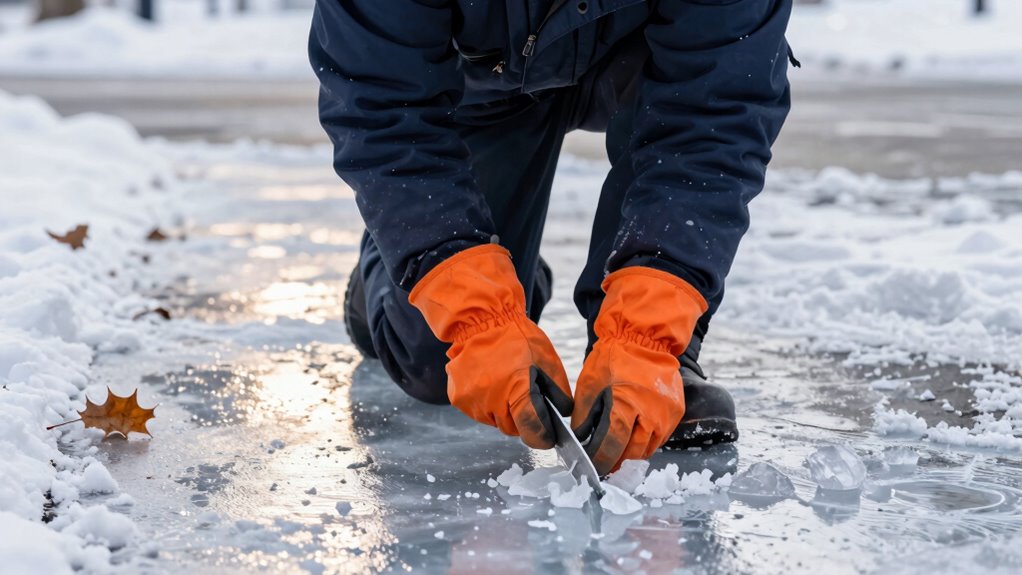

When splitting wood in cold weather, wear slip-resistant boots and clear ice from your workspace to prevent falls. Use insulated, textured gloves for protection and a better grip on tools. Stay visible by wearing bright or reflective clothing, and carry a flashlight if you work early or late. Prioritize secure footing and careful tool handling to avoid accidents. Continue exploring safety tips to stay warm and injury-free during your outdoor tasks.
Key Takeaways
- Wear slip-resistant footwear or traction cleats to prevent slips when splitting wood on icy surfaces.
- Use insulated, textured gloves to improve grip and protect hands during splitting tasks in cold weather.
- Ensure proper lighting and wear reflective clothing to enhance visibility during early morning or late evening work.
- Maintain stable footing by clearing ice and using proper tools to avoid falls and injuries.
- Dress in layered, waterproof clothing to stay warm, dry, and safe during outdoor splitting activities in winter conditions.
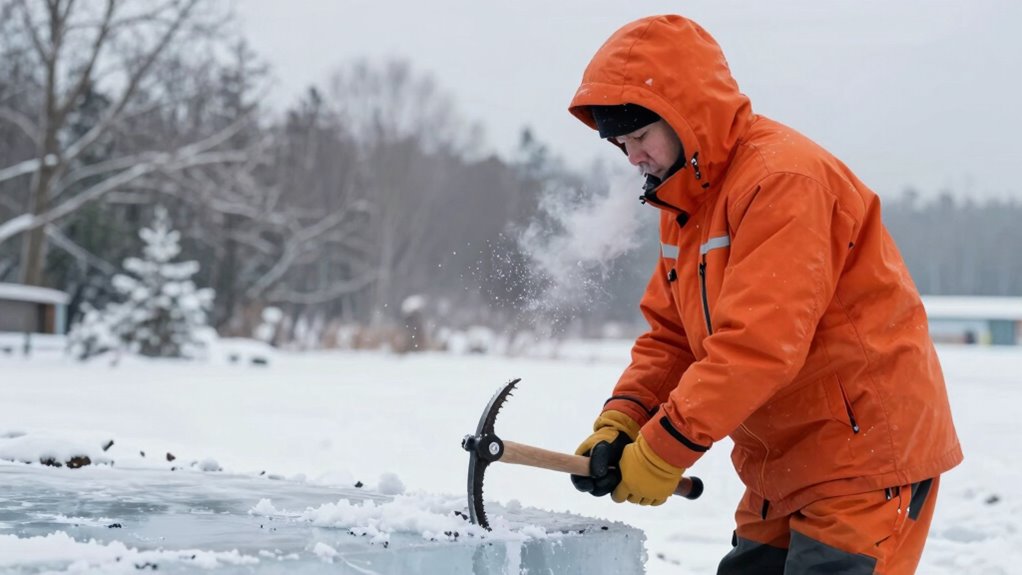
As temperatures drop, it is crucial to take steps to protect yourself from the dangers of cold weather. When dealing with winter conditions, your first line of defense is wearing the right winter clothing. Layering is essential; start with moisture-wicking base layers to keep sweat away from your skin, add insulating layers like fleece or wool, and finish with a waterproof, windproof outer shell. This combination traps heat and prevents cold air from penetrating, helping you stay warm and safe during outdoor activities. Proper winter clothing also shields you from wind chill, which can make the temperature feel much colder than it is. Keep your extremities covered with insulated gloves and a warm hat, as a significant amount of heat escapes through your head and hands. Wearing gloves not only keeps your hands warm but also provides better grip and dexterity, reducing the risk of slips or accidents. Using high-quality gloves with textured palms can improve grip and safety even further. Ice mitigation is equally important when venturing into winter environments. Icy surfaces are slippery and pose a high risk for falls, especially if you’re splitting wood or working outdoors. Before starting any task, check the area for ice patches and clear or treat them with salt, sand, or commercial ice melt products. If you’re working on icy ground, consider using footwear with slip-resistant soles or attach traction cleats to your boots. These small additions can make a big difference in maintaining stability. Always move cautiously, taking shorter steps and avoiding sudden movements that could cause you to lose balance. When splitting wood or performing tasks that involve heavy or sharp tools, ensure your footing is secure to prevent slips. Properly maintaining your tools and using them with care also reduces the risk of accidents that could lead to injuries or falls on icy surfaces. Visibility can be compromised during winter, especially in snowstorms or fog. To stay safe, wear bright or reflective clothing, which makes you more visible to others, particularly drivers. Carry a flashlight or headlamp if you’re working early in the morning or late at night, and keep your work area well-lit. Good visibility is critical when splitting wood or navigating icy paths, as it helps you spot hazards before they cause accidents. Remember to stay alert and aware of your surroundings, especially in low-light conditions, and communicate clearly with others nearby. Combining proper winter clothing, ice mitigation techniques, and enhanced visibility measures ensures you’re better prepared to handle the dangers of cold weather safely. Always prioritize your safety by taking these precautions seriously—cold weather can be unforgiving, but with the right approach, you can stay warm, secure, and injury-free.
Frequently Asked Questions
How Can I Prevent Frostbite During Cold Weather Work?
To prevent frostbite during cold weather work, you should keep your skin covered, wear layered clothing, and take regular breaks in warm areas. Use insulated gloves and proper footwear to protect extremities. Stay dry and avoid prolonged exposure to wind or cold. If frostbite occurs, apply cold weather first aid by warming affected areas gradually with body heat or warm water. Always prioritize frostbite prevention to stay safe.
What Are the Best Types of Gloves for Cold Environments?
You should choose insulated gloves to keep your hands warm in cold environments, as they provide essential thermal protection. Additionally, touchscreen gloves are a smart option, allowing you to operate devices without removing them, which helps maintain your warmth. Look for gloves made with waterproof and windproof materials, and guarantee they fit snugly for maximum dexterity and comfort during your work.
How Do I Identify Hidden Icy Patches on Walkways?
To identify hidden icy patches on walkways, you need to focus on ice detection techniques. Look for subtle signs like a glossy or slick appearance, especially in shaded areas or where water tends to collect. Pay close attention to walkway hazards such as uneven surfaces or discoloration, which can hide ice. Test suspicious spots with your foot or a walk-behind tool to guarantee safety before proceeding.
What Clothing Layers Are Most Effective for Cold Weather Safety?
You should wear layered clothing with thermal insulation to stay warm and moisture control to keep sweat away from your skin. Start with a moisture-wicking base layer, add an insulating middle layer like fleece or down, and top it with a waterproof, windproof outer layer. This combination helps regulate your temperature and prevents moisture buildup, ensuring you stay safe and dry during cold weather work.
How Can Visibility Be Improved in Winter Work Conditions?
You can improve visibility in winter work conditions by wearing reflective gear that catches the light and makes you more noticeable. Additionally, guarantee proper lighting around your work area to eliminate dark spots and reduce accidents. Coincidentally, using high-visibility clothing and well-placed lights not only protect you from slips and falls but also help colleagues see you clearly, especially during early mornings or late evenings when visibility is low.
Conclusion
As you step outside into the icy air, remember that safety keeps you steady on slippery paths and warm gloves protect your hands from freezing. Keep your visibility clear like a bright lantern cutting through the fog, and take each cautious step with confidence. With awareness and preparation, you’ll navigate cold weather’s icy grip safely—your path bright and sure as winter’s frost blankets the ground. Stay alert, stay safe, and embrace winter’s beauty while protecting yourself.