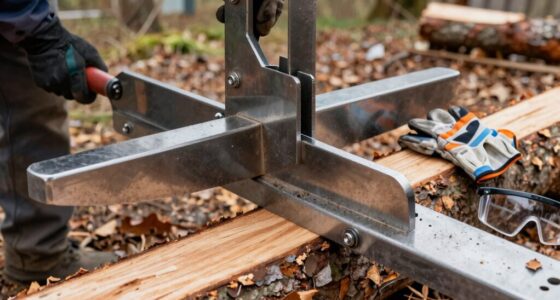
When towing a splitter, many forget to double-check all connections—hitch, safety chains, and hydraulic hoses—for security and wear. You should verify your trailer’s weight distribution and make sure the hitch ball size matches. Don’t skip testing lights and brakes, and always distribute weight evenly. Keep an eye out for trailer sway, unusual sounds, or movement during stops. To keep yourself and your equipment safe, paying attention to these often-overlooked details is vital; learn what else is essential to prevent mishaps.

Get business pricing on tools and workshop supplies
- Business-only prices and quantity discounts
- Tax-exempt purchasing
- Multiple users, one account, clear invoices
Key Takeaways
- Double-check all connections, including hitch, chains, and safety straps, for security and wear before towing.
- Verify trailer weight distribution and ensure safety chains are crossed and properly attached.
- Inspect hydraulic hoses and splitter mounting to prevent leaks or detachment during transport.
- Test all vehicle lights, brakes, and signals to ensure visibility and safe operation.
- Confirm the towing vehicle’s capacity matches the trailer and splitter weight, and drive at safe speeds.

Towing a splitter can be a straightforward process if you understand the proper techniques and safety precautions. Before hitting the road, you need to prioritize safety to prevent accidents and equipment damage. The first step is to conduct a thorough equipment inspection. Check all connections, including the hitch, chains, and safety straps, ensuring they’re secure and in good condition. Look for any signs of wear, rust, or damage that could compromise the integrity of the setup. Confirm that the splitter itself is properly secured to the trailer, with no loose or missing fasteners. Verify that the hydraulic hoses are intact and free from leaks, as hydraulic failure can be dangerous during transport.
Once you’ve inspected the equipment, focus on safety precautions. Make sure your towing vehicle is capable of handling the weight of the splitter and trailer. Check your vehicle’s load capacity and ensure the hitch ball size matches the trailer coupler. Attach safety chains in a crisscross pattern underneath the trailer tongue; this provides extra security should the hitch disconnect. Double-check that your lights, brakes, and turn signals are working correctly, so you’re visible and predictable on the road. It’s also wise to have reflective tape or signs on the trailer for increased visibility, particularly if you’re traveling during low-light conditions.
Ensure your towing vehicle can handle the splitter’s weight and verify all safety connections before hitting the road.
When you’re ready to tow, distribute the weight evenly on the trailer to maintain balance and prevent swaying. Drive at moderate speeds, especially when turning or descending hills, to keep control. Maintain a safe following distance to give yourself ample time to react to road hazards or sudden stops. Remember that a splitter can be top-heavy, so gentle acceleration and braking are essential to avoid tipping or rolling over. Periodically stop during your trip to check that all connections remain secure and that there’s no unusual play or movement. Keep an eye out for trailer sway or any abnormal sounds, which might indicate a problem that needs immediate attention. Additionally, understanding the hydraulics involved helps prevent unexpected failures that could pose safety risks.
Throughout the process, communication is key. If you’re towing with others, ensure everyone understands the safety procedures and knows what to do in case of an emergency. By thoroughly inspecting your equipment beforehand and adhering to safety precautions during the drive, you ensure a smooth, safe journey. Proper preparation not only protects your equipment but also keeps you and others safe on the road. Remember, a little extra caution goes a long way when towing a splitter—it’s worth the effort to avoid costly damage or potential accidents.
As an affiliate, we earn on qualifying purchases.
Frequently Asked Questions
What Are the Legal Requirements for Towing a Splitter?
When towing a splitter, you need to meet legal requirements like proper splitter installation and ensuring weight distribution is correct. Make sure your trailer and vehicle comply with local regulations, including weight limits and safety standards. Check that the splitter is securely attached and balanced to prevent accidents. Always carry necessary permits if required, and verify that your setup meets the specific laws in your area for safe, legal towing.
How Do Weather Conditions Affect Towing Safety?
Did you know that nearly 20% of accidents involve weather hazards? Weather conditions can substantially impact your towing safety, as rain, snow, or fog reduce visibility and create slippery road conditions. These hazards make it harder to control your vehicle and increase stopping distances. Always check the weather forecast, slow down, and increase your following distance to stay safe during adverse weather, and avoid towing in extreme conditions whenever possible.
What Tools Are Essential for Roadside Assistance?
When you’re dealing with roadside assistance, make certain you have crucial tools like a sturdy trailer hitch, jumper cables, a flashlight, and a wrench set. Your trailer hitch must match your vehicle’s towing capacity to prevent accidents. Carrying safety cones, gloves, and a spare tire is also essential. These tools help you handle common issues quickly and safely, especially if weather conditions or other factors complicate your roadside situation.
How to Handle Trailer Sway During Towing?
When trailer sway threatens to turn your journey into a wild dance, take control like a skilled captain steering through choppy seas. To maintain trailer stability, apply sway prevention techniques such as adjusting your hitch, reducing speed, and evenly distributing load weight. Keep a firm grip on the wheel, stay alert, and remember: steady hands and calm nerves are your best tools against sway, ensuring a smooth, safe voyage.
What Maintenance Checks Are Needed Before Towing?
Before towing, you should check your trailer lighting to guarantee all signals work properly, preventing accidents. Also, verify your tire pressure on both the trailer and the tow vehicle; properly inflated tires improve safety and fuel efficiency. Additionally, inspect the hitch and connections, and make sure the brakes are functioning. Doing these maintenance checks helps prevent breakdowns and ensures a smooth, safe towing experience.
Conclusion
Remember, towing a splitter isn’t just about equipment—it’s about trust and responsibility. Like a steady hand guiding a delicate instrument, your careful prep and awareness keep the journey smooth. Forgetting essentials can be like losing the compass on a long road—risking chaos and damage. Stay vigilant, follow the checklist, and treat your gear as a symbol of your commitment to safety. When you do, you’re not just towing a splitter—you’re steering your future with confidence.
Halloween Picks
halloween
As an affiliate, we earn on qualifying purchases.