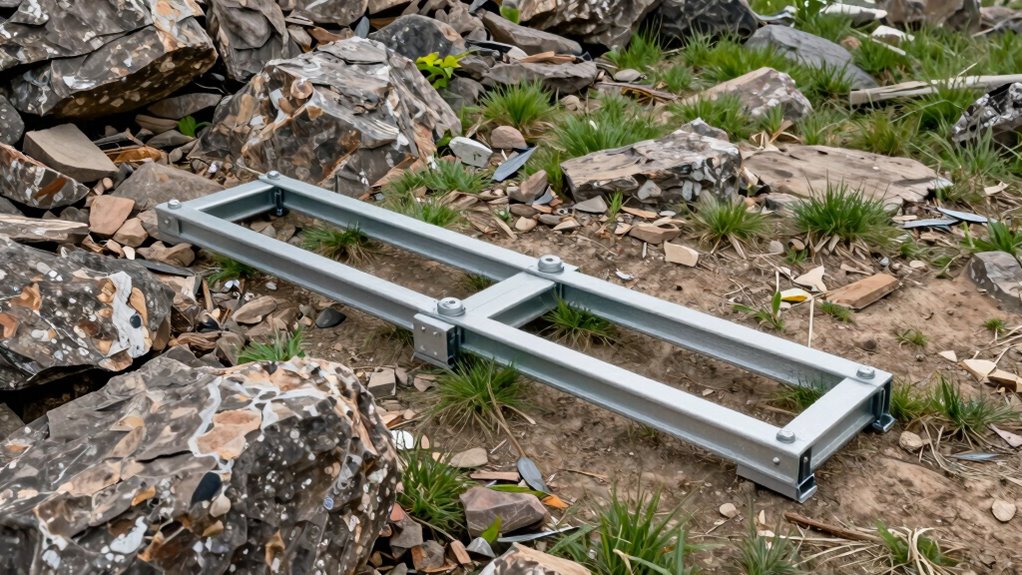

When working on uneven ground, start by thoroughly inspecting the surface for soft spots, loose debris, or irregularities. Use leveling tools, gravel, or compacted soil to create a stable, even base. Installing support pads or adjustable supports like leveling jacks helps fine-tune equipment positioning. Regularly monitor ground conditions over time, especially after weather changes. Following these steps can greatly reduce tip-over risks—keep going for more tips to guarantee safety and stability in challenging terrains.

Get business pricing on tools and workshop supplies
- Business-only prices and quantity discounts
- Tax-exempt purchasing
- Multiple users, one account, clear invoices
Key Takeaways
- Conduct ground surface analysis to identify irregularities and soft spots before setup.
- Use leveling tools and support pads to create a stable, even foundation for equipment.
- Perform stability testing under controlled loads to ensure terrain can support equipment safely.
- Implement adjustable supports like leveling jacks and monitor ground conditions regularly.
- Follow safety guidelines and proper ground preparation to prevent tipping and ensure equipment stability.
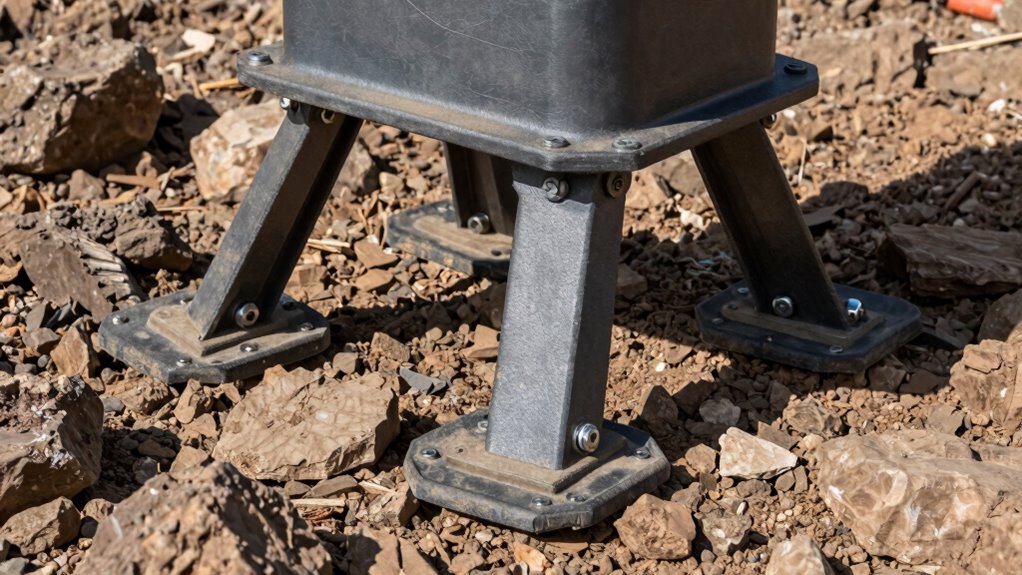
Have you ever wondered how to prevent equipment from tipping over on uneven ground? It’s a common concern, especially when working outdoors or on sites with unpredictable terrain. The key to avoiding costly accidents lies in thorough ground surface analysis combined with proper stability testing. Before setting up any machinery or equipment, take the time to evaluate the ground where it will sit. This involves inspecting the surface for irregularities, soft spots, or loose debris that could compromise stability. By understanding the specific conditions of the ground, you can make smarter decisions about placement and support. Stability testing becomes your first line of defense, allowing you to assess how different loads and configurations behave on the terrain. It’s not just about checking whether the ground looks firm; it’s about measuring how it responds under the weight of your equipment. Conducting stability testing involves applying controlled loads and observing how the surface reacts, giving you concrete data to work with. If the ground surface analysis reveals unevenness, you can take proactive steps to level or reinforce the area before installation. Using leveling tools, adding gravel or compacted soil, or installing support pads can make a significant difference. These measures help create a more uniform foundation, reducing the risk of tipping caused by slope or soft spots. Remember, equipment stability isn’t just about the ground; it’s also about how well your setup compensates for irregularities. Consider using adjustable supports or leveling jacks to fine-tune the position of your machinery. When combined with prior ground surface analysis and stability testing, these tools allow you to adapt to the terrain dynamically. It’s essential to keep monitoring the ground conditions over time, especially if the site is prone to erosion or moisture changes that may alter stability. Regular checks ensure your setup remains secure, minimizing the risk of accidental tip-overs. Additionally, always follow manufacturer guidelines regarding weight distribution and safety margins, especially on challenging terrain. By thoroughly analyzing the ground surface and conducting stability testing, you’re actively reducing hazards and protecting both your equipment and personnel. Proper preparation is about foreseeing potential issues and addressing them before they occur. For example, understanding ground stability factors can help you plan more effectively. So, next time you’re working on uneven ground, remember that a careful ground surface analysis combined with stability testing can make all the difference in keeping your equipment upright and safe. It’s a simple, effective strategy that saves you time, money, and potential accidents, making your work site safer and more efficient.
adjustable leveling jacks for machinery
As an affiliate, we earn on qualifying purchases.
As an affiliate, we earn on qualifying purchases.
Frequently Asked Questions
Can This Setup Be Used on Slopes or Uneven Terrain?
Yes, this setup can be used on slopes or uneven terrain because it offers excellent ground stabilization and terrain adaptability. You’ll find that its design helps prevent tip-overs by adjusting to various ground conditions. You can confidently use it on uneven surfaces, knowing that it maintains stability. This flexibility makes it ideal for outdoor tasks where terrain varies, ensuring safety and performance regardless of ground irregularities.
Is Special Equipment Required for Installation on Uneven Ground?
Think of your setup as a sturdy ship ready to weather rough seas. You’ll need ground leveling to create a flat surface and proper anchoring techniques to secure it firmly. Special equipment isn’t required, but using leveling tools and anchors guarantees stability on uneven terrain. With these adjustments, your setup stays balanced, even on slopes or bumpy ground, preventing tip-overs and keeping everything safe and secure.
How Does the Setup Adapt to Changing Ground Conditions?
You can easily adapt the setup to changing ground conditions with its built-in terrain flexibility. The system automatically adjusts to uneven surfaces, maintaining stability and preventing tip-overs. This ground adaptation guarantees your equipment stays secure regardless of terrain variations. You don’t need special tools or modifications—just rely on the setup’s smart design to handle shifting ground conditions, keeping your operation safe and efficient.
What Maintenance Is Needed for Long-Term Stability?
Sure, because nothing says long-term stability like overlooking maintenance. You should regularly perform ground inspections to spot erosion or shifting, which could threaten your setup. Also, check the material durability; over time, weather and wear can weaken components. Tighten bolts, replace worn parts, and ensure the ground remains firm. Neglecting these simple steps might just turn your stable setup into a tip-over waiting to happen.
Are There Size or Weight Limits for the Equipment?
Yes, there are weight restrictions and size limitations for the equipment. You should always check the manufacturer’s specifications to make sure your equipment doesn’t exceed the recommended weight capacity or size limits. Exceeding these restrictions can compromise stability and safety, especially on uneven ground. Keeping within the specified limits helps prevent tip-overs and maintains long-term stability, so always verify these details before setup and operation.
Conclusion
With this setup, you’ll never fear uneven ground again—it’s like having a safety net so strong, it could catch a falling skyscraper. You’ll breeze through rough terrain knowing your equipment stays balanced and secure. Say goodbye to tip-overs and hello to peace of mind, even on the most unpredictable surfaces. Trust me, once you experience this setup, you’ll wonder how you ever managed without it—it’s a game-changer that keeps your gear perfectly upright, no matter what.
Halloween Picks
halloween
As an affiliate, we earn on qualifying purchases.