Hydraulic pressure injuries happen when high-pressure fluids accidentally inject into your body during maintenance or use of hydraulic equipment. These injuries can cause serious tissue damage that isn’t always obvious externally, often leading to pain, swelling, and nerve issues. If not treated promptly by medical professionals, the injury could worsen, causing infections or tissue death. Knowing how dangerous hydraulic pressure injuries are underscores the importance of proper safety steps—you’ll discover more about how to stay safe below.

Get business pricing on tools and workshop supplies
- Business-only prices and quantity discounts
- Tax-exempt purchasing
- Multiple users, one account, clear invoices
Key Takeaways
- Hydraulic injection injuries occur when high-pressure fluids penetrate the skin, causing internal tissue damage.
- These injuries often appear minor externally but can cause severe internal damage, including necrosis and nerve injury.
- Rapid, appropriate medical treatment is essential to prevent complications like infection and tissue death.
- Proper safety measures, such as protective gear and system shutdown procedures, are crucial to prevent hydraulic injection injuries.
- Recognizing symptoms early and seeking urgent medical care can significantly reduce long-term harm.
Hydraulic pressure injuries occur when high-pressure fluids are injected into the body, often during the use or maintenance of hydraulic equipment. These injuries are not only painful but can also cause serious tissue damage if not addressed promptly. When working around hydraulic systems, understanding hydraulic safety is essential to prevent injection trauma. High-pressure fluids can penetrate the skin with force, pushing contaminants deep into tissues, which complicates treatment and increases the risk of infection or permanent damage.
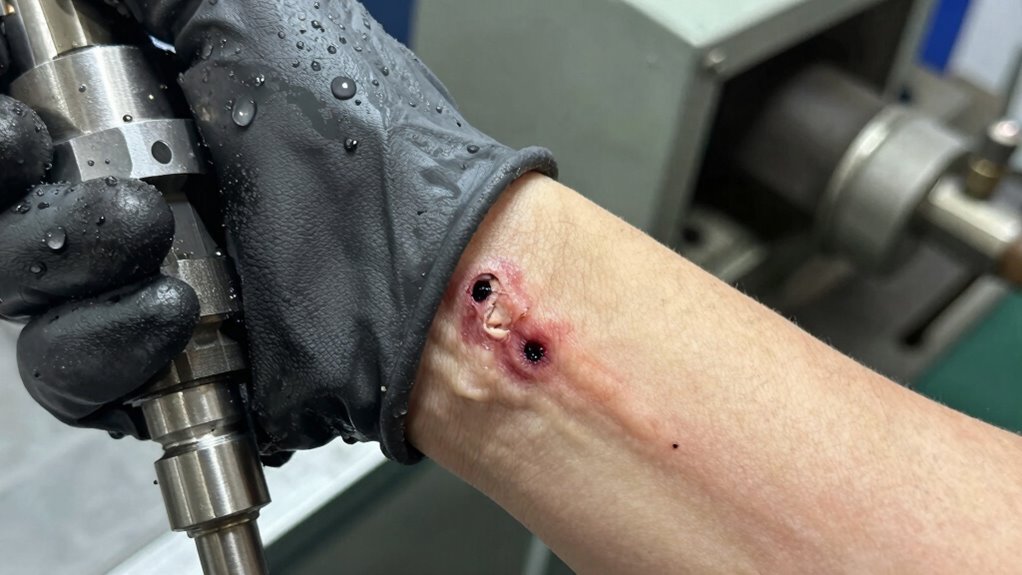
You might not realize how dangerous hydraulic equipment can be until an injury occurs. Hydraulic safety protocols are designed to minimize risks, but lapses or accidents happen. When a high-pressure jet strikes your skin, it can drive fluid into soft tissues, creating an injury that resembles a small puncture wound but with far more severe internal damage. The injected fluid may contain oils, grease, or other contaminants, compounding the injury’s severity. Because the injury isn’t always obvious, it’s *crucial* to seek immediate medical attention if you suspect an injection trauma, even if the wound appears minor.
Hydraulic injection injuries require immediate medical attention regardless of wound appearance.
Injection trauma from hydraulic pressure isn’t just a superficial injury; it involves the forceful introduction of fluid into your tissues, which can cause necrosis, nerve damage, or even bone injury if untreated. Often, the initial signs include swelling, pain, and a small puncture wound, but symptoms can escalate quickly. You might experience numbness, loss of function, or increased swelling as the fluid spreads. It’s *essential* to understand that the wound may look deceptively simple, but the internal damage can be extensive. Delaying treatment increases the risk of complications, including infection, tissue death, or the need for surgical intervention.
Preventing hydraulic injection injuries hinges on strict adherence to hydraulic safety measures. Always wear proper protective gear, such as gloves and eye protection, when working with hydraulic systems. Use appropriate tools and follow lockout/tagout procedures to *guarantee* equipment isn’t accidentally energized during maintenance. If you notice a leak or suspect high-pressure exposure, shut down the system immediately and avoid direct contact. Remember, even a small jet of hydraulic fluid can cause serious injury.
If an injury occurs, don’t try to treat it yourself. You need urgent medical care—preferably from specialists who understand injection trauma. Early intervention can be lifesaving, as it allows for proper removal of embedded fluid and minimizes tissue damage. Recognizing the danger of hydraulic pressure and respecting hydraulic safety guidelines are your best defenses against injury. Never underestimate the force of high-pressure fluids; they’re powerful and can cause lasting harm if mishandled.
As an affiliate, we earn on qualifying purchases.
Frequently Asked Questions
How Quickly Can Hydraulic Injection Injuries Develop Symptoms?
Symptoms from hydraulic injection injuries can develop quickly, often within minutes to hours after exposure. You might notice pain, swelling, or redness almost immediately, signaling rapid injury progression. It’s essential to seek medical attention right away if you suspect an injection, as early intervention can prevent severe tissue damage. Don’t delay—prompt treatment reduces the risk of long-term complications and helps manage symptom onset effectively.
Are Certain Industries More Prone to Hydraulic Injection Injuries?
Yes, certain industries are more prone to hydraulic injection injuries, especially those involving high-pressure systems like construction, manufacturing, and automotive repair. In these fields, industrial safety protocols are vital to prevent injuries. You should always wear proper protective gear and follow injury prevention practices when working with hydraulic equipment. Staying vigilant about safety measures helps minimize the risk of serious injection injuries and keeps everyone safer on the job.
Can Hydraulic Injection Injuries Be Fully Healed Without Surgery?
Hydraulic injection injuries can sometimes heal without surgery if you seek prompt treatment and follow preventive measures. Early intervention with antibiotics and wound care can prevent infection and reduce damage. However, more severe cases might require surgical intervention to remove damaged tissue. To improve healing chances, always wear proper protective gear, avoid accidental hydraulic fluid injection, and consult a healthcare professional immediately if injury occurs.
What Are the Long-Term Effects of Untreated Hydraulic Injection Injuries?
Ignoring hydraulic injection injuries is like neglecting a ticking time bomb — long-term, you face chronic complications and disability concerns. Untreated, the damage can spread like wildfire, causing persistent pain, tissue death, and limited mobility. Over time, you might find yourself battling ongoing health issues, with your quality of life severely diminished. Don’t wait; early intervention is vital to prevent these devastating, lasting effects from taking hold.
How Can Workers Best Protect Themselves From Hydraulic Injection Risks?
You can best protect yourself from hydraulic injection risks by always wearing proper Personal Protective Equipment, like gloves and eye protection. Additionally, participate in extensive Safety Training to recognize hazards and respond correctly. Stay alert around hydraulic systems, avoid distractions, and follow established safety protocols. Regularly inspect equipment for leaks or damage, and never attempt repairs without proper authorization. These steps help minimize your risk of injury.
Conclusion
Remember, hydraulic pressure isn’t a joke—it can cause serious injury if mishandled, much like the unexpected dangers of a black plague in medieval times. Always prioritize safety, wear proper gear, and stay alert around high-pressure systems. If you get injured, don’t delay; seek medical help immediately. Think of it as your modern-day armor—protecting you from unseen, yet deadly, forces. Stay cautious, stay alive—because even in this age, a misstep can turn tragic in the blink of an eye.
Fall Picks
fall essentials
As an affiliate, we earn on qualifying purchases.