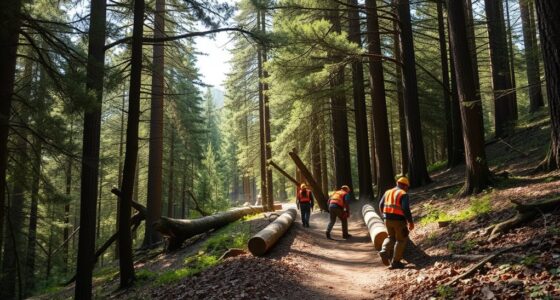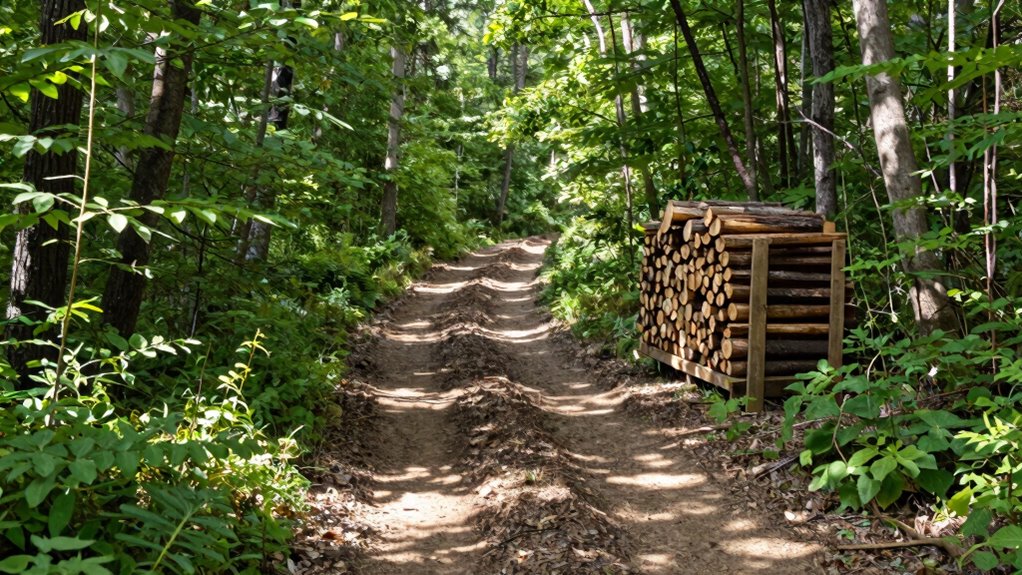

To create simple, safe access routes for firewood work, start by surveying the area and clearing obstacles like rocks and fallen branches. Use gravel or temporary boards to improve muddy spots and guarantee the path is stable and wide enough. Keep routes well-lit and mark them clearly with reflective tape if working in low light. Regularly inspect and maintain the paths, adding handrails or ropes in tricky spots. If you keep these tips in mind, you’ll be well on your way to safer firewood collection.
Key Takeaways
- Survey the area to identify the safest, most direct path avoiding obstacles and hazards.
- Clear loose rocks, fallen branches, and uneven ground before establishing the route.
- Use gravel or temporary boards to stabilize muddy or loose soil sections.
- Ensure pathways are wide, level, and free of steep inclines or sharp turns for easy movement.
- Mark routes clearly with lighting and reflective tape, and perform regular inspections for safety.
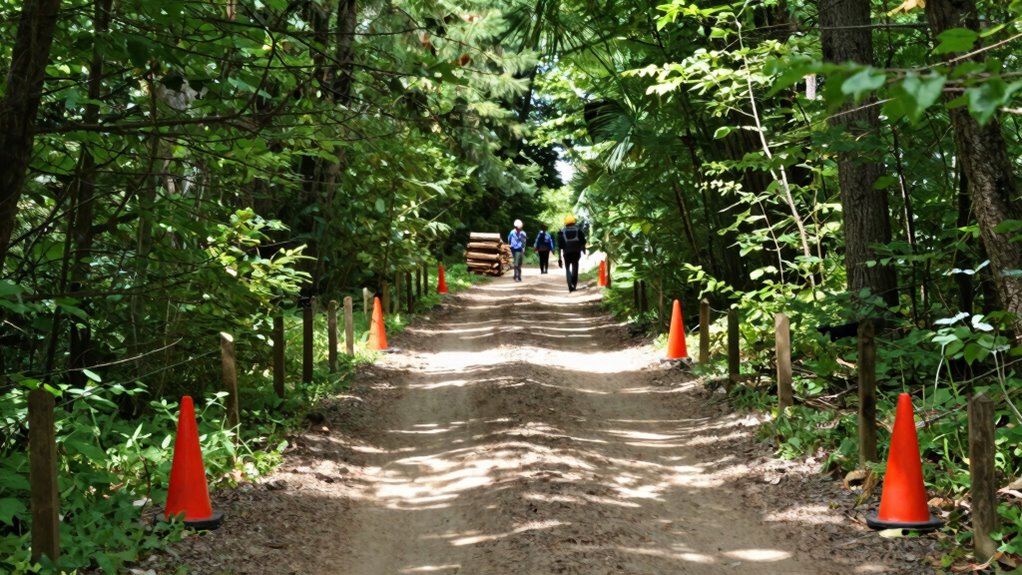
Creating clear and secure access routes is essential for safer firewood work. When you’re handling heavy logs and steering through uneven terrain, your safety depends heavily on how well you plan your route. Proper route planning minimizes risks like trips, slips, and falls, helping you work more efficiently and confidently. Before you start, take a moment to survey the area and identify the safest, most direct path to your firewood collection or processing site. Keep an eye out for obstacles such as loose rocks, fallen branches, or uneven ground that could cause accidents. Clearing these hazards beforehand ensures you don’t encounter surprises that could derail your work or lead to injuries.
Plan and clear safe, stable routes to prevent accidents and work confidently in firewood tasks.
To enhance firewood safety, create routes that are not only clear but also stable. If you notice muddy patches or loose soil, consider installing temporary boards or gravel to provide firm footing. These small adjustments can make a big difference in preventing slips. When planning your route, think about the weight and size of the logs you’ll be transporting. Choose a path that minimizes steep inclines or sharp turns, which can be tricky to traverse with heavy loads. If you’re using a wheeled cart or wheelbarrow, confirm the pathway is wide enough for smooth movement without risking tipping over.
Lighting is another key aspect of route planning. If you’re working early in the morning or late in the evening, make sure your path is well-lit or marked with reflective tape. This simple step prevents you from misjudging distances or stepping into hidden hazards in low visibility. Additionally, consider establishing a designated, clearly marked route from your storage area to your work zone. Consistently sticking to this route reduces confusion and the chance of straying into unsafe areas. If the terrain is particularly challenging, think about adding handrails or ropes to guide you along the safest sections.
Remember that good firewood safety isn’t just about how you handle the logs but also how you move through the environment. Regularly inspect and maintain your routes, especially after storms or heavy rain, which can create new hazards. By prioritizing route planning and keeping pathways clear and stable, you create a safer work environment where accidents are less likely. Incorporating proper terrain assessment can help you identify potential risks before beginning your work. With thoughtful preparation, you’ll find it easier to focus on your task, work more efficiently, and most importantly, stay safe during every phase of your firewood work.
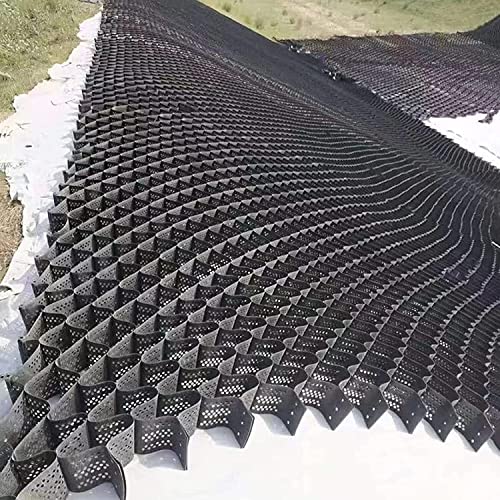
LWJQRSP Gravel Stabilizer Grid for Driveways, Garden Paths, & Sloped Areas – 2-Inch Ground Stabilizat (5×6 m / 16.5×20 ft) for Foundat Projects
- High Tensile Strength Material: Made from durable HDPE with ultrasonic welding
- Easy to Install: Simple to cut, connect, and fill with soil or gravel
- Heavy-Duty Support: Supports up to 3600 kg per grid
As an affiliate, we earn on qualifying purchases.
As an affiliate, we earn on qualifying purchases.
Frequently Asked Questions
What Materials Are Best for Constructing Access Routes?
You should use durable materials like gravel, compacted dirt, or wood planks for constructing access routes. These materials guarantee route accessibility and withstand frequent use and weather conditions. Gravel provides good drainage and stability, while wood planks create a firm surface over uneven ground. Avoid loose or unstable materials that could cause slips or falls. Prioritize material durability to maintain safe, reliable access for firewood work.
How Often Should Access Routes Be Inspected and Maintained?
Think of your access routes as arteries that keep your work safe and flowing smoothly. You should inspect and maintain them regularly—at least monthly or after severe weather. During inspections, focus on equipment selection and training protocols to identify hazards early. Consistent upkeep guarantees these routes stay clear, stable, and safe, preventing accidents. Remember, proactive care is the best way to keep your firewood work safe and efficient.
Are There Specific Safety Gear Recommendations for Using These Routes?
Yes, you should wear protective gloves and a safety helmet when using these access routes. Gloves protect your hands from splinters, cuts, and abrasions, while a safety helmet shields your head from falling debris or accidental bumps. Always make sure your safety gear fits properly and is in good condition before starting work. Using the right safety gear helps prevent injuries and keeps you safe while steering the routes.
How Can I Prevent Erosion on Access Routes?
To prevent erosion on your access routes, focus on erosion control and route stabilization techniques. You can add gravel or crushed stone to improve drainage and reduce soil displacement. Installing water bars or drainage ditches helps redirect water flow away from the path. Planting native grasses or ground cover stabilizes the soil, preventing erosion over time. Regular maintenance, like reapplying gravel and clearing debris, also keeps routes stable and safe.
What Signage Is Recommended for Indicating Firewood Work Areas?
You should use clear emergency signage to alert people about firewood work areas, ensuring they’re aware of potential hazards. Incorporate visibility markers like reflective tape or bright colors to make signs easily seen from a distance, especially in low light. Position signs at key access points and along routes to guide workers and visitors safely. This combination of emergency signage and visibility markers helps prevent accidents and keeps everyone informed about the firewood work zone.
Conclusion
By creating clear, safe access routes, you make firewood work safer and more efficient. Some might think it’s too much effort, but the benefits outweigh the hassle—reducing trips, preventing injuries, and saving time. Just take a few minutes to plan and clear your path; the safety and ease you’ll gain are well worth it. Enjoy your firewood work with confidence, knowing your routes keep you protected every step of the way.