
When managing windthrow trees, you need a different cutting strategy because these trees often leave unstable roots and disturbed soil, heightening erosion risks. Rushing or aggressive cuts can cause further destabilization or soil displacement, so a staged and careful approach is essential. Proper timing, selective removal, and considering soil conditions help promote natural recovery while preventing accidents. If you want to understand more about how to properly handle windthrow trees, there’s important guidance waiting for you.

Get business pricing on tools and workshop supplies
- Business-only prices and quantity discounts
- Tax-exempt purchasing
- Multiple users, one account, clear invoices
Key Takeaways
- Windthrow trees often have destabilized root systems requiring careful, staged removal to prevent further soil erosion.
- Their uprooted or damaged roots need selective trimming to maintain land stability and avoid additional soil displacement.
- Standard cutting methods may worsen soil erosion; tailored strategies support natural stabilization processes.
- Timing and approach are crucial to minimize risks of unexpected falls and protect surrounding areas.
- Specialized cutting strategies help preserve remaining root health and ensure safer, more effective removal.
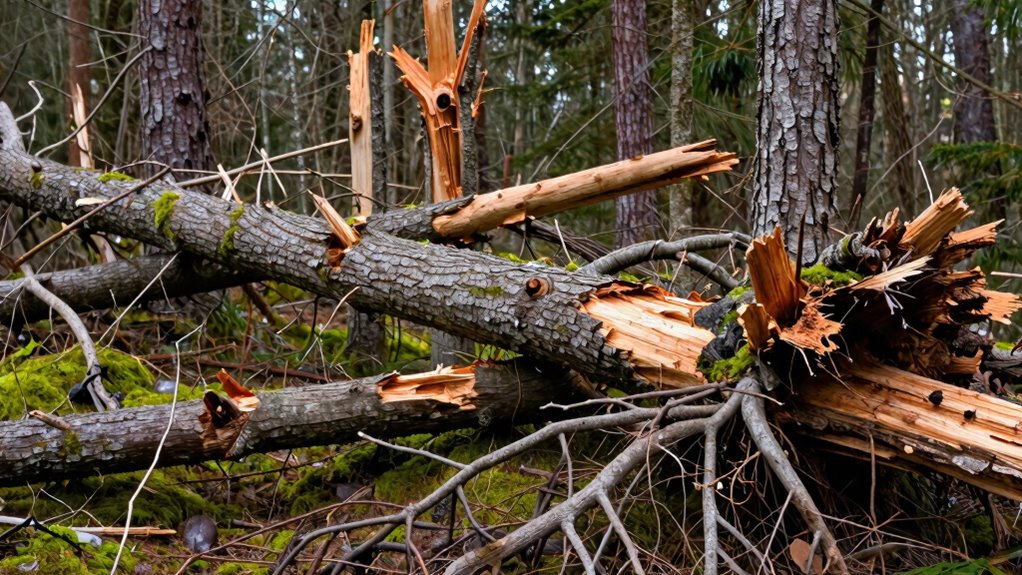
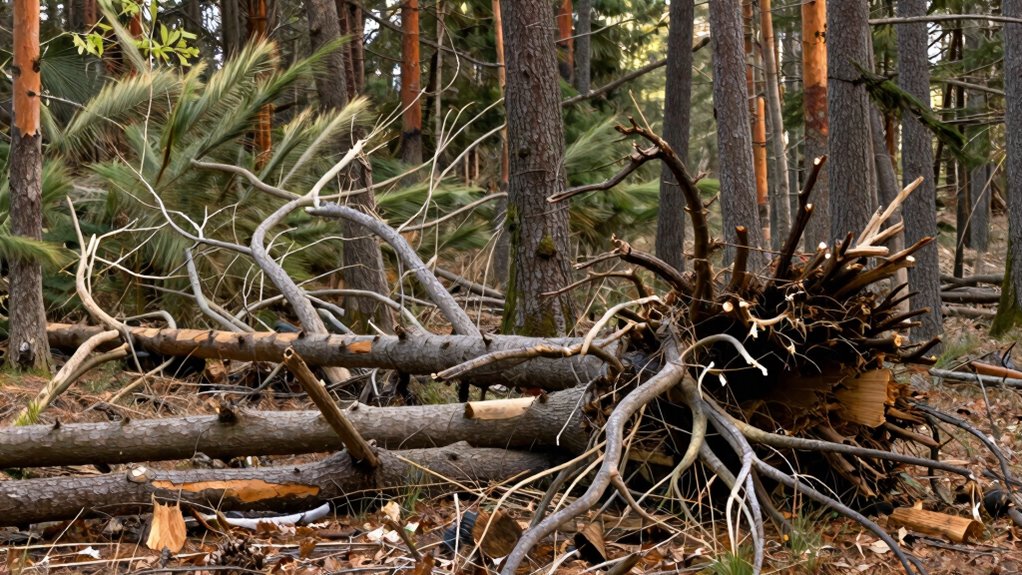
When dealing with windthrow trees, choosing the right cutting strategy can make all the difference in ensuring safety and minimizing damage. Windthrow refers to trees uprooted or broken by strong winds, often leaving unstable roots and precarious positions. Because these trees are compromised, traditional removal methods might not be suitable. Instead, you need a specialized approach that considers root stabilization and prevents further soil erosion, both of which are critical for maintaining the landscape’s stability.
First, your focus should be on stabilizing the remaining root system. Windthrow trees often leave roots exposed or damaged, reducing their ability to anchor the soil. A proper cutting strategy involves carefully assessing the tree’s remaining structure and selectively removing unstable parts. This reduces the risk that the tree or parts of it will fall unexpectedly, which could cause injury or damage to nearby structures. By prioritizing root stabilization, you help prevent additional soil displacement, which is vital for ongoing land integrity. Additionally, understanding the importance of soil stabilization can guide the timing and methods used during removal. Taking into account the soil’s condition can also influence how you approach the stabilization process.
Prioritize stabilizing exposed or damaged roots to prevent soil displacement and avoid unexpected tree falls.
Soil erosion is a significant concern when dealing with windthrow trees. Once a tree is uprooted, the roots no longer hold the soil in place, making the area vulnerable to erosion, especially during heavy rains. Using a strategic cutting approach, you can minimize this risk. For example, you should avoid leaving large, jagged stumps that can create pathways for water to wash away soil. Instead, carefully cut back the exposed roots and remaining trunk in a way that encourages natural stabilization of the soil. This might involve installing erosion control measures like mulching or temporary barriers until the area can regenerate naturally.
The timing and method of cutting are also essential. You want to take a gradual approach, removing parts of the tree in stages if necessary, to allow the soil and roots to adapt and settle. Rushing to clear the site could disturb the soil further and lead to increased erosion. Additionally, when cutting, you should consider the direction of the wind and the tree’s leaning position to prevent accidental falls onto sensitive areas or infrastructure. Properly planning your cuts helps avoid further destabilization and supports the natural process of root re-establishment.
tree pruning saw for windthrow trees
As an affiliate, we earn on qualifying purchases.
As an affiliate, we earn on qualifying purchases.
Frequently Asked Questions
How Do Windthrow Trees Affect Nearby Healthy Trees?
Windthrow trees can negatively impact nearby healthy trees by causing canopy disruption, which reduces light and airflow. Their roots may become unstable, risking further root destabilization and potential damage to adjacent trees. As you manage these trees, consider their root stabilization and the effects of canopy disruption to prevent the spread of damage. Proper removal and strategic cutting help protect the health and stability of surrounding trees.
What Equipment Is Best for Cutting Windthrow Trees Safely?
You should use specialized equipment for safe tree felling, like chainsaws with a sharp chain and proper safety gear such as helmets, gloves, eye protection, and chainsaw chaps. Make sure you have a clear escape route and consider using a winch or crane for larger windthrow trees to prevent accidents. Always assess the tree’s stability and wind direction before starting, and never cut alone—safety gear and proper tools are essential for safe, effective cutting.
How Does Soil Stability Influence Windthrow Tree Removal?
Soil stability plays a vital role in windthrow tree removal. If the soil is compacted, it can hinder safe extraction, risking further root destabilization. You need to assess soil conditions carefully, as loose or heavily compacted soil affects how you approach removal. Properly managing soil compaction and ensuring root stabilization during removal helps prevent additional damage to surrounding areas and maintains the site’s overall stability.
Are There Environmental Regulations for Removing Windthrow Trees?
You need to know that removing windthrow trees involves strict environmental regulations. You must guarantee legal compliance by following permit requirements, which vary by location. Visualize how authorities monitor forest management to protect habitats and prevent ecological damage. Failing to adhere can lead to hefty fines or legal action. So, always check local guidelines before removing windthrow trees, and obtain the necessary permits to stay within legal boundaries.
How Can I Prevent Future Windthrow Damage in My Forest?
To prevent future windthrow damage, you should focus on root reinforcement and canopy thinning. Strengthen root systems by avoiding soil compaction and ensuring proper drainage. Thin the canopy to reduce wind resistance, which lowers the risk of uprooting during storms. Regularly assess your trees for vulnerabilities and prune weak branches. These strategies improve stability, helping your forest withstand high winds and minimizing windthrow risks effectively.
Conclusion
When dealing with windthrow trees, you’re not just pruning; you’re facing an epic battle against nature’s fury. Using the wrong cutting strategy can turn a manageable mess into a catastrophe of fallen branches and shattered hopes. Think of it as trying to tame a wild beast with a butter knife—ineffective and dangerous. So, arm yourself with the right approach. Your trees will thank you, and you’ll avoid turning your landscape into a disaster zone that even storms would envy!
Halloween Picks
halloween
As an affiliate, we earn on qualifying purchases.