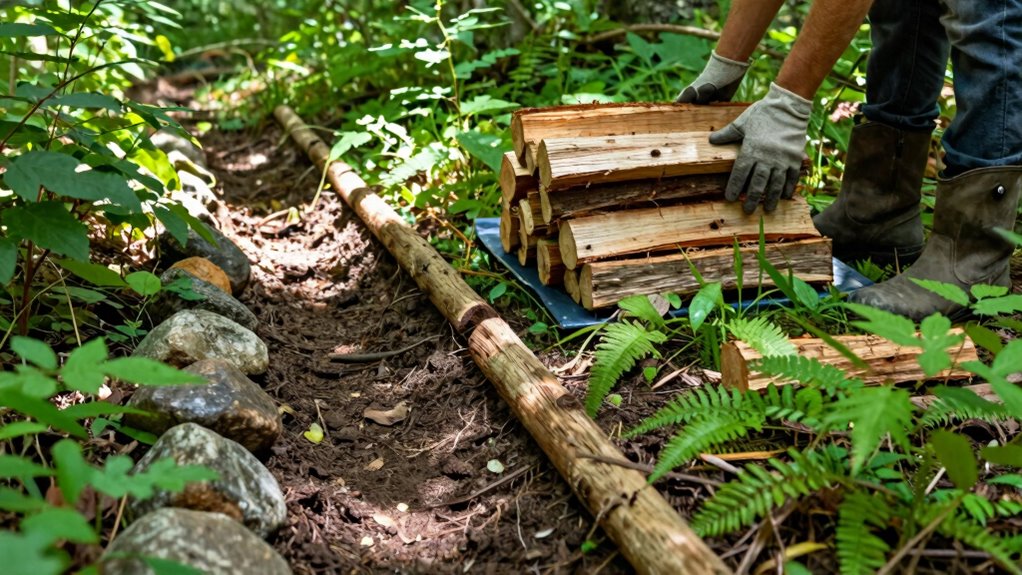

To reduce soil damage during firewood season, stick to established paths or create stable routes for collection. Reinforce these trails with gravel or wood chips to prevent erosion and avoid wandering through soft, muddy areas. Carry loads with carts or wheelbarrows, and load on firm ground. Schedule your work during dry weather and implement erosion prevention methods like mulching. Want to learn more tips for protecting soil and maintaining land health? Keep exploring for effective strategies.
Key Takeaways
- Use designated pathways reinforced with gravel or wood chips to prevent soil erosion and compaction.
- Limit load sizes and transport firewood with carts or wheelbarrows on stable ground.
- Schedule gathering during dry weather to minimize soil disturbance and damage.
- Implement erosion control measures like mulching or contouring to protect soil stability.
- Avoid trampling in the same areas repeatedly to maintain healthy, loose soil structure.
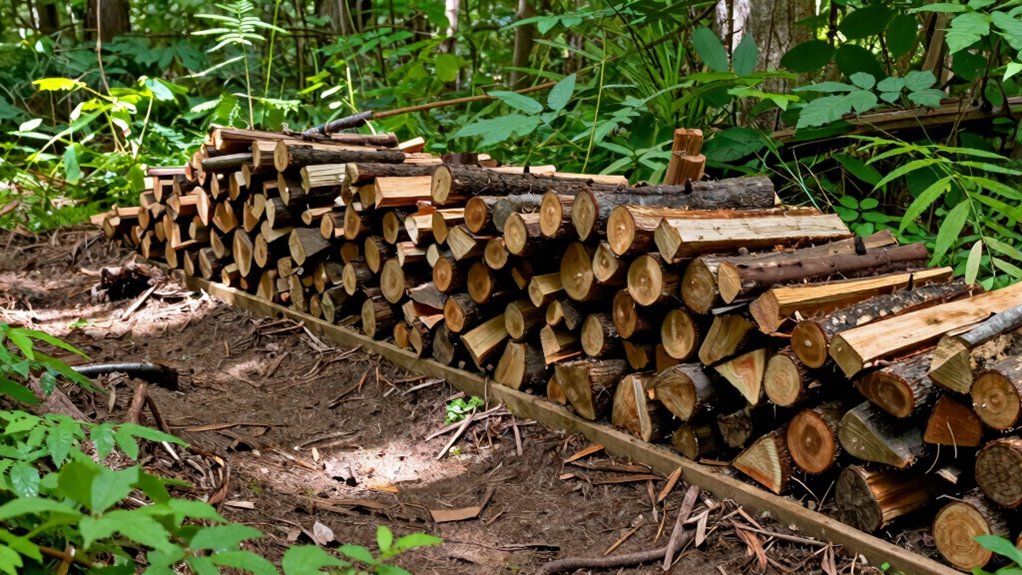
As firewood season ramps up, it’s easy to overlook how gathering and transporting wood can harm the soil beneath. Every trip into the woods, every load carried, can lead to soil compaction, which reduces the soil’s ability to absorb water and nutrients. When soil becomes compacted, it becomes harder for roots to grow and for water to drain properly, increasing the risk of erosion. To protect your land, you should think about minimizing soil disturbance with simple practices that promote erosion control and reduce compaction.
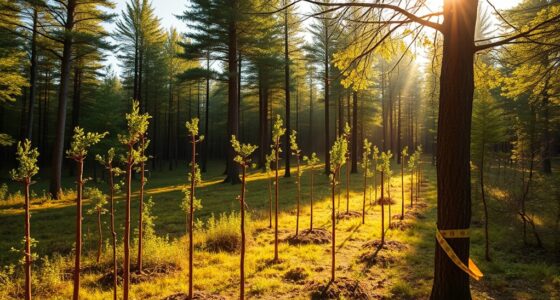
One of the most effective ways to prevent soil damage is to create designated pathways or trails for firewood collection. Instead of wandering randomly through the forest, stick to existing paths or establish stable routes that are reinforced with gravel or wood chips. This prevents you from repeatedly trampling the same areas, which can lead to severe soil compaction. When you stick to these pathways, you reduce the pressure on the soil, helping it to stay loose and porous, which is essential for healthy plant growth and water infiltration.
Another approach involves limiting the size of your loads. Carrying heavy bundles of firewood across soft terrain increases compaction risks and damages the soil structure. Use carts or wheelbarrows to distribute the weight more evenly and prevent excessive pressure on the ground. When loading and unloading, choose spots with firm, stable ground rather than soft, muddy patches. This helps maintain soil integrity and minimizes erosion, especially during rainy periods when loose soil can wash away easily. Additionally, understanding the importance of soil health can guide you in adopting practices that sustain the land’s natural resilience. Incorporating erosion prevention techniques such as contouring or mulching can enhance long-term soil stability. Implementing soil conservation measures can further safeguard the land from lasting damage and ensure its productivity for future seasons. Recognizing the benefits of proper land management can also help you make more informed decisions that protect the environment and your landscape. Moreover, being aware of the role of soil structure can help you avoid practices that degrade the ground’s ability to support plant life and resist erosion.
Finally, schedule your firewood gathering during dry conditions whenever possible. Wet soil is more prone to compaction and erosion, especially when disturbed. By choosing dry days, you reduce the likelihood of creating lasting damage, ensuring your land remains healthy for years to come. Being mindful of how you move through the woods and taking simple steps like establishing stable routes and controlling load sizes can considerably reduce soil compaction and erosion during firewood season, helping preserve your land’s essential qualities and resilience.
firewood collection trail reinforcement gravel
As an affiliate, we earn on qualifying purchases.
As an affiliate, we earn on qualifying purchases.
Frequently Asked Questions
How Does Soil Damage Affect Local Plant Growth?
Soil damage can markedly hinder local plant growth by causing soil compaction, which reduces airflow and water infiltration. When erosion occurs, nutrients wash away, leaving plants with less nourishment. You can minimize this by practicing erosion prevention techniques like creating designated firewood areas, avoiding heavy machinery on fragile soil, and maintaining ground cover. These steps help preserve soil health, ensuring plants can grow properly and thrive in your area.
Can Soil Recovery Be Accelerated After Firewood Season?
Imagine a gentle rain nurturing soil, and you can see how soil recovery can be accelerated after firewood season. You should focus on soil restoration techniques like adding organic matter and planting cover crops to rebuild nutrients. Erosion prevention is crucial, so implement mulching or install barriers. These actions protect the soil, promote faster healing, and guarantee the land remains healthy and productive for future use.
What Tools Minimize Soil Disruption During Wood Collection?
You can minimize soil disruption during wood collection by using hand tools like axes, saws, or wedges, which require less ground contact and disturbance. Additionally, placing ground barriers such as plywood or mats under your tools helps protect the soil from compaction and damage. By choosing lightweight tools and creating designated collection zones with barriers, you prevent unnecessary soil disruption and promote quicker recovery after firewood gathering.
Are There Specific Soil Types More Vulnerable to Damage?
Certain soil types, like sandy or loamy soils, are more vulnerable to damage during firewood collection. You’ll notice these soils easily suffer from erosion and compaction issues, turning fragile landscapes into cracks and crumbles. Like a delicate dance, handling these soils with care preserves their importance. By understanding their fragility, you can minimize erosion and compaction issues, keeping the land resilient and healthy through every season of firewood gathering.
How Does Mulch Help Protect Soil During Firewood Season?
Mulch benefits your soil by providing a protective layer that minimizes erosion and compaction during firewood season. It helps retain moisture, reducing the need for heavy foot traffic or machinery that can damage the soil. By acting as a barrier, mulch promotes healthy soil protection, prevents weeds, and maintains soil structure. This way, you can guarantee your soil stays healthy and resilient, even with increased activity during firewood collection and processing.
Conclusion
By taking simple steps like creating designated firewood collection areas and avoiding heavy machinery on sensitive soil, you can protect your land during firewood season. For example, imagine a small farm that reduced soil compaction by using hand tools instead of trucks, resulting in healthier soil and better crop yields afterward. Protecting your soil isn’t just good for the environment—it’s good for your land’s future. Small changes today can make a big difference tomorrow.