TL;DR

Get business pricing on tools and workshop supplies
- Business-only prices and quantity discounts
- Tax-exempt purchasing
- Multiple users, one account, clear invoices
Electric log splitters use an electric motor to drive a hydraulic ram that pushes wood against a wedge. Choose one by checking your typical log size and condition, annual firewood volume, cycle time, and available electrical supply; advertised tonnage alone cannot predict whether every knotty log will split. Work on stable ground, keep hands clear, follow the manual, and use the specified electrical setup and protective gear.
Measure typical log length and diameter, and note species, knots, and grain before choosing a model.
Treat advertised tonnage as a guide to rated pushing force, not a guarantee that every log within the size limits will split.
Compare cycle time with your seasonal firewood volume and the hours you can spend working.
Check voltage, amperage, and extension-cord requirements against the power available at your work site.
Use stable ground, suitable eye and hearing protection, safe lifting practices, and the manufacturer’s instructions; keep hands away from the ram and wedge.
What an electric log splitter does in your firewood workflow
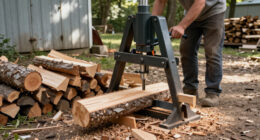
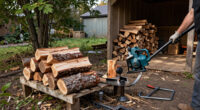
An electric log splitter uses an electric motor to drive a pump, which sends hydraulic fluid to a hydraulic ram that pushes a log against a splitting wedge. You place the log in the splitting area, operate the controls as the manual directs, and the ram forces the wood onto the wedge. The machine does the pushing; you still handle, position, and remove each piece. That setup suits firewood preparation near an appropriate outlet, such as splitting a few cords beside a garage or wood shed. Electric models produce no exhaust at the machine and are generally quieter than gas models, though their motors and pumps still make noise. One homeowner might use a wheeled splitter beside a woodpile on Saturday, then store it in the shed when the stack is ready. Think of the machine as a steady mechanical wedge rather than a magic button: grain and knots still matter. A straight piece may open with a crisp crack, while a twisted round can cling to the wedge or resist the ram. Keep hands clear of both, and follow the manufacturer’s controls and safety instructions.Choose force and capacity for the logs you actually burn
Electric log splitters are easier to choose when you start with your woodpile: note the usual log length, diameter, species, and condition, then compare those details with the machine’s stated limits. Splitting force is commonly advertised in tons, but that rating describes pushing force—not a promise that the splitter will handle every log of a given size. A large knot or stringy grain can defeat a piece that looks modest on paper. For example, if your pile is mostly short, straight-grained rounds, a smaller machine within its stated capacity may suit your work. If you regularly split dense hardwood or knotted rounds, look for a model suited to those demands and expect occasional difficult pieces. Wood behavior varies: some green logs split readily, while other species become easier after seasoning.| What to check | Why it matters | Example from the woodpile |
|---|---|---|
| Rated force | Gives a guide to pushing strength, not a guarantee for each log | A knotty round may resist more than a straight one |
| Maximum length and diameter | Sets the machine’s listed size limits | Measure the rounds you usually cut before shopping |
| Cycle time | Affects how quickly the ram extends and returns | A shorter cycle can help when you have a large stack |
| Orientation | Changes how you load and handle heavy pieces | A vertical or convertible model can let you split a heavy round closer to the ground |
Match cycle time and annual volume to your weekends
Cycle time measures how long the ram takes to extend and return, so it helps you estimate the pace of a splitting session. A shorter cycle can move a stack along faster, but the machine’s real work rate also depends on loading, log size, splitting difficulty, and your rest breaks. A quoted cycle time is one part of the picture, not a count of finished logs per hour. Imagine splitting a small stack of stove wood close to home: a moderate pace may be perfectly comfortable. If you prepare a winter’s supply over several weekends, a quicker machine, a convenient loading height, or a vertical position may save effort. If you heat a large house and need to process substantial volume, compare realistic session length and machine capacity before assuming a smaller unit will keep up. Count your wood before shopping. Estimate how much firewood you prepare in a season, how many hours you can spend splitting, and whether you’ll work near power. Electric models have expanded beyond compact benchtop units to include wheeled and convertible machines, but sustained heavy work still needs a suitable machine and electrical setup. Battery models add mobility; compare stated force, runtime, and recharge time, since cordless convenience alone does not tell you how many difficult logs a charge will handle.Check the outlet before you bring a splitter home
An electric splitter needs a power source that matches the model’s voltage, amperage, and wiring requirements. Those requirements determine whether the motor can start and keep running under load. If the circuit cannot supply what the machine needs, you may have to move the work, arrange a suitable circuit, or choose another model; an outlet that merely accepts the plug is not proof that the setup is appropriate. Some splitters connect to a household outlet, while others need a higher-voltage circuit. Check the label and manual before purchase, and compare them with the power available at the work site. Extension cords add distance but can also reduce voltage reaching the motor. A long or undersized cord may lead to poor performance and put extra stress on the equipment, so use one only if the manufacturer permits it and follow the required wire gauge and maximum length. For instance, a splitter beside the shed may seem convenient until the only available cord is longer than the manual allows. Moving the splitter closer to an approved outlet or arranging a suitable circuit may be a more reliable setup than improvising with a longer cord. Set the unit on stable, level ground with room to position logs and move pieces away. A level surface helps keep the machine steady while you load and operate it, and clear space reduces awkward handling around the moving parts. Don’t assume wheels and a handle mean you can tow it on a road; only tow a machine that its manufacturer explicitly rates and equips for towing. If your intended setup needs new wiring or a higher-voltage circuit, hire a licensed electrician and follow applicable code and permit requirements. Keep electrical connections dry and use protective gear suited to the work.Use a simple setup routine to split safely
A careful setup keeps the ram, wedge, and log area clear of hands and stray pieces. The ram applies substantial force, so a hand or loose object in its path can be crushed or struck. Before each session, place the splitter on stable ground, check that the electrical supply matches the manual, and put on suitable eye and hearing protection. Read and follow the manufacturer’s operating instructions; never bypass a safety control. Use this routine each time you start a batch:- Inspect the machine. Check hoses, fittings, controls, and the work area for visible damage or loose debris. A damaged hose or obstructed area can create a hazard once the machine is under pressure.
- Position the splitter. Set it on level ground, with space to load logs and remove split pieces safely. Clear space reduces the chance that you’ll need to reach across the moving parts or trip over wood.
- Prepare the logs. Work within the listed length and diameter limits, and use safe lifting practices for heavy rounds. Oversized pieces may not sit or split as intended, while awkward lifting can cause strain before the machine is even running.
- Operate as directed. Keep hands away from the ram and wedge; use the controls exactly as the manual describes. This keeps your hands outside the crush zone throughout each cycle.
- Stop before clearing trouble. If a log binds or behaves unexpectedly, follow the manual’s shutdown and clearing directions before approaching the splitting area. The ram or wood may still move if you try to free a jam while the machine is active.
Keep maintenance simple with regular checks
Electric splitters avoid engine chores such as fuel and oil changes, but they still need care for their hydraulic system and moving parts. Hydraulic fluid transfers force from the pump to the ram, so low or unsuitable fluid can interfere with operation and may damage components. The manual sets the maintenance schedule and specifies whether and how to check or change hydraulic fluid. Inspect hoses and fittings, clean the machine as directed, and store it according to the manufacturer’s guidance. A good habit is to check the machine before putting it away after a weekend session. Look for visible hose wear, leaks, loose fittings, or debris around moving parts, and address problems according to the manual before the next use. A leak or damaged hose matters because the hydraulic system operates under pressure; stop using the machine until it has been dealt with safely. That quick check can prevent a small problem from becoming a frustrating surprise beside a half-split pile. Requirements vary by model, so don’t guess at fluid type or service intervals. Follow the manual for inspections, cleaning, maintenance, and storage.Decide whether electric fits your firewood routine
Electric log splitters suit you when you prepare firewood near an appropriate power source and value no on-site exhaust, lower noise, and less engine maintenance. Those benefits can make work around the home more comfortable and reduce engine-related upkeep, but they depend on having a suitable outlet or circuit where you need to split. A cord may also limit placement and add setup considerations. Gas models can make more sense for remote work or demanding jobs where access to a suitable outlet is a problem, though they bring engine maintenance and exhaust. Your wood, location, and work rate determine which tradeoffs matter most. If you split a modest stack beside your home each autumn, an electric model may offer a simple routine: roll it out, connect it as specified, and work through manageable batches. If you need to split far from a building or process heavy volumes for long sessions, compare gas and electric options against that workload. Higher volume makes pace and sustained capacity more important, while remote locations make power access the deciding constraint. For either type, wheels help with yard movement but do not automatically make a splitter road-safe. Before committing, check the machine’s capacity, cycle time, electrical needs, and placement against your typical season. A faster cycle can shorten a session, but only if the splitter can handle your wood and the setup can support it. A model that needs a circuit you don’t have may add installation cost or rule out your preferred work area. Battery models may help when cords limit access, but weigh runtime and recharge time against the work you expect between charges. Compare current product specifications and independent reviews before buying.Frequently Asked Questions
How many tons of force do I need for an electric log splitter?
Choose by your wood’s species, diameter, length, and knotting, along with the model’s stated capacity. Straight, smaller rounds generally ask less of a splitter than large, knotty, or stringy pieces. Treat the tonnage rating as a guide to pushing force, not a guarantee for every log.Can an electric log splitter split hardwood?
Many models can split hardwood when the pieces fall within the machine’s stated capacity. Dense or knotty rounds may still resist, so compare your typical logs with the product limits and allow for variation from piece to piece.Can I use an extension cord with an electric log splitter?
Only if the manufacturer allows it and you follow the specified wire gauge and maximum length. A cord that is too long or too thin can cause voltage drop and poor performance. Check the manual before setting up.Are electric log splitters quieter than gas models?
They are generally quieter and produce no exhaust at the machine, but they are not silent. Motor and hydraulic pump noise varies between models, so use suitable hearing protection as directed for your work.What maintenance does an electric log splitter need?
Follow the manual for hydraulic fluid checks or changes, hose and fitting inspections, cleaning, and storage. Electric models avoid engine fuel and oil chores, but their hydraulic systems and moving parts still need care.Conclusion
Choose an electric log splitter by matching its capacity, pace, and power needs to the wood you actually burn. Measure your rounds, check your outlet, and follow the manual—then your firewood stack can grow one safe, satisfying crack at a time.Fall yard work Picks
leaf blowers
As an affiliate, we earn on qualifying purchases.